Karin Daymond
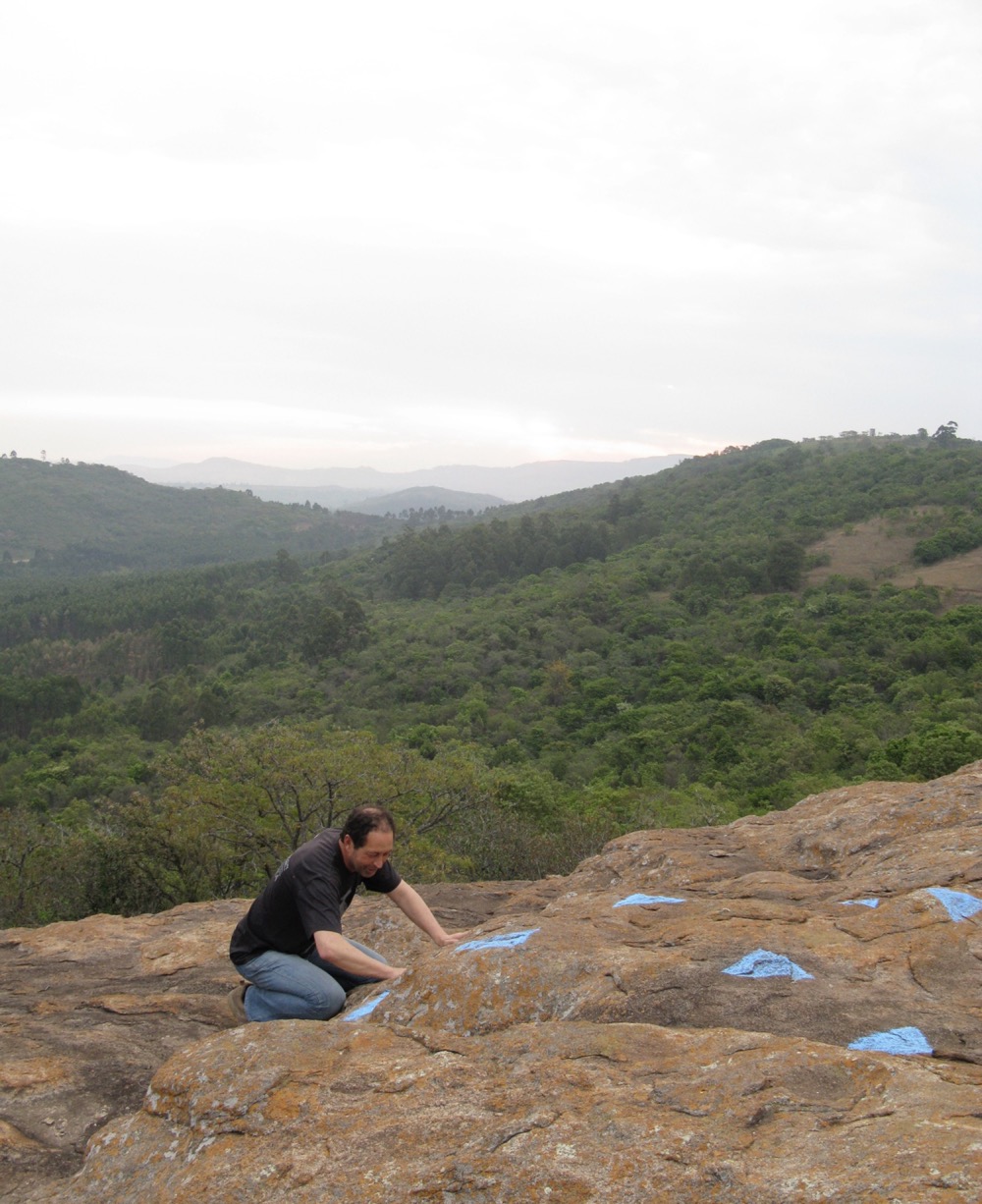
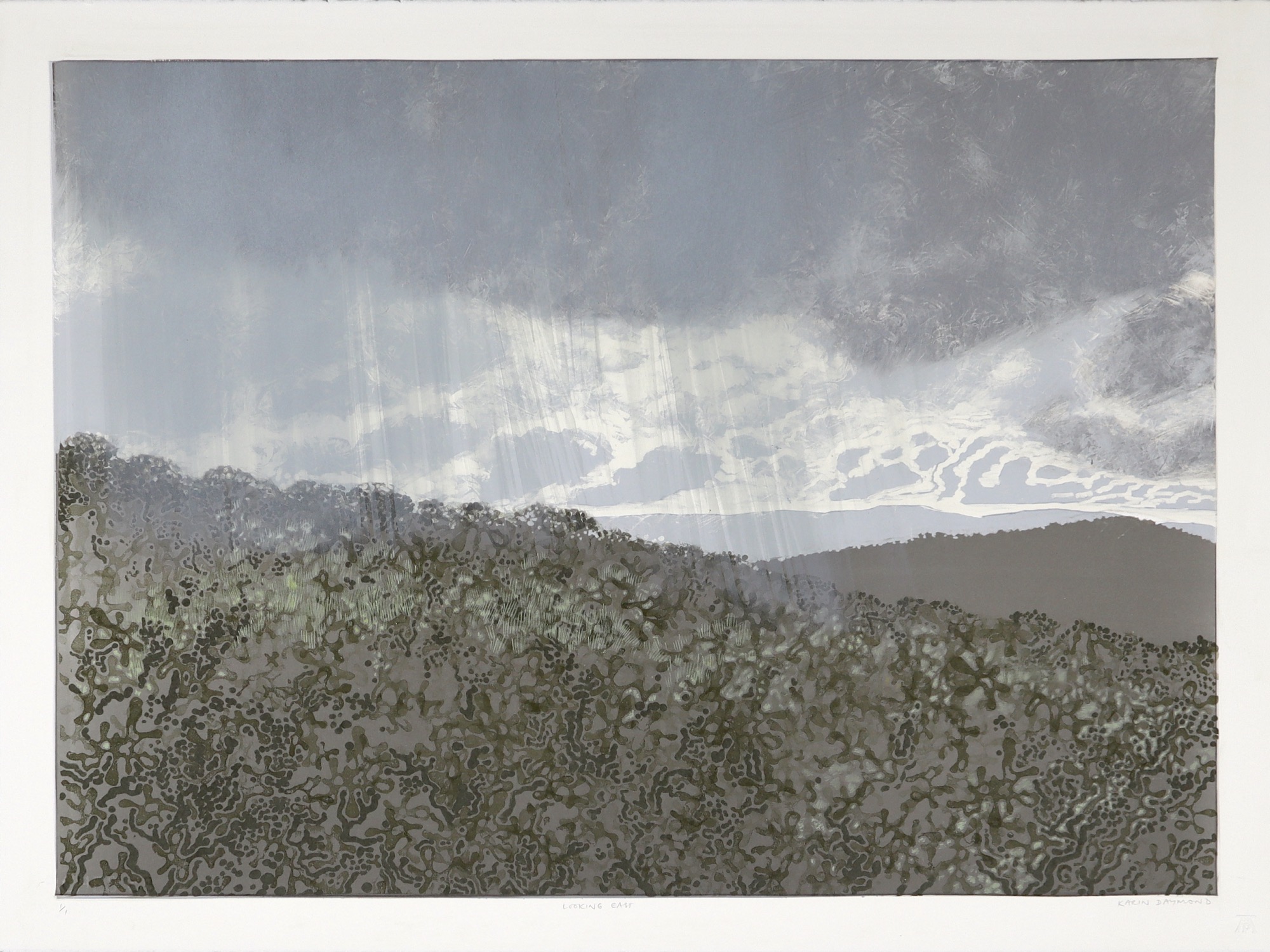
Karin Daymond lives in a part of South Africa that has some of the most staggering landscapes in the country. Mbombela is the capital of Mpumalanga and has been home for Daymond since 1992. It is mountainous country wedged snugly into a corner bordering Mozambique, Eswatini and the pristine Kruger National Park. The vegetation is sub-tropical and huge whaleback granite formations surge out of the fertile orange, litchi and nut orchards that surround Mbombela. Karin Daymond has chosen to live almost within her paintings. The connection with her life's outlook, where she lives and what she depicts are tightly bound.
Karin Daymond Monotypes
New Editions from The Artists' Press
Karin Daymond Print Archive
Artists at The Artists' Press A to L (by surname)
Artists at The Artists' Press M to X (by surname)
For orders (with free shipping) or any other enquiries, please contact us.
Kalahari
"All the cliched descriptions one hears about the Kalahari are true. It is harsh land, where the distribution of the plants and the colour of the soil are the only signs that there may be, or may have been, water there.
It took me months to process what I had seen and felt. My trusted methods of painting didn't work: it was as if the light came from above and somehow, from the ground. I reassessed every colour and brush mark.
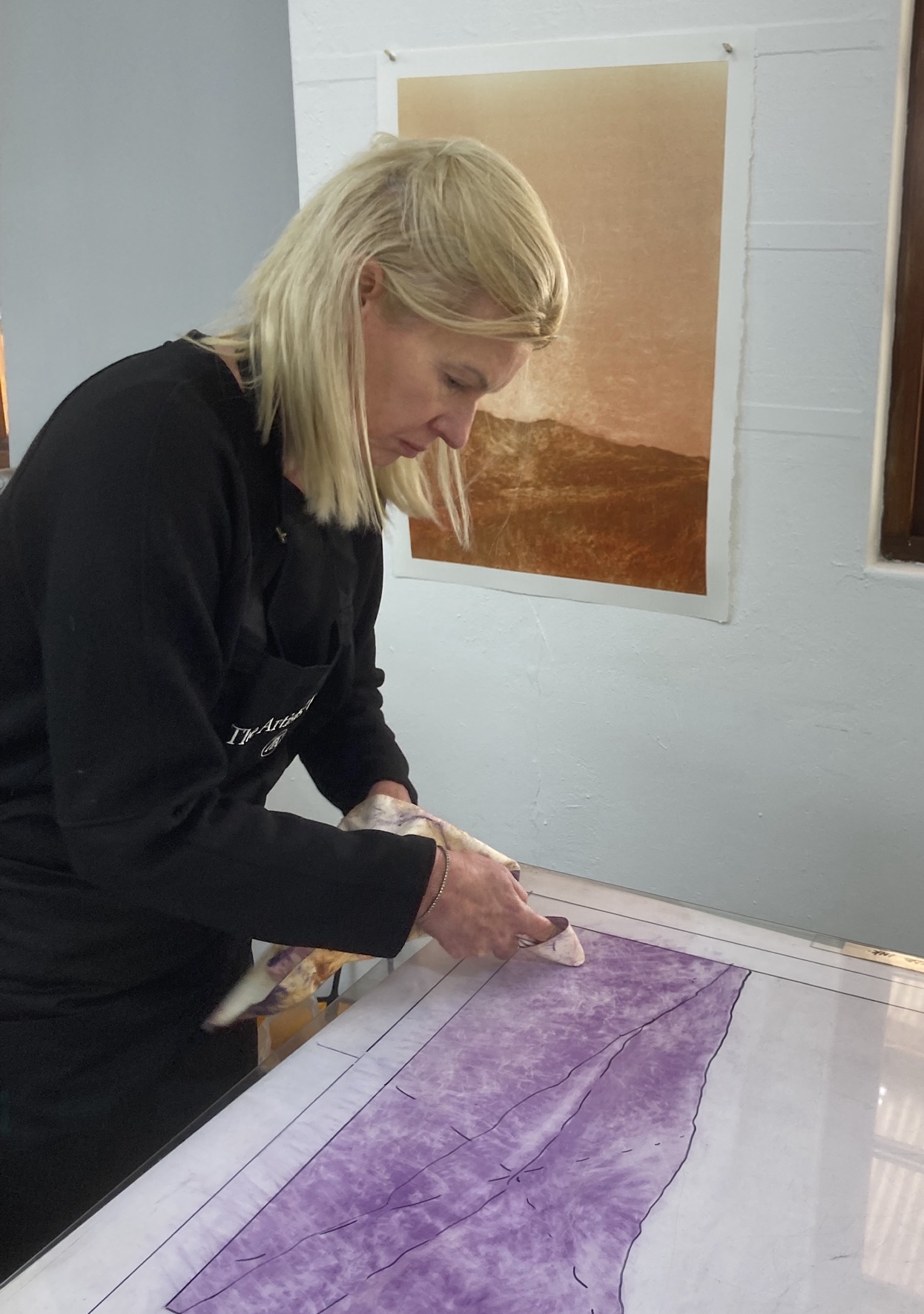
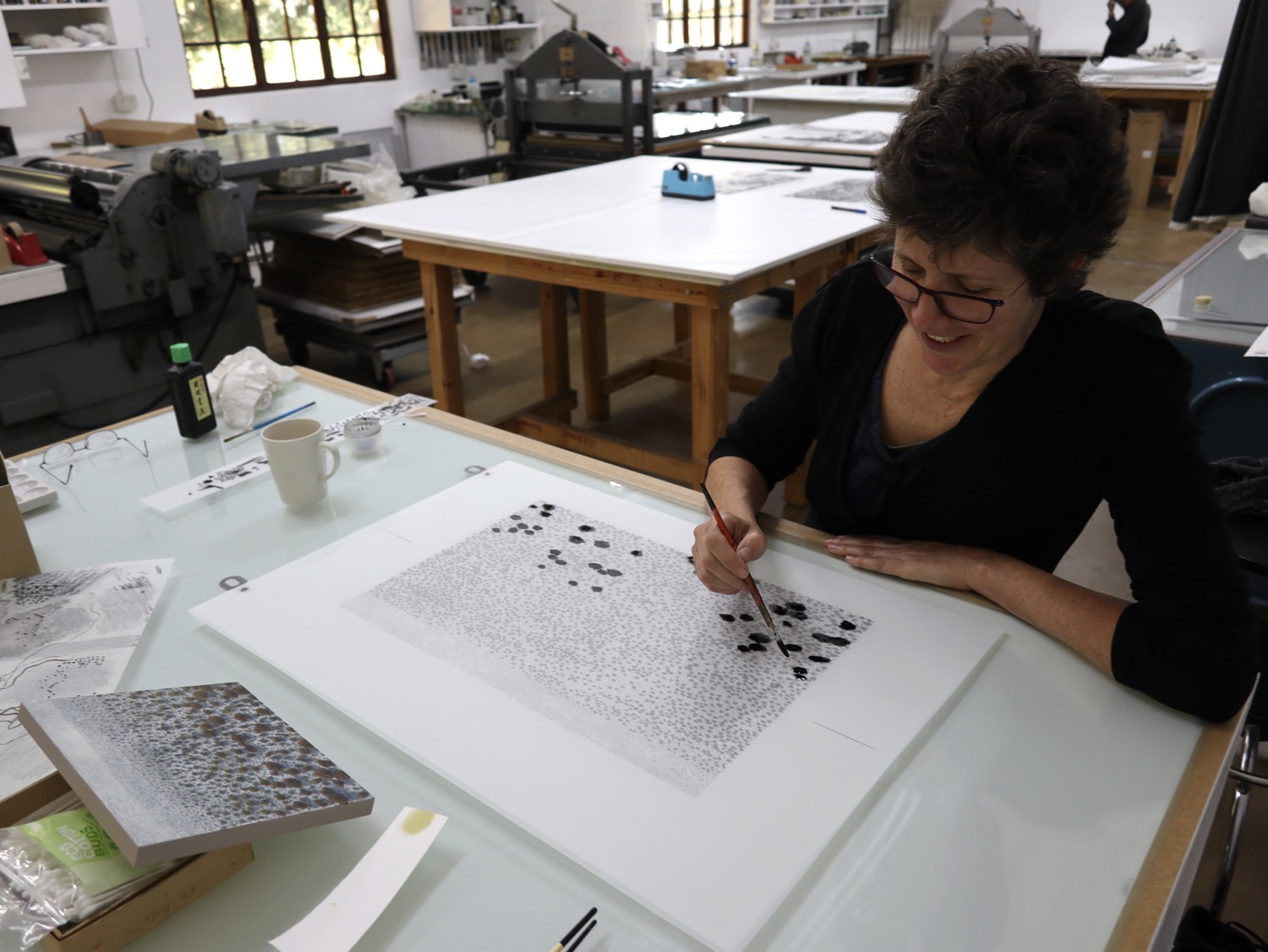
The white paper that is the start of the printmaking process suited this bleached and tentative landscape. Collaborating with Mark also worked; he is so tuned in to the surface of the print, seeing with me, the things that may go unnoticed, picking up on the tentative and helping to find a way to say it with ink. What fun it was to pick up on chance marks and develop them into thorn bushes or pebbles and to build up layers of thousands of carefully curated dots (really like doing that!) into something that radiates heat and gives a sense of vast space." Karin Daymond, 2019
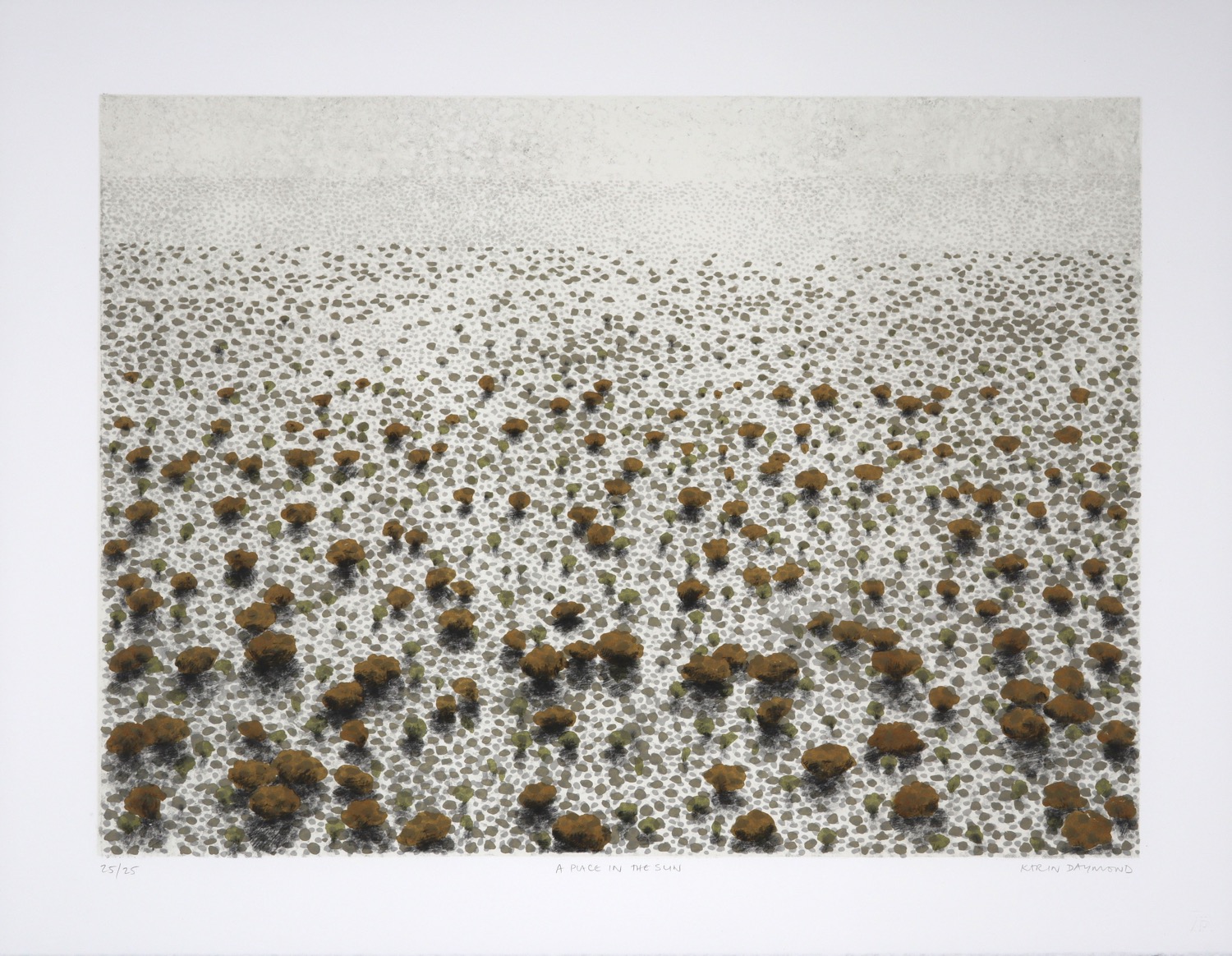
Title: A Place in the Sun
Medium: Six colour lithograph
Paper size: 48 x 62 cm
Edition size: 25
Price: R 6 200 (excl.VAT)
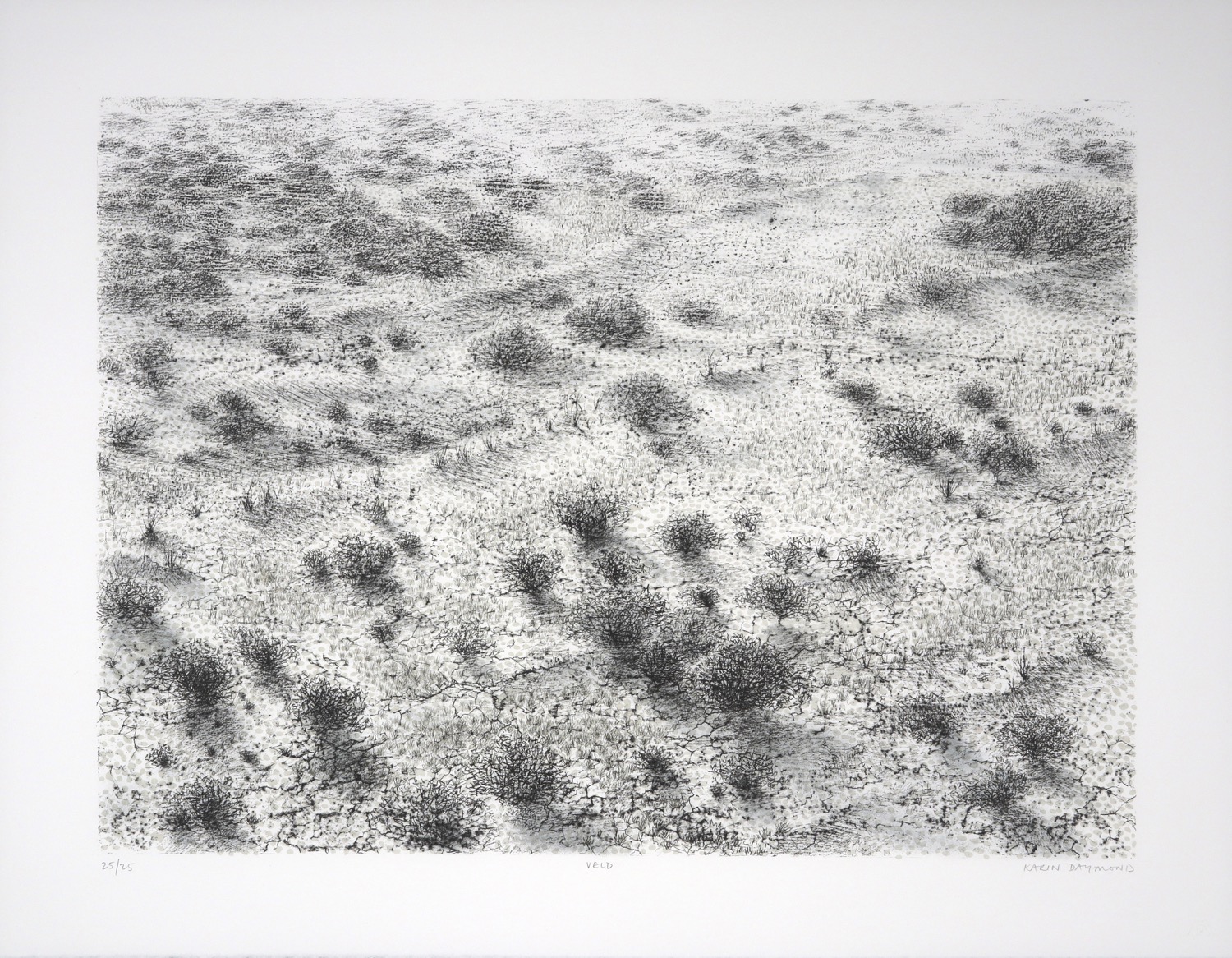
Title: Veld
Medium: Four colour lithograph
Paper size: 48 x 62 cm
Edition size: 25
Price: R 6 200 (excl.VAT)
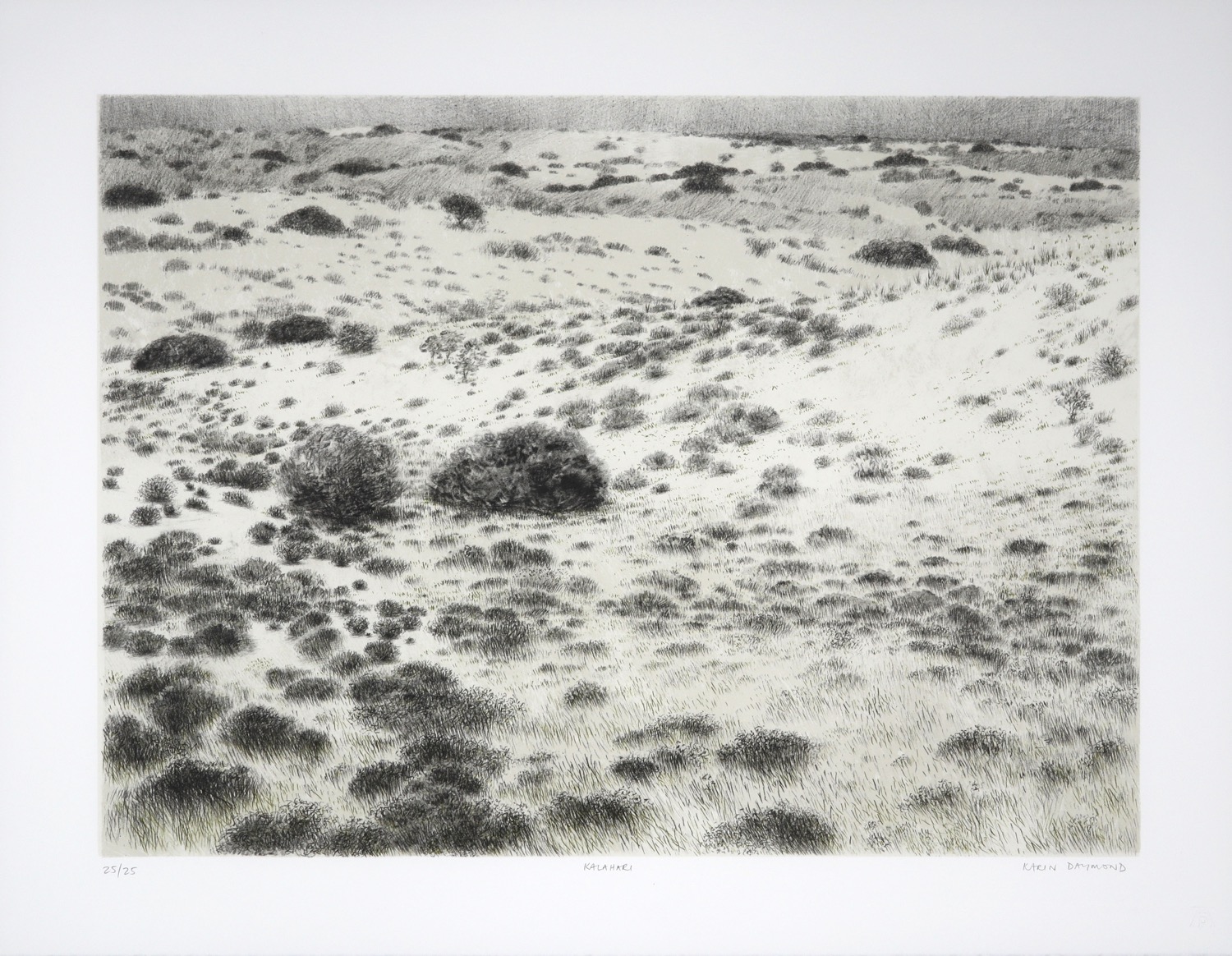
Title: Kalahari
Medium: Four colour lithograph
Paper size: 48 x 62 cm
Edition size: 25
Price: R 6 200 (excl.VAT)
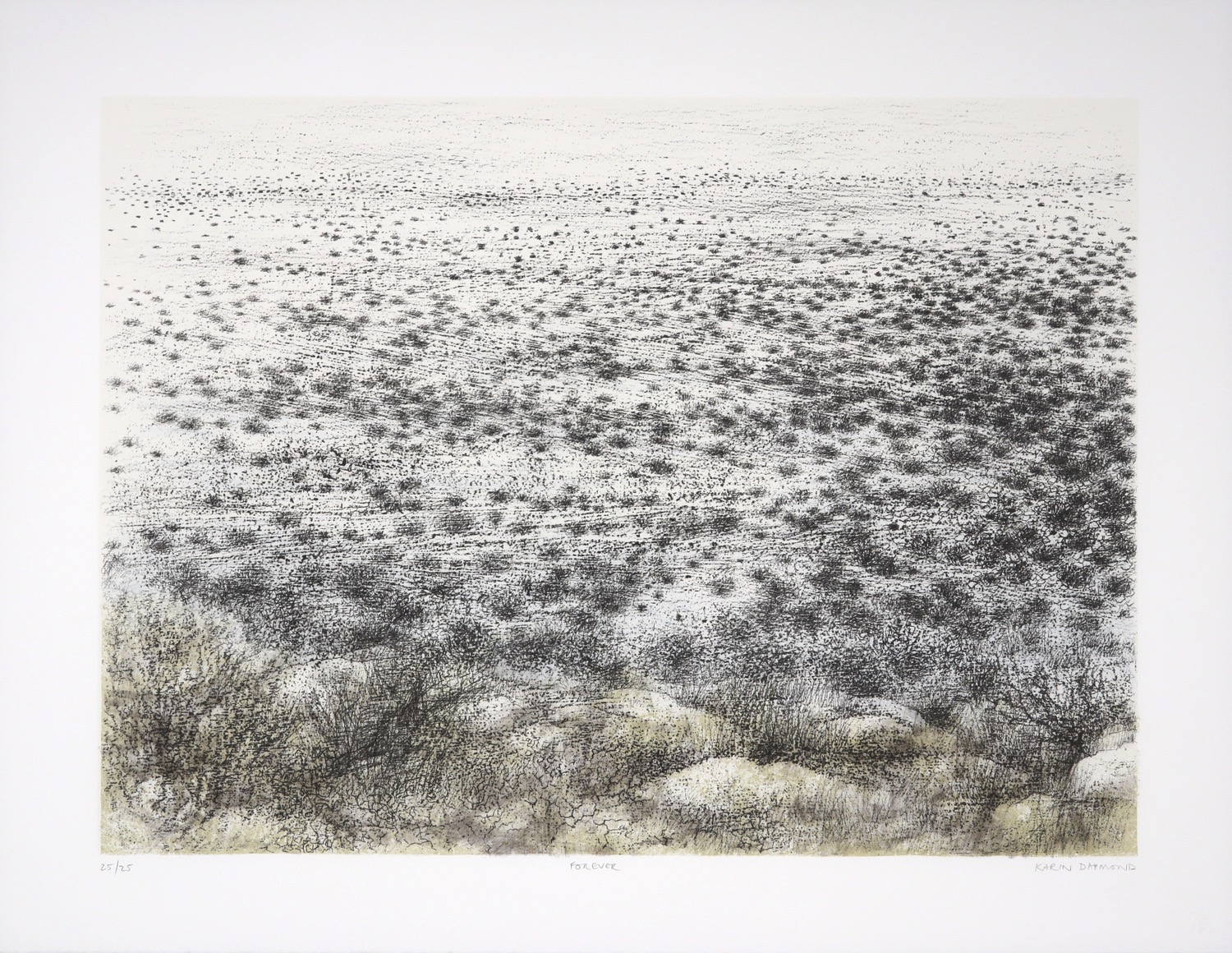
Title: Forever
Medium: Five colour lithograph
Paper size: 48 x 62 cm
Edition size: 25
Price: R 6 200 (excl.VAT)
Night Sighting
"We cannot see what isn’t illuminated, yet we all read different things into the darkness. It becomes the space where the unknown and unproven reside. Our response to what we can’t or don’t see can be most revealing, a vehicle for our dreams and our anxieties.
Living in Mpumalanga offers plenty of chances to travel on dirt roads at night. I feel soothed in remote places, where the night is darker. When I first experienced night game drives I found myself overlooking the lions and studying the way the spotlight burnt out the lit areas and increased the sense of mystery in the dark. Peering into the darkness, shining a spotlight on things connects with something primal in us.
The medium, starting with a dark plate and using a subtraction process to coax the light coming from the light-box, was eerily akin to the idea behind these images. The single light source in the images challenged my knowledge of how to represent landscape, encouraging me to find new ways of seeing and drawing." Karin Daymond, 2017
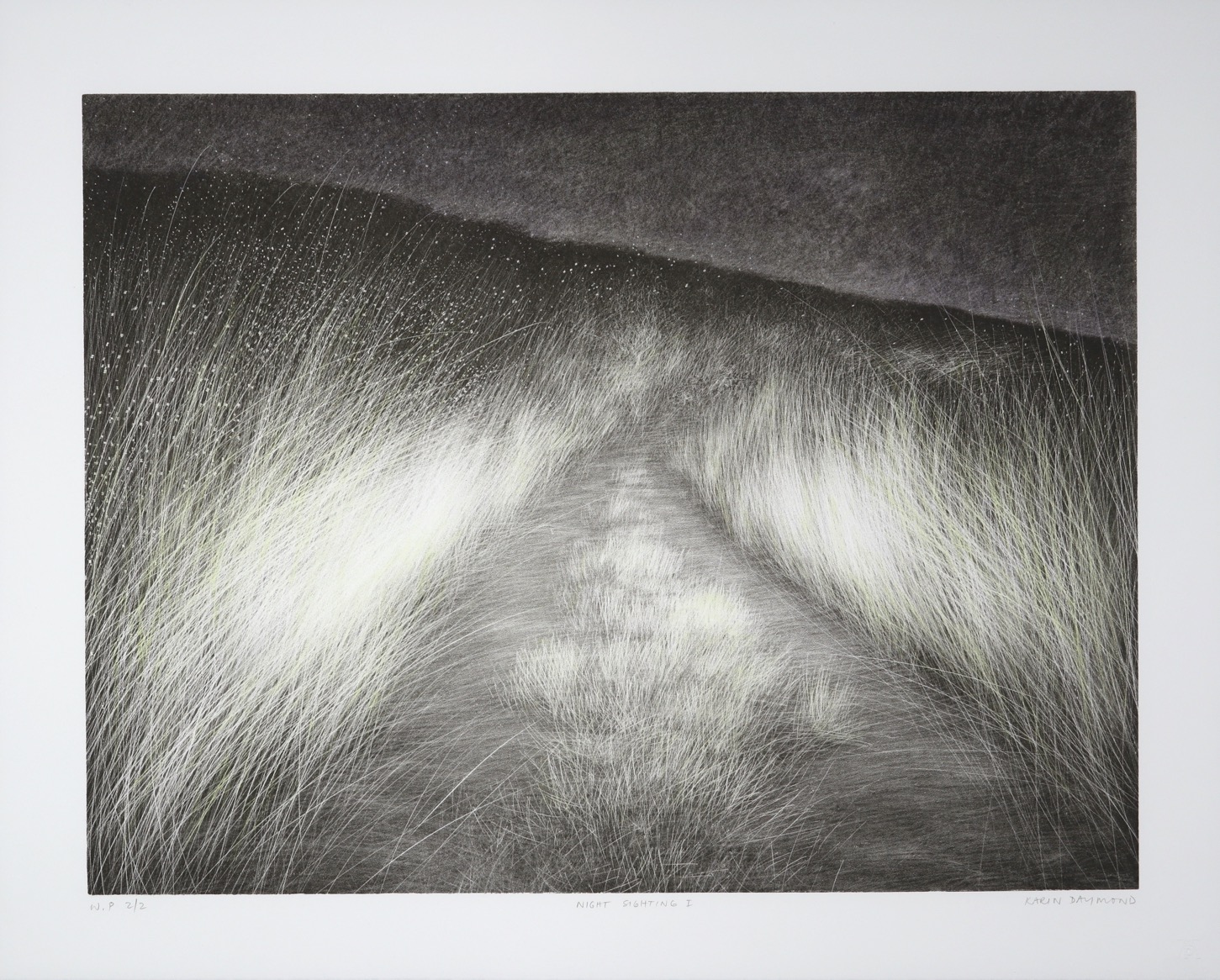
Title: Night Sighting I
Medium: Single colour lithograph with hand colouring
Paper size: 50 x 62.5 cm
Edition size: 15
SOLD OUT
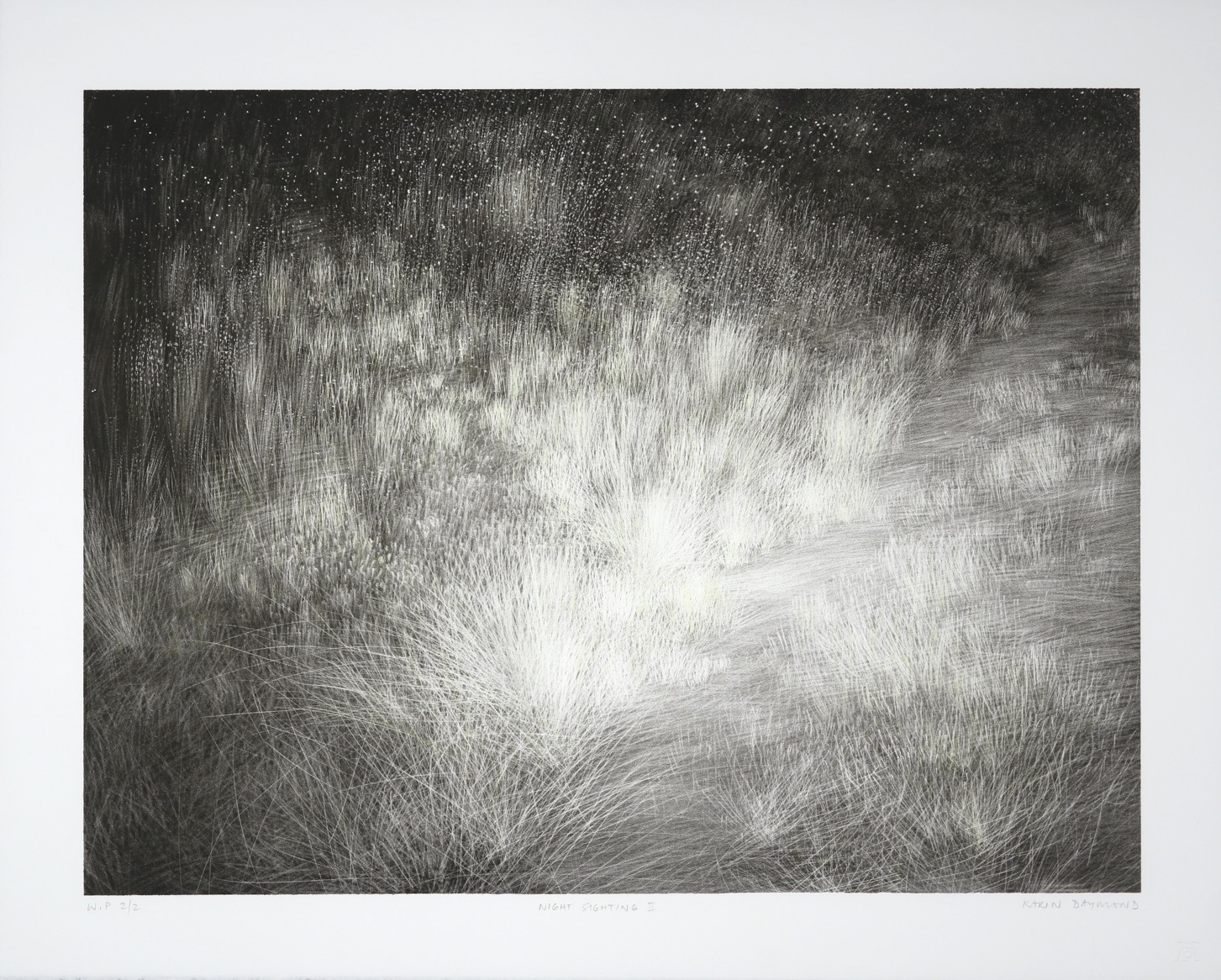
Title: Night Sighting II
Medium: Single colour lithograph with hand colouring
Paper size: 50 x 62.5 cm
Edition size: 15
Price: R 5 560 (excl.VAT)
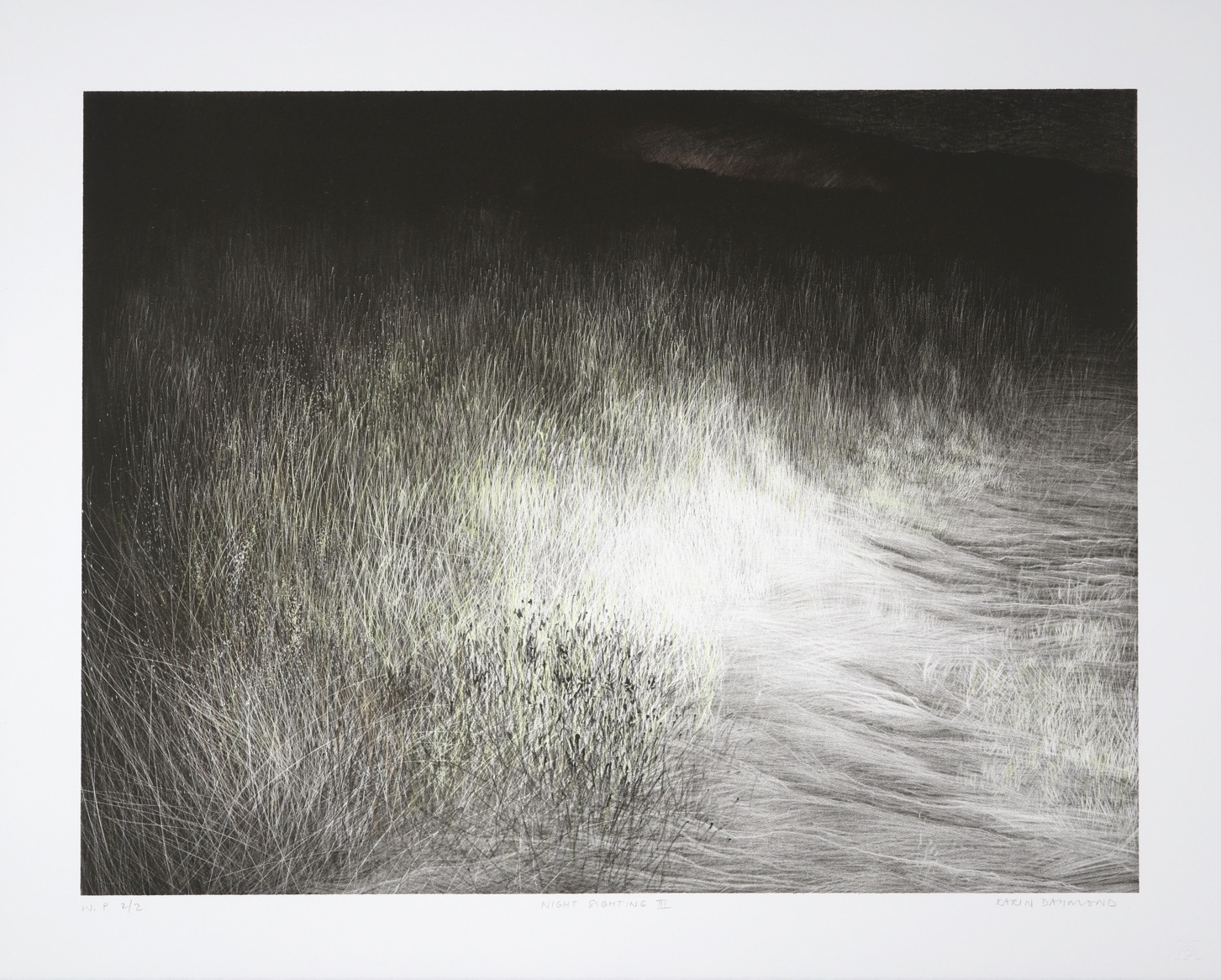
Title: Night Sighting III
Medium: Single colour lithograph with hand colouring
Paper size: 50 x 62.5 cm
Edition size: 15
Price: R 5 560 (excl.VAT)
Welcome Stranger
"Migration is pervasive. Out of necessity, it often happens quietly. In these works, the refugees leave silent traces of their journey through water, sand and mountains. I asked myself what I would take if I had to leave, and I saw that African women take fabric. I scattered my collection of African fabrics on the floor and painted them as if lost at sea. Every cloth is regional and has meaning. With it around her, a woman can seem regal and even happy. She might even feel these things. These flashes of colour push back despair; they conceal and express at the same time." Karin Daymond, 2015.
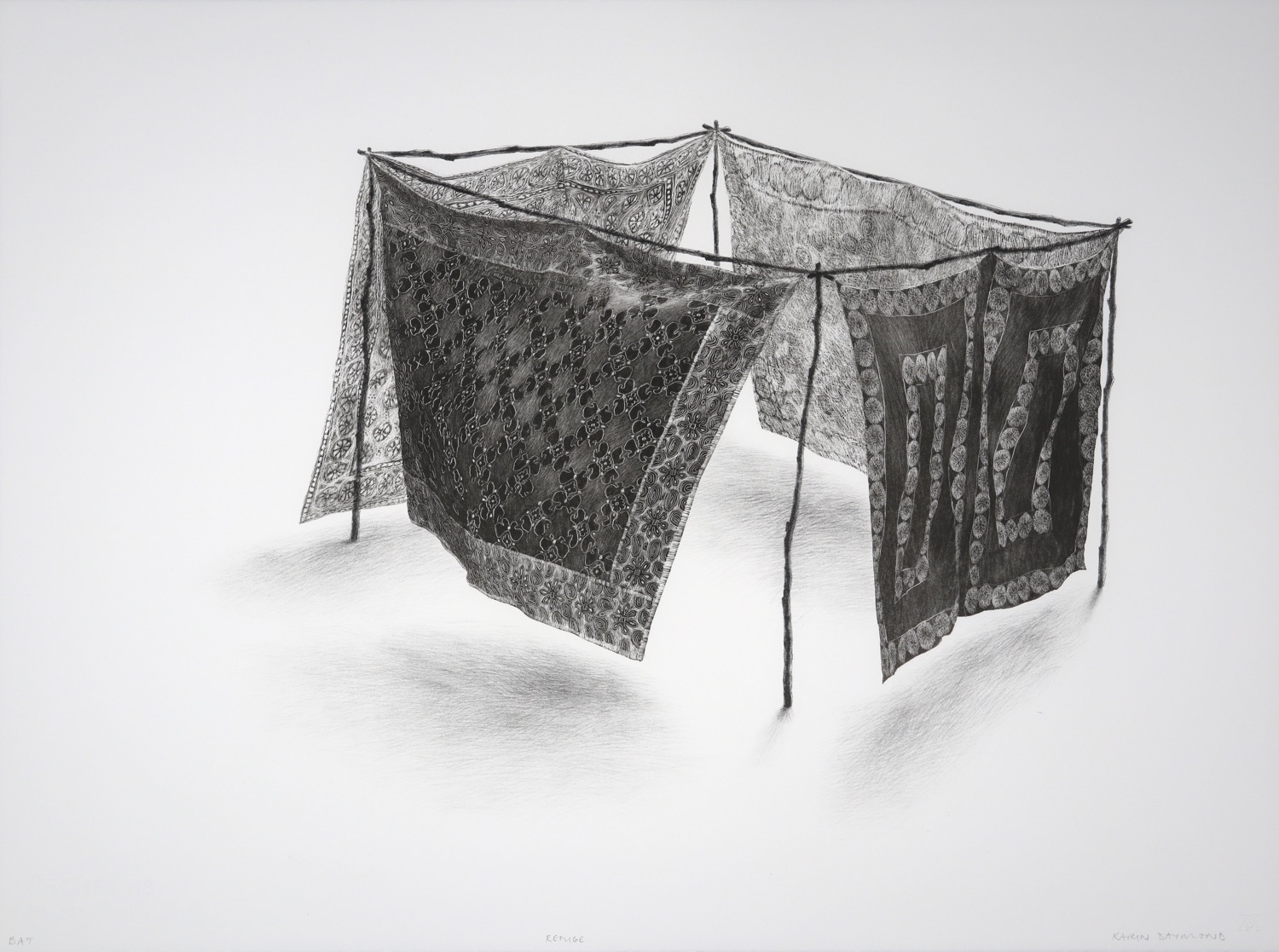
Title: Refuge
Medium: Two colour lithograph
Paper size: 57 x 76 cm
Edition size: 35
Price: R 4 750 (excl.VAT)
Remnants on the Land
Karin Daymond has a strong connection with the land and is attracted to the sense of aloneness that one has within a landscape even though the "ghosts" of previous land use emerge, whether these are old fields and orchards or the remains of earlier stone age and iron age settlements. They are like stretch marks on the land and put the individual and time into perspective.
"The unusual arrangement of rocks on the land is often the only visible sign that people were living there. In each of these prints, the arrangement of the rocks is different suggesting different ways in which the land was used. The environment is starting to reassert itself with grass obscuring the rock and rocks starting to topple from the pyramid.
In “Scatter” I wanted to create a secretive feeling as if the viewer has stumbled upon something that has been lying quietly in the grass for a long time. The hint of birds being flushed out of the grass and forming randomly scattered marks in the sky adds to this. The stone circle appears repeatedly in our South African landscape and appeals to me because it seems so fundamental in all forms of shelters and enclosures. In this image, the stones have shifted slightly, but one can still piece together the circle as it was. There is light in the center of the circle because this was a meaningful space to which people were drawn. Stormy weather is whipping up the grass and bringing dark clouds, but the stones are constant.
“Past Our Peak” is a pyramid of rocks that refers to the cairns that are all over South Africa. Most passers-by have added to the pile, and this particular pile has grown so top heavy that it is now beginning to crumble. This is an analogy to our modern society that is so top heavy and has so many imbalances, that it is threatening to become unsustainable. The fires are necessary and suggest change and the end of a process.
“The Brave Tree” stands alone in the stormy weather. The arrangement of the stones is random and confusing. I wanted to get the feeling that people have moved through this environment, leaving crisscrossed paths. This environment is in a process of transition, the light and shadows moving across the land, and the counterfoil for that state of change is the single, upright tree." Karin Daymond, 2010
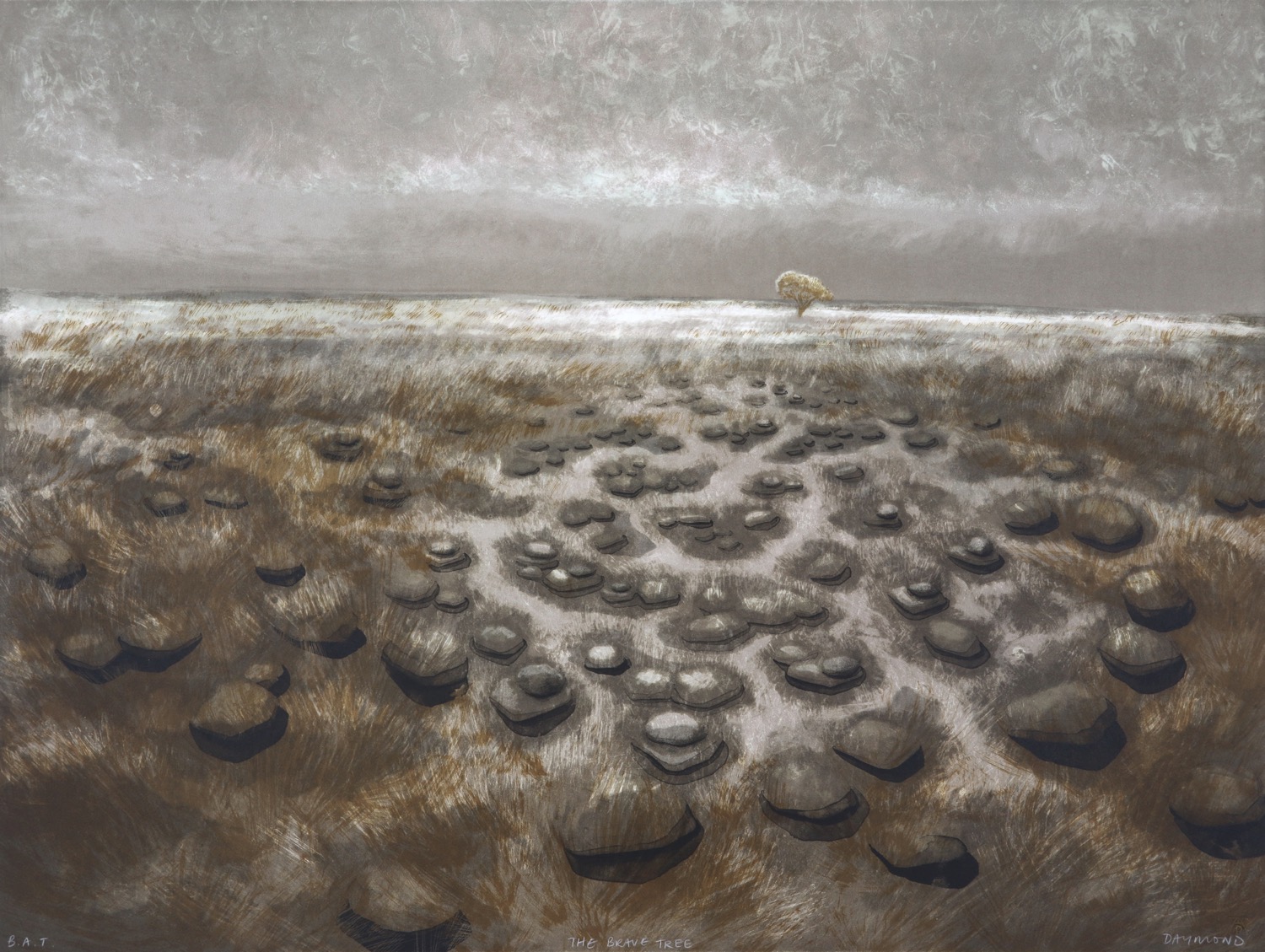
Title: The Brave Tree
Medium: Nine colour lithograph
Paper size: 57 x 76.5 cm
Image size: 57 x 76.5 cm
Edition size: 35
Price: R 6 000 (excl.VAT)
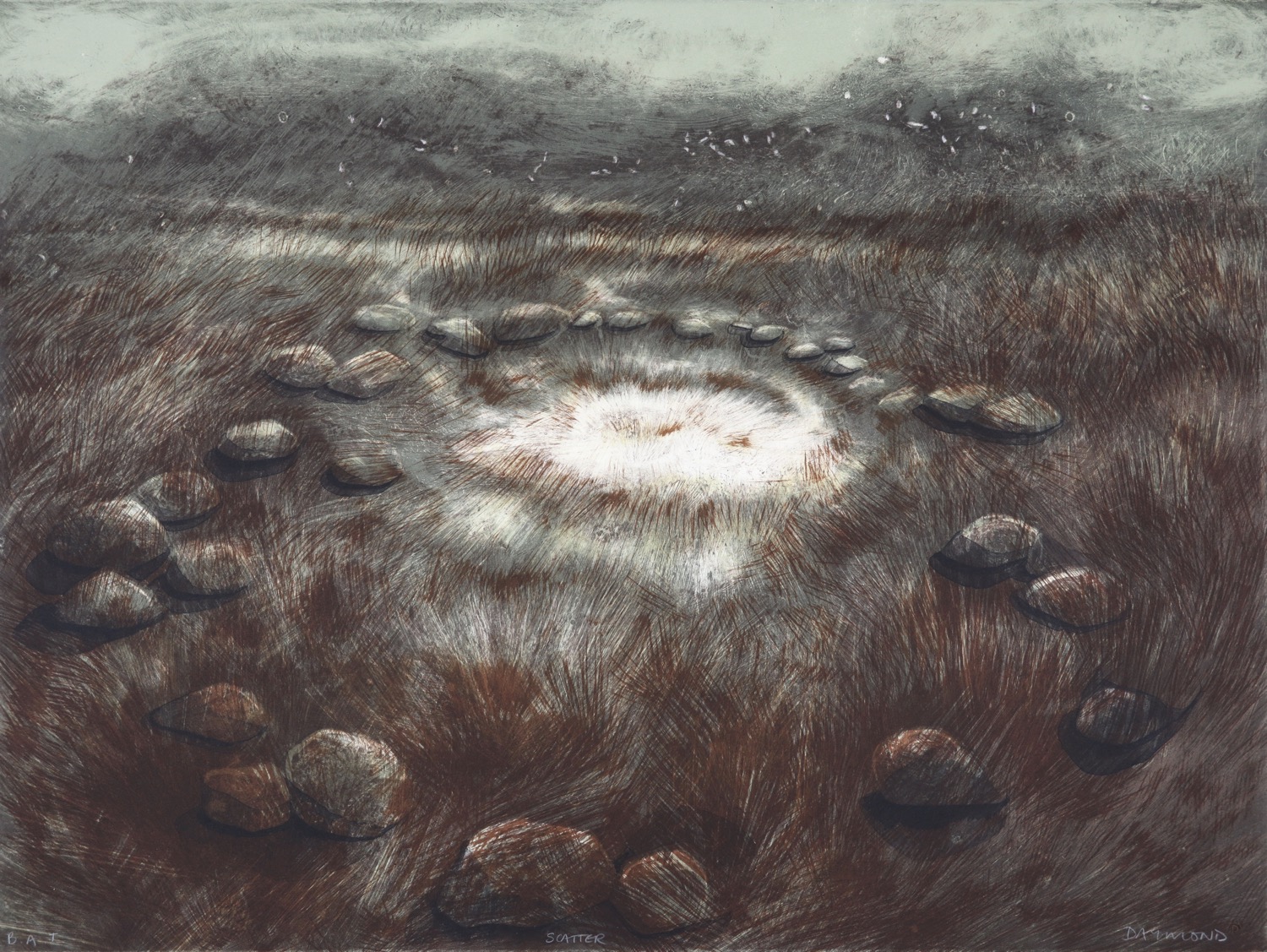
Title: Scatter
Medium: Five colour lithograph
Paper size: 57 x 76.5 cm
Image size: 57 x 76.5 cm
Edition size: 35
Price: R 6 000 (excl.VAT)
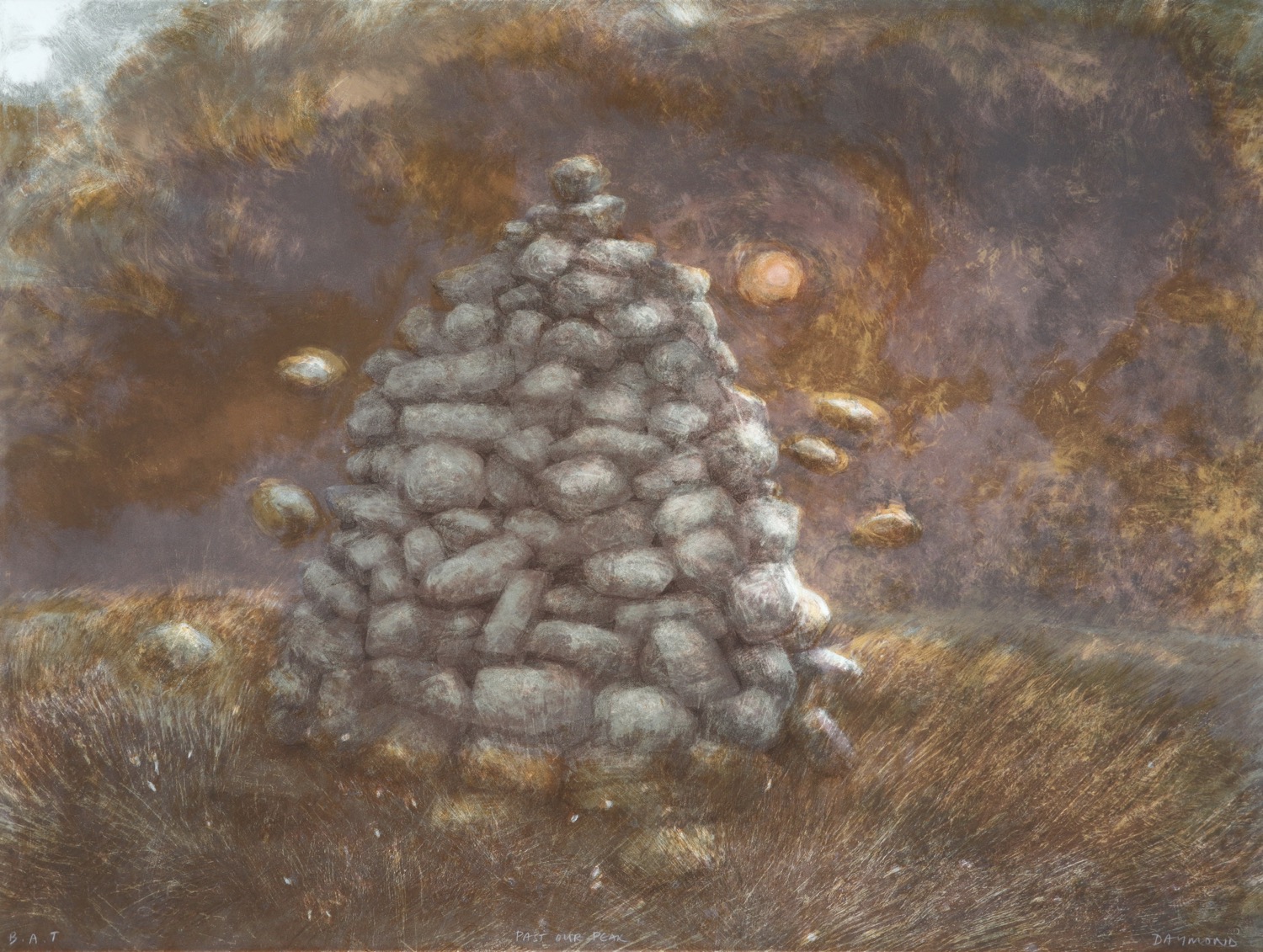
Title: Past Our Peak
Medium: Seven colour lithograph
Paper size: 57 x 76.5 cm
Image size: 57 x 76.5 cm
Edition size: 35
Price: R 6 000 (excl.VAT)
Karin Daymond's Website
Follow Karin Daymond on Facebook
Follow Karin Daymond on Instagram
You might like these
Strijdom van der Merwe
Lithographs by Strijdom van der Merwe, an artist who primarily works as a land artist. His prints all refer to land art pieces that he has worked on across the globe.
Sue Martin Monotype Prints
Monotype prints by Sue Martin landscapes of hope and light
Karin Daymond Print Archive
Archive of lithographs and monoprints done by Karin Daymond at The Artists' Press.