Tamar Mason
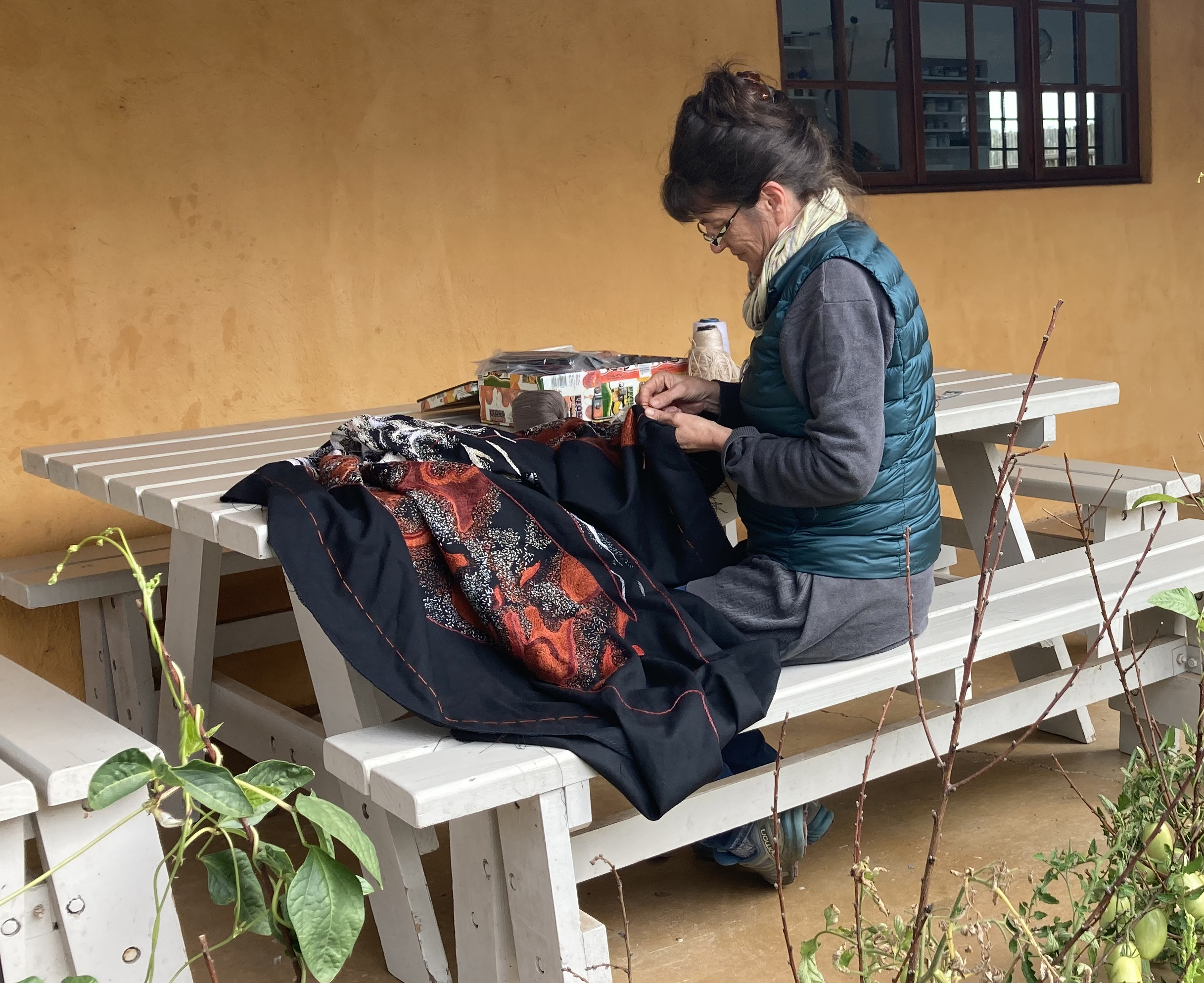
Tamar Mason (b. 1966 Johannesburg) lives and works in Mbombela, South Africa. She is an artist and co-director of the Artists’ Press.
Mason has worked extensively with rural women’s projects focused on teaching embroidery, jewellery making and business skills. After fifteen years of facilitating community projects in South Africa, Botswana and Namibia, Mason now focuses on her own art-making. She has worked across a variety of media: textiles, ceramics, printmaking, sculpture and architectural installations.
Mason’s primary schooling was at The Waldorf School in Johannesburg where she was taught woodwork, sewing and art in abundance. In grade two, her class planted a vegetable patch, made butter by hand and baked bread in a wood oven. This set the course for a life of making things with her hands.
Mason matriculated from Woodmead High School and dropped out of Wits University. She later studied art and jewellery design for a fine arts diploma from Scuola Lorenzo de' Medici, Florence. Her academic career was completed in Botswana’s Kalahari Desert, where she wrote her final BA exams through Unisa while working with the Kuru Art Project.
Large works on fabric are the focus of Mason’s work. With hand-embroidered compositions on black suiting material, Mason integrates personal narratives into wider themes of environmental crisis, motherhood and history. Her artwork reflects the complexities of everyday life and landscapes in rural Southern Africa.
The birth of Mason’s children, Simon and Maru, led her and her partner Mark Attwood to leave Johannesburg in favour of a beautiful valley outside of White River in Mpumalanga. Here they set up The Artists’ Press in a purpose-built studio and set about planting a food forest. As co-director of the studio, Mason focuses on marketing and curation.
In 2024, Mason exhibited Seeing Shadows, her first solo exhibition with Pippy Houldsworth Gallery, London.
Other collections and exhibitions include Now, Museu Inima De Paula, Belo Horizonte, Brazil; An Odyssey in Print: Adventures in the Smithsonian Libraries, National Museum of American History, Washington, DC; Goodman Gallery, Johannesburg; Rijswijk Textile Biennial, Museum Rijswijk, The Netherlands; Museum Africa, Johannesburg, and Pretoria Art Gallery and Museum, Pretoria. Collections include The Smithsonian, Washington, D.C.; School of the Art Institute of Chicago, IL; Institute of Contemporary Art, Miami, FL; Nelson Mandela Metropolitan Art Museum, Port Elizabeth; Wits Art Museum, University of the Witwatersrand, Johannesburg; University of Wisconsin- Madison, Madison, WI; and Mpumalanga Legislature Collection, Mbombela.
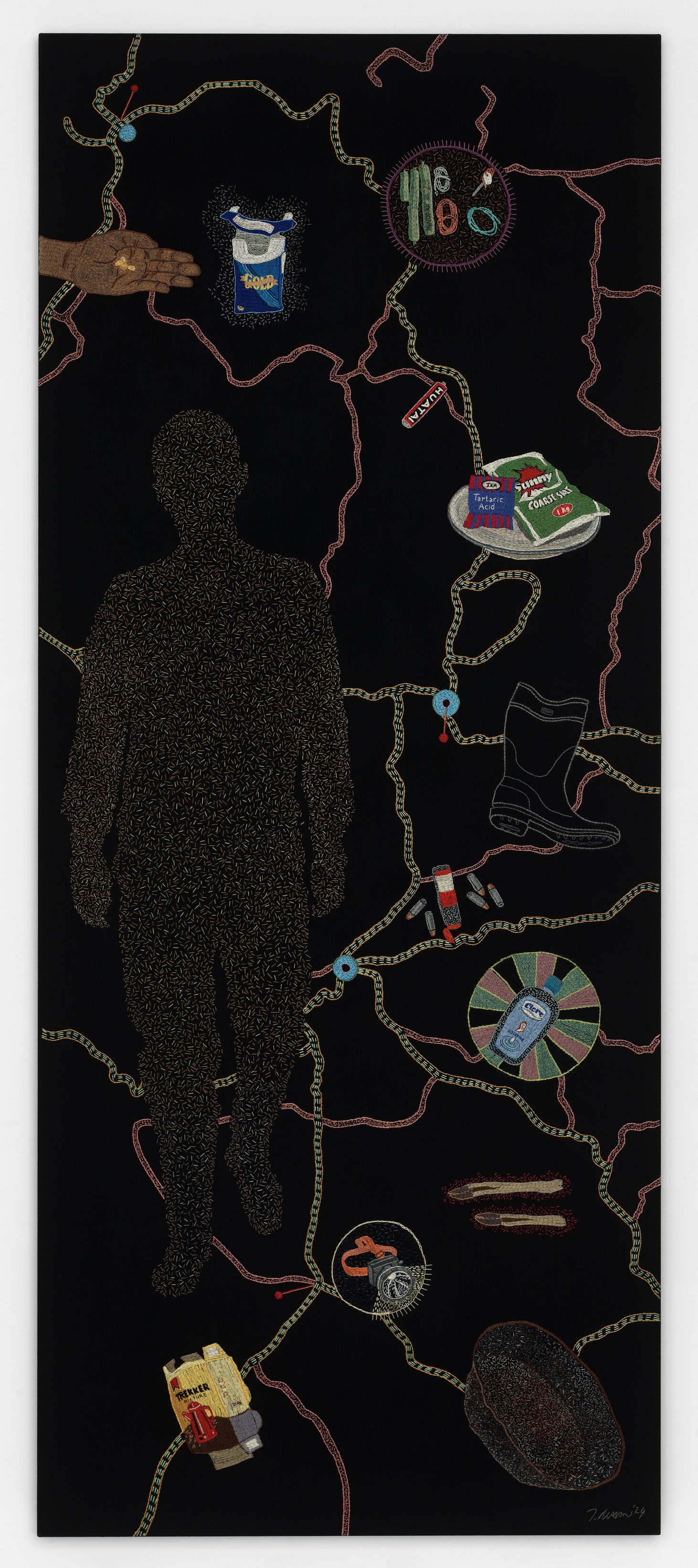
Title: Traces
Medium: Embroidery and beadwork on fabric
Size: 215 x 88 cm
Available through the Pippy Houldsworth Gallery (London)
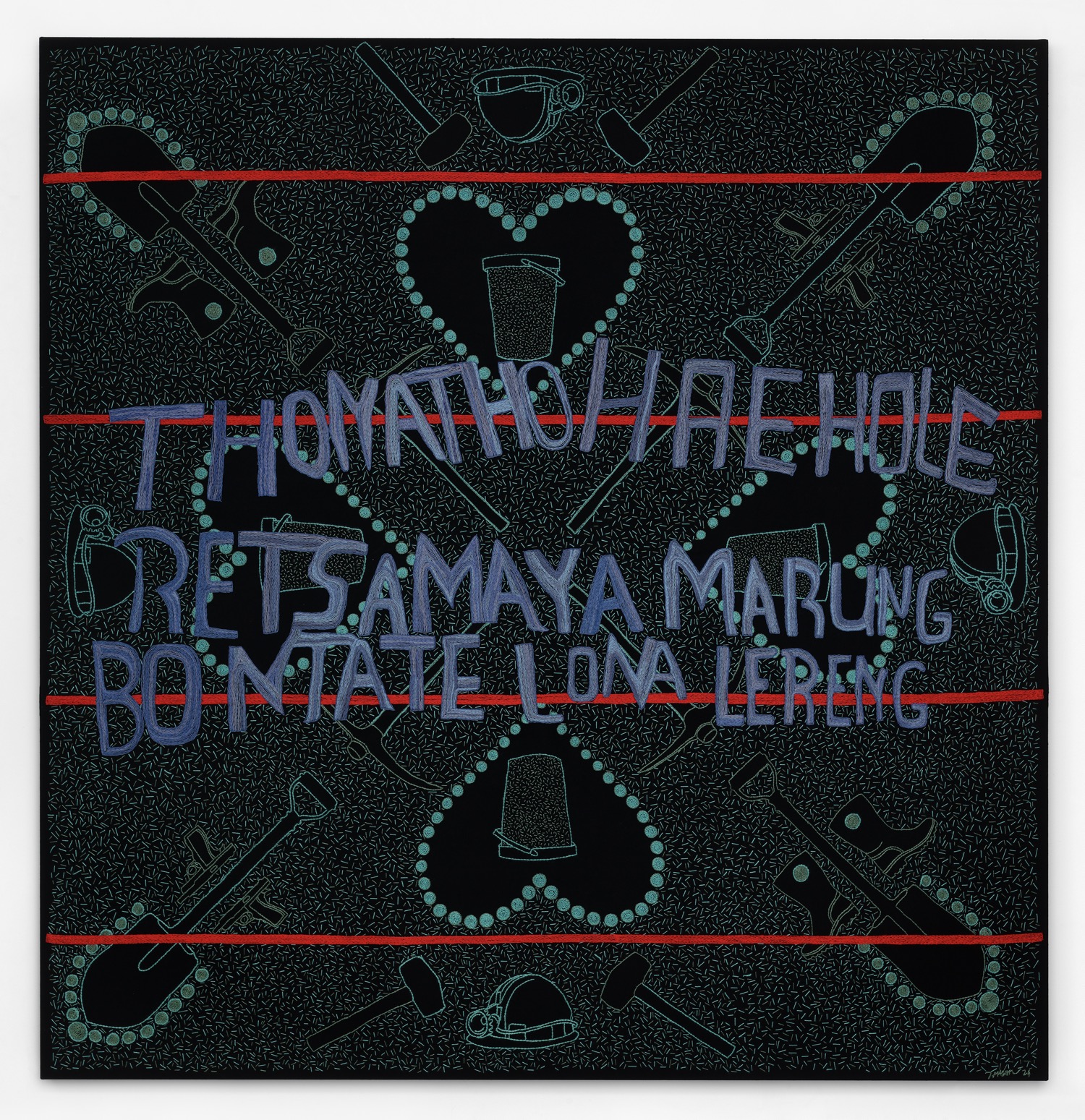
Title: Zama Zama Blanket
Medium: Embroidery on fabric
Size: 160 x 165 cm
Available through the Pippy Houldsworth Gallery (London)
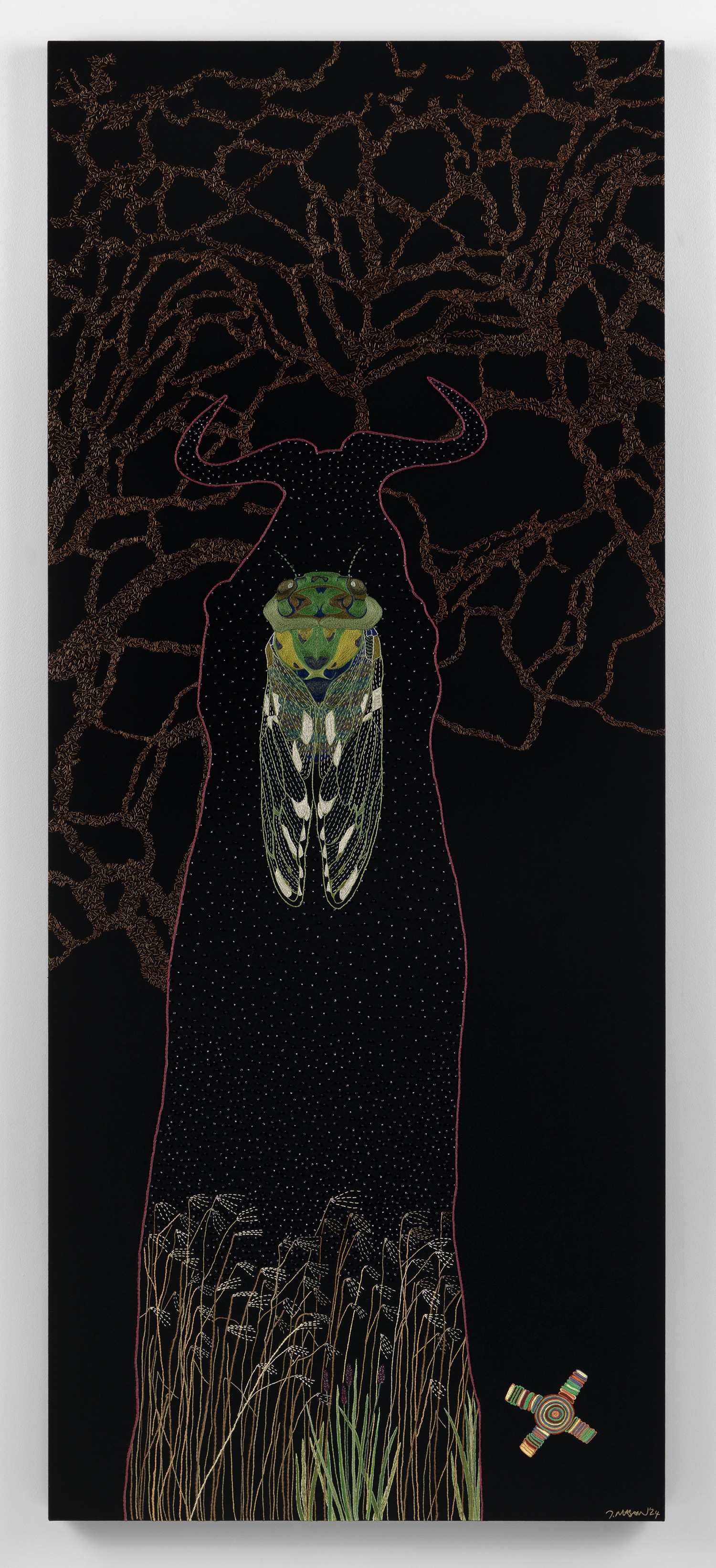
Title: Make
Medium: Embroidery and beadwork on fabric
Size: 213 x 88.5 cm
Available through the Pippy Houldsworth Gallery (London)
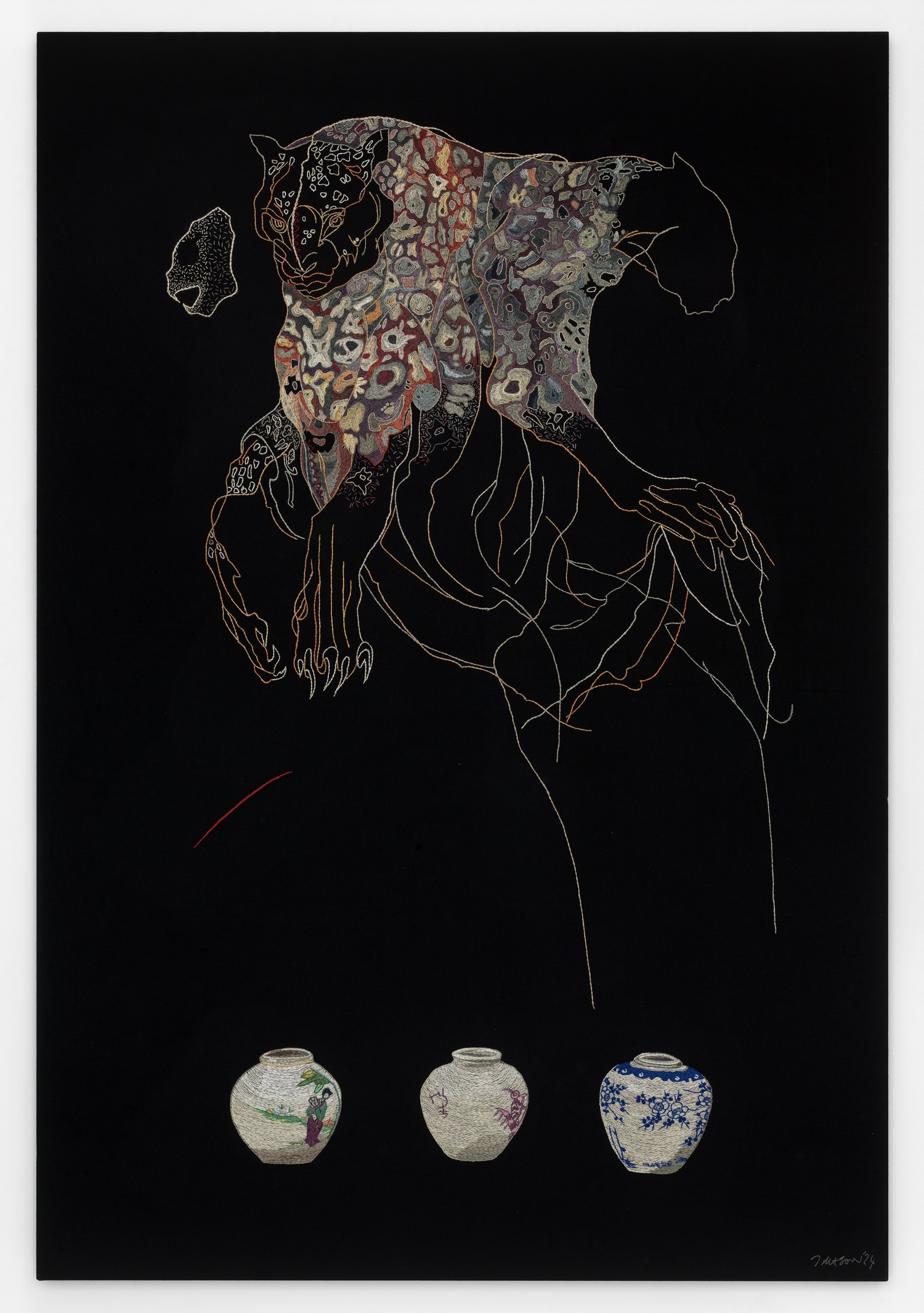
Title: Leopard's Cloak
Medium: Embroidery on fabric
Size: 155.5 x 106.5 cm
Available through the Pippy Houldsworth Gallery (London)
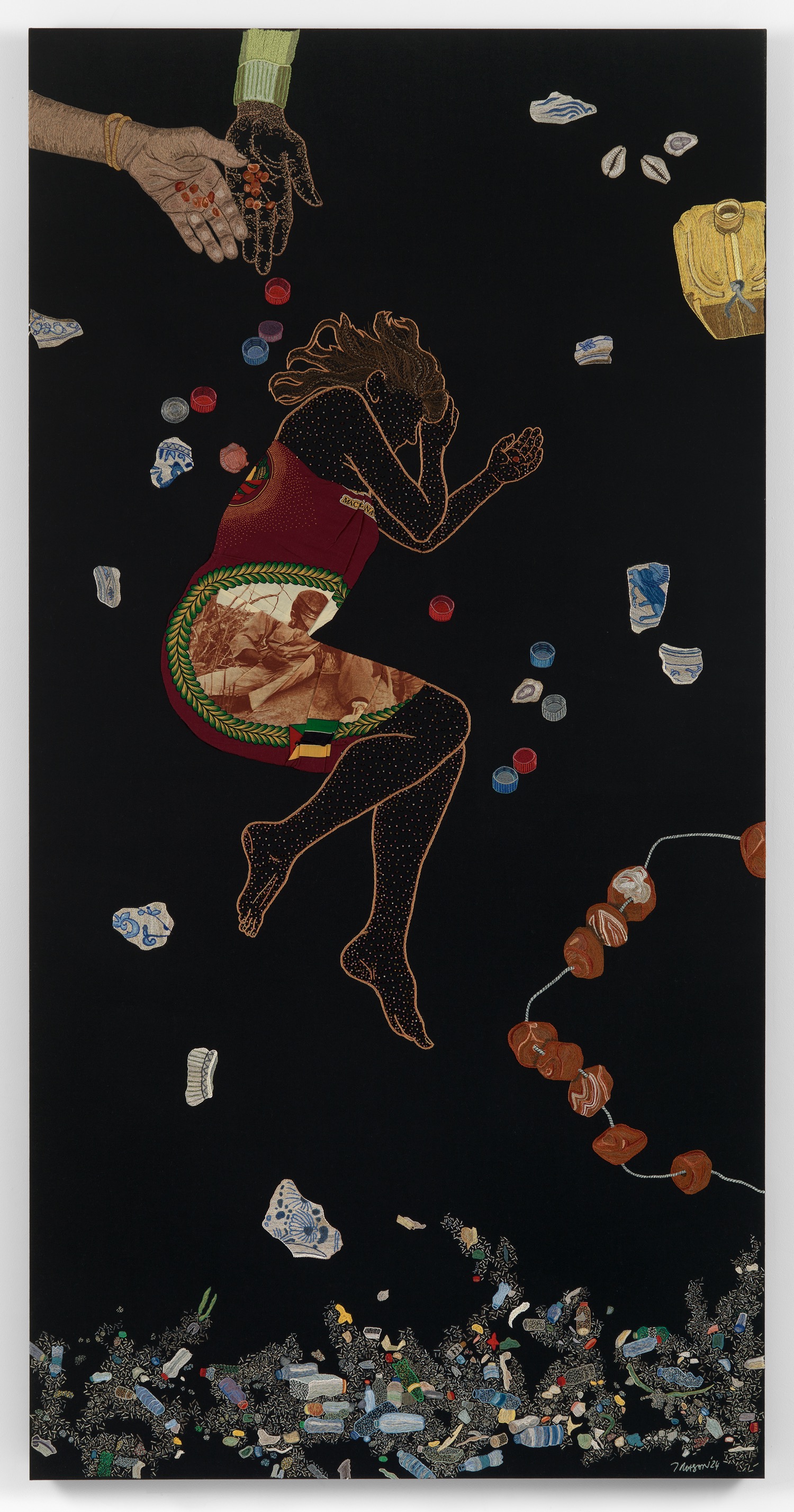
Title: Tides
Medium: Embroidery, beadwork and applique on fabric
Size: 257 x 128 cm
Available through the Pippy Houldsworth Gallery (London)
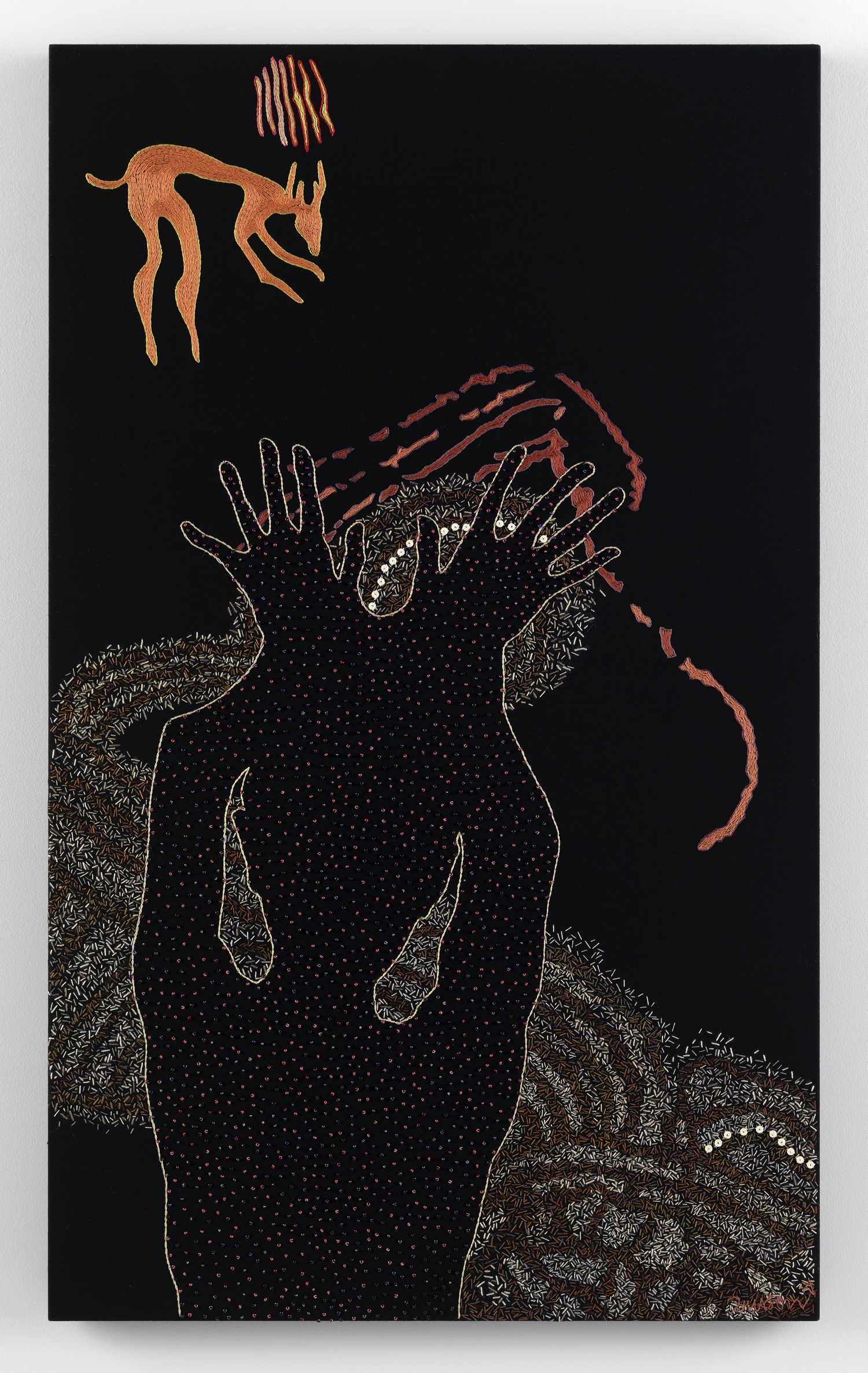
Title: Transform
Medium: Embroidery on fabric
Size: 101 x 61 cm
Available through the Pippy Houldsworth Gallery (London)
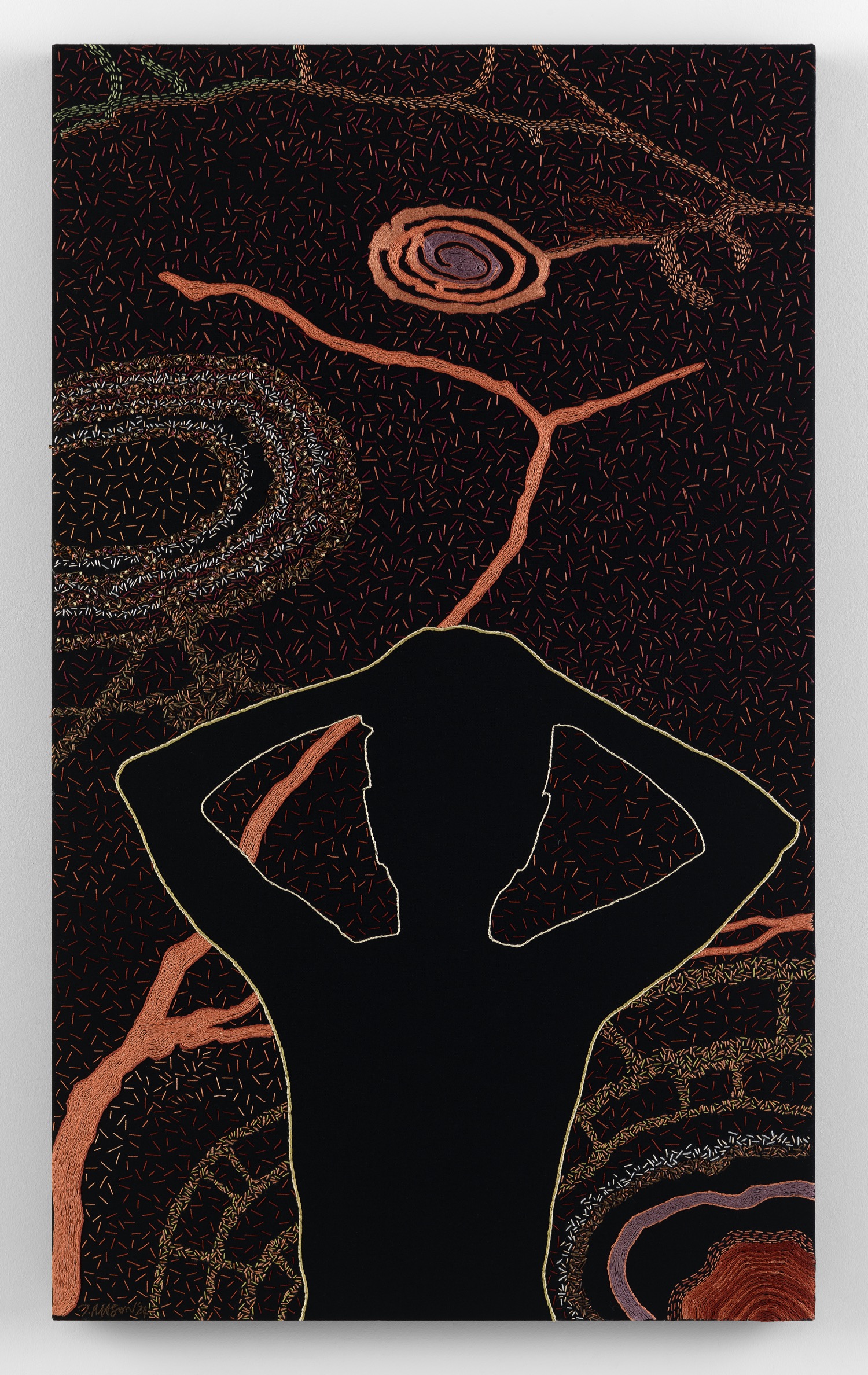
Title: i Shadow
Medium: Embroidery and beadwork on fabric
Size: 100.5 x 60 cm
Available through the Pippy Houldsworth Gallery (London)
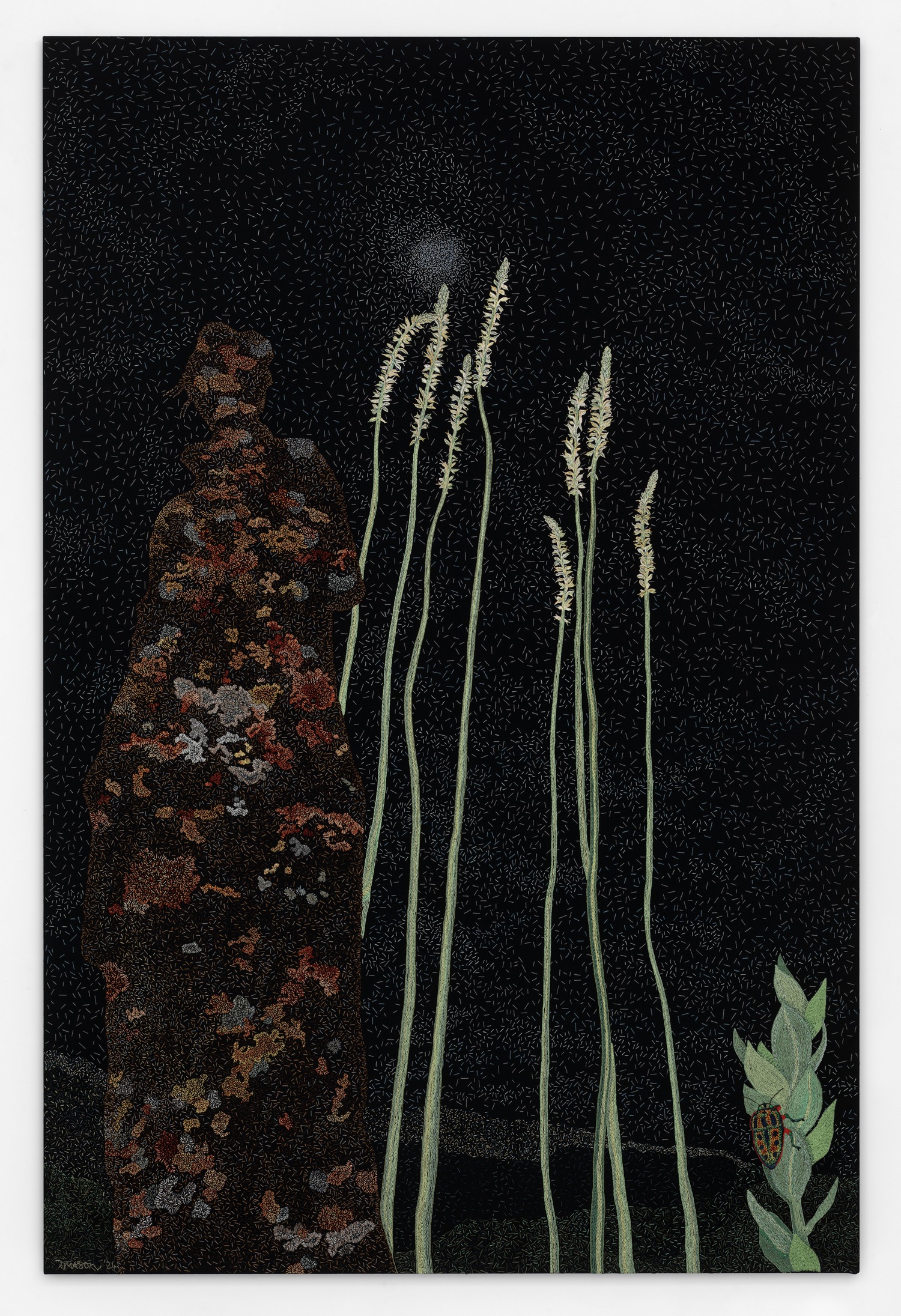
Title: Valley
Medium: Embroidery on fabric
Size: 190 x 123 cm
Private collection South Africa
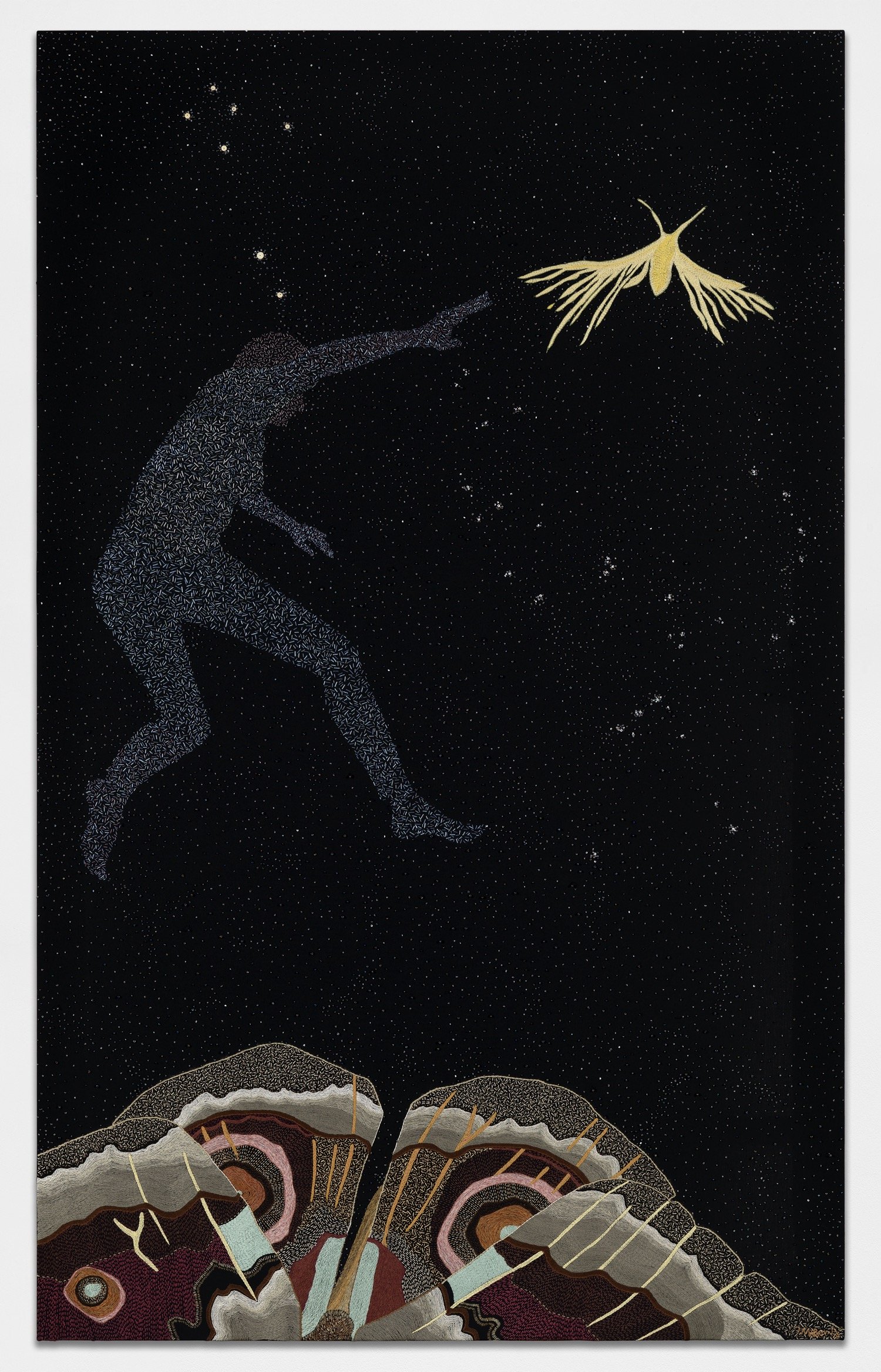
Title: Navigation
Medium: Embroidery and beadwork on fabric
Size: 208 x 128 cm
Private collection Italy
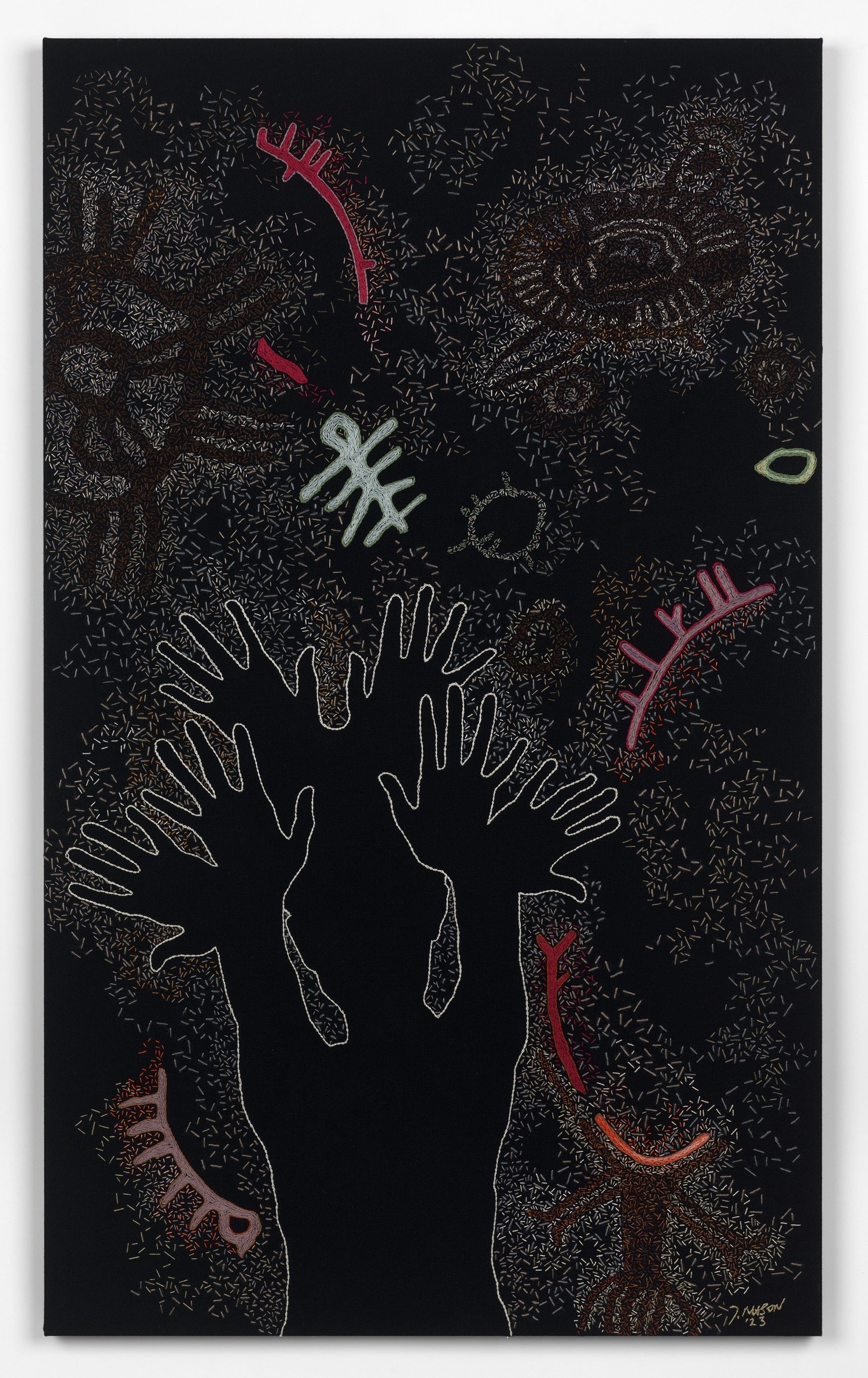
Title: Shadow Hands
Medium: Embroidery on fabric
Size: 100 x 60 cm
Available through the Pippy Houldsworth Gallery (London)
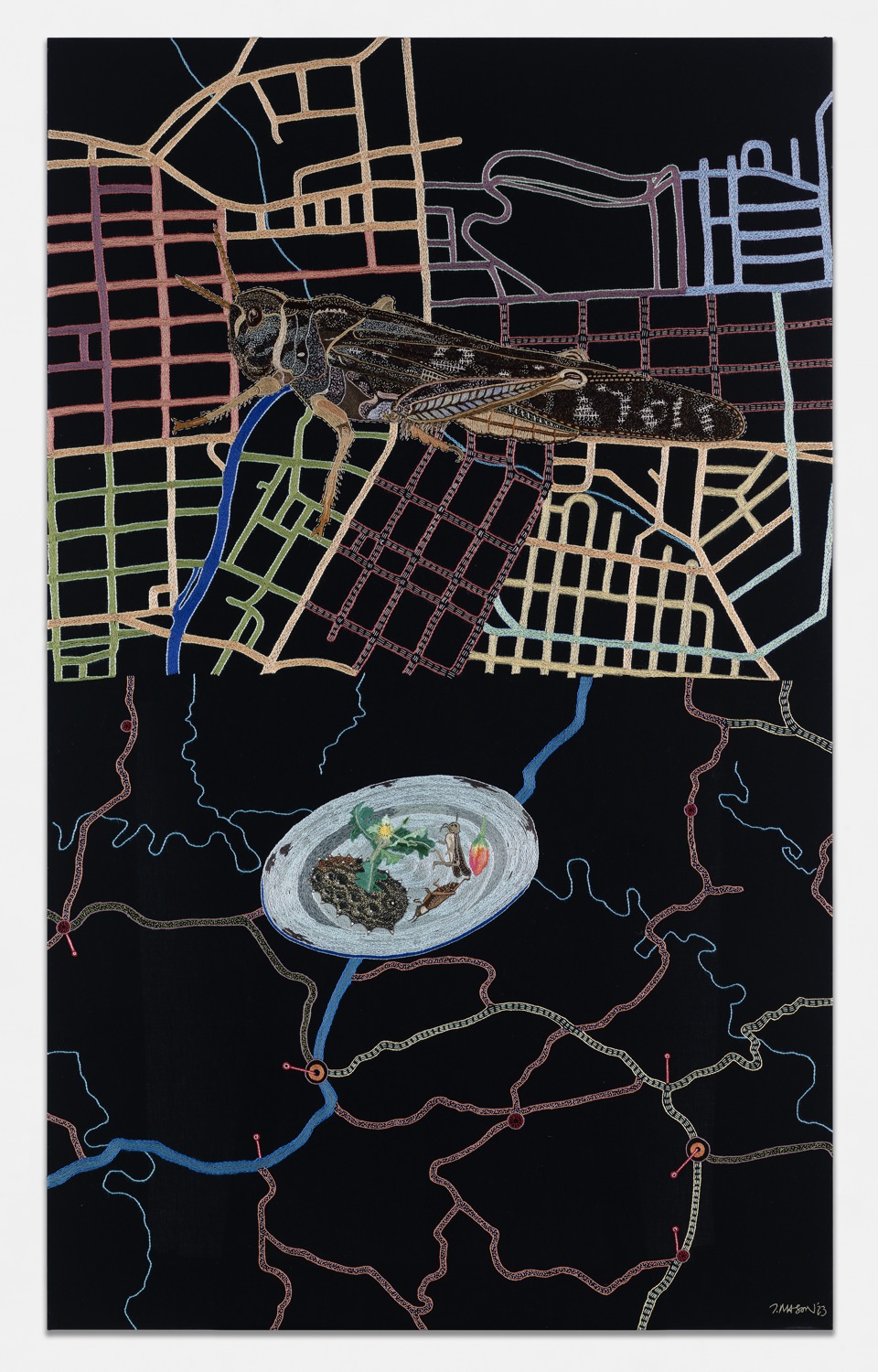
Title: Locusts
Medium: Embroidery on fabric
Size: 185 x 105 cm
Available through the Pippy Houldsworth Gallery (London)
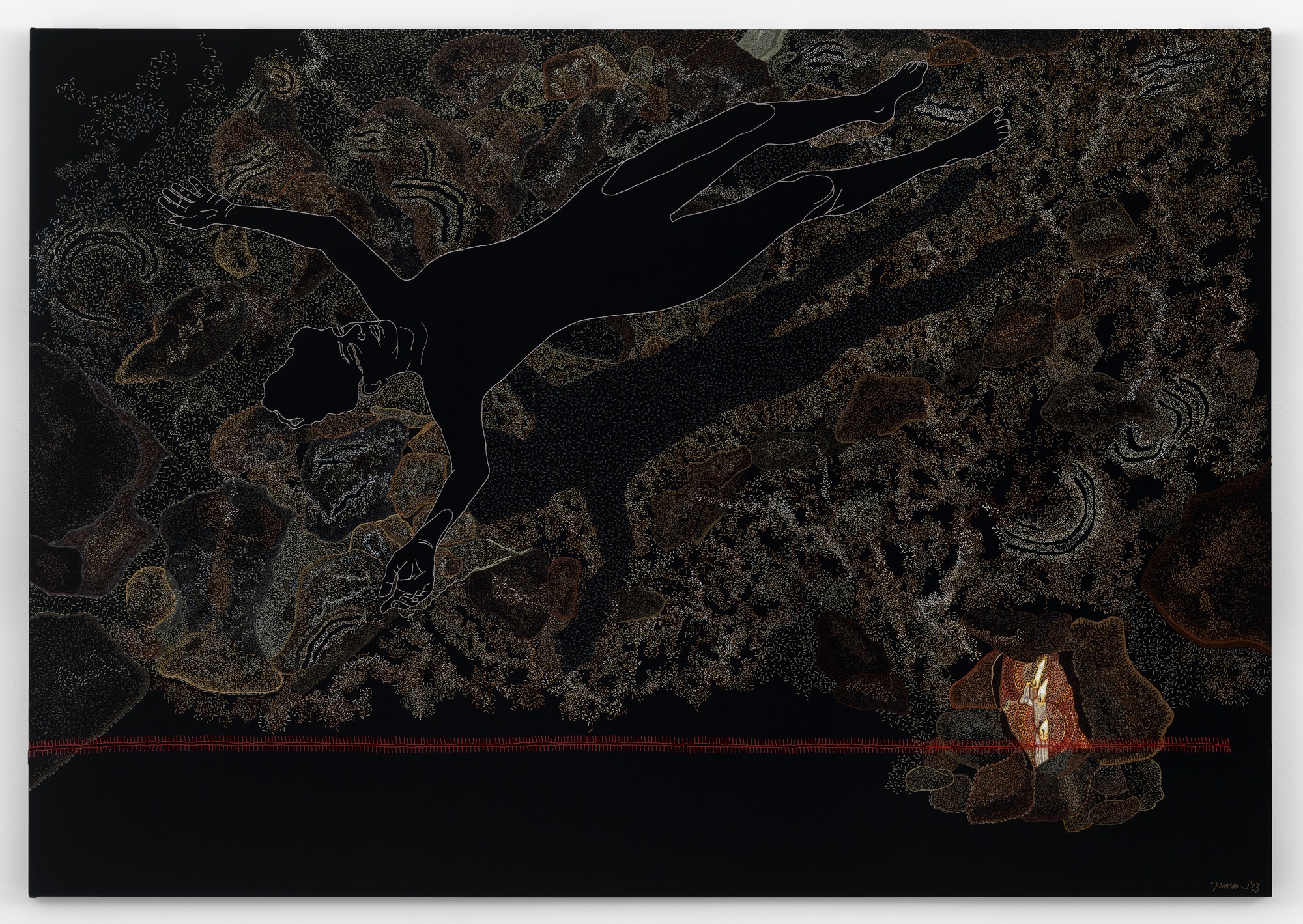
Title: Sefogwane/Treur
Medium: Embroidery and beadwork on fabric
Size: 160 x 234 cm
Private collection USA
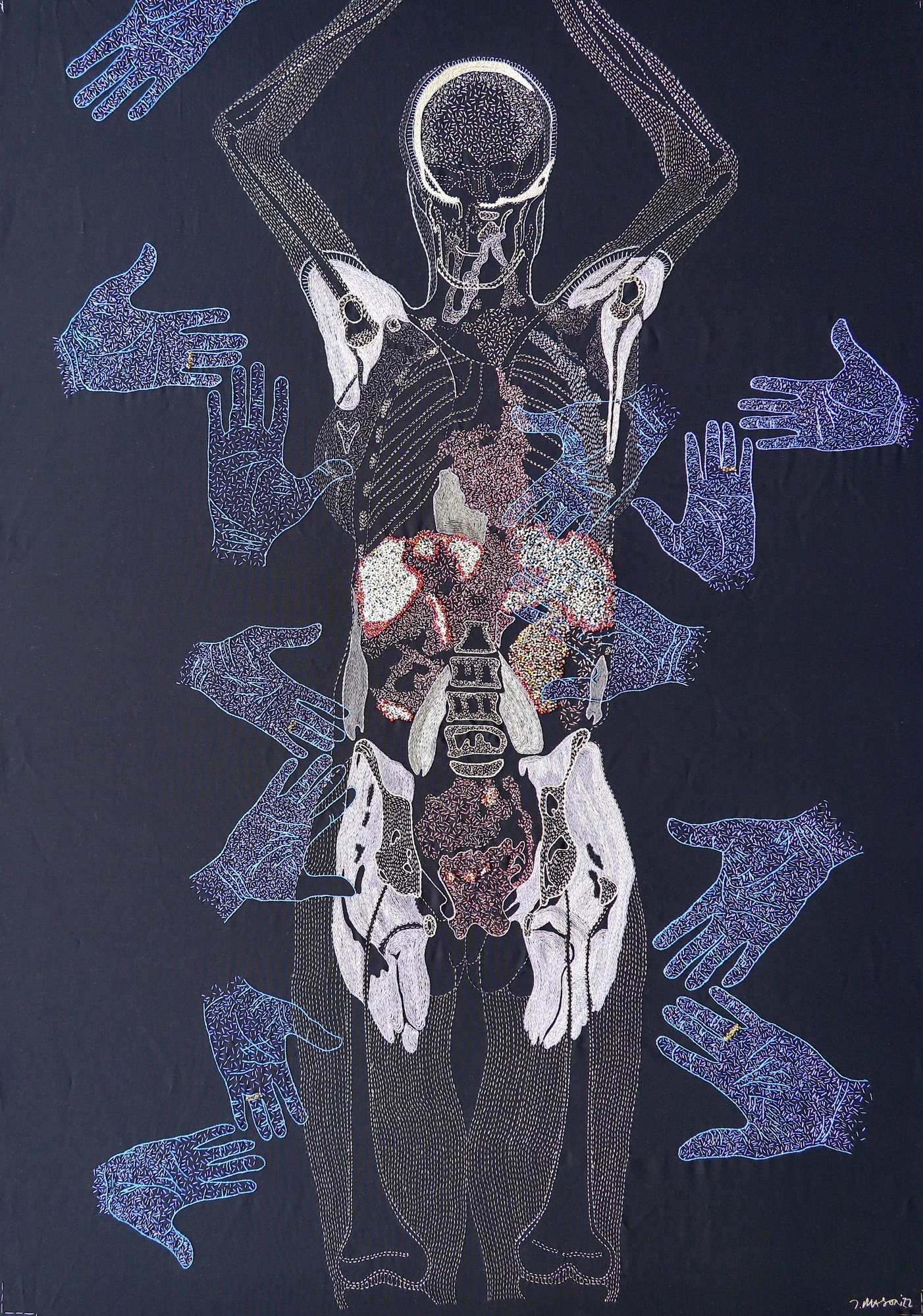
Title: Gauteng
Medium: Embroidery and beadwork on fabric
Size: 169 x 118 cm
Museu Inimá de Paula collection, Belo Horizonte, Brazil
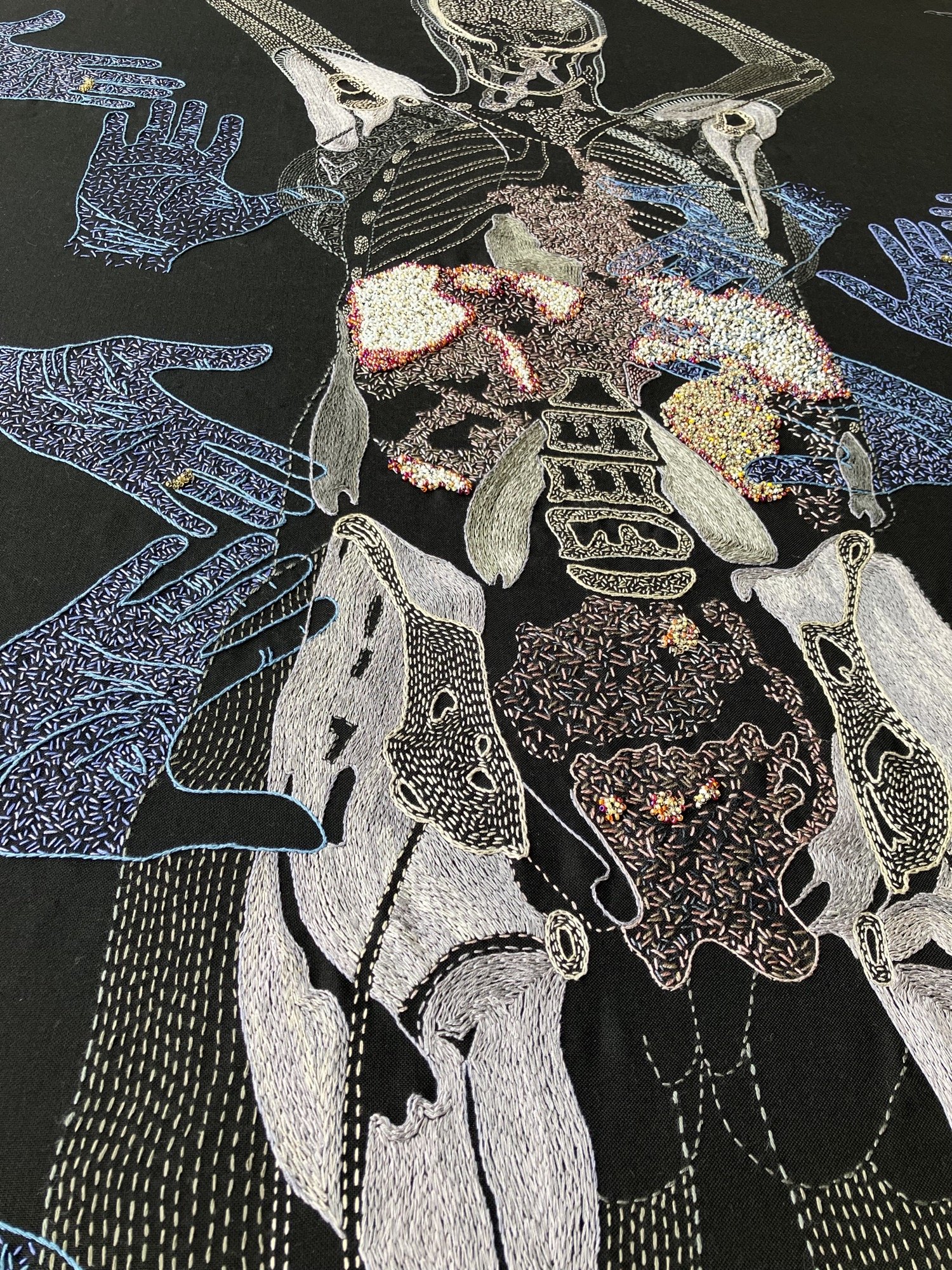
Title: Gauteng (detail)
Medium: Embroidery and beadwork on fabric
Size: 169 x 118 cm
Museu Inimá de Paula collection, Belo Horizonte, Brazil
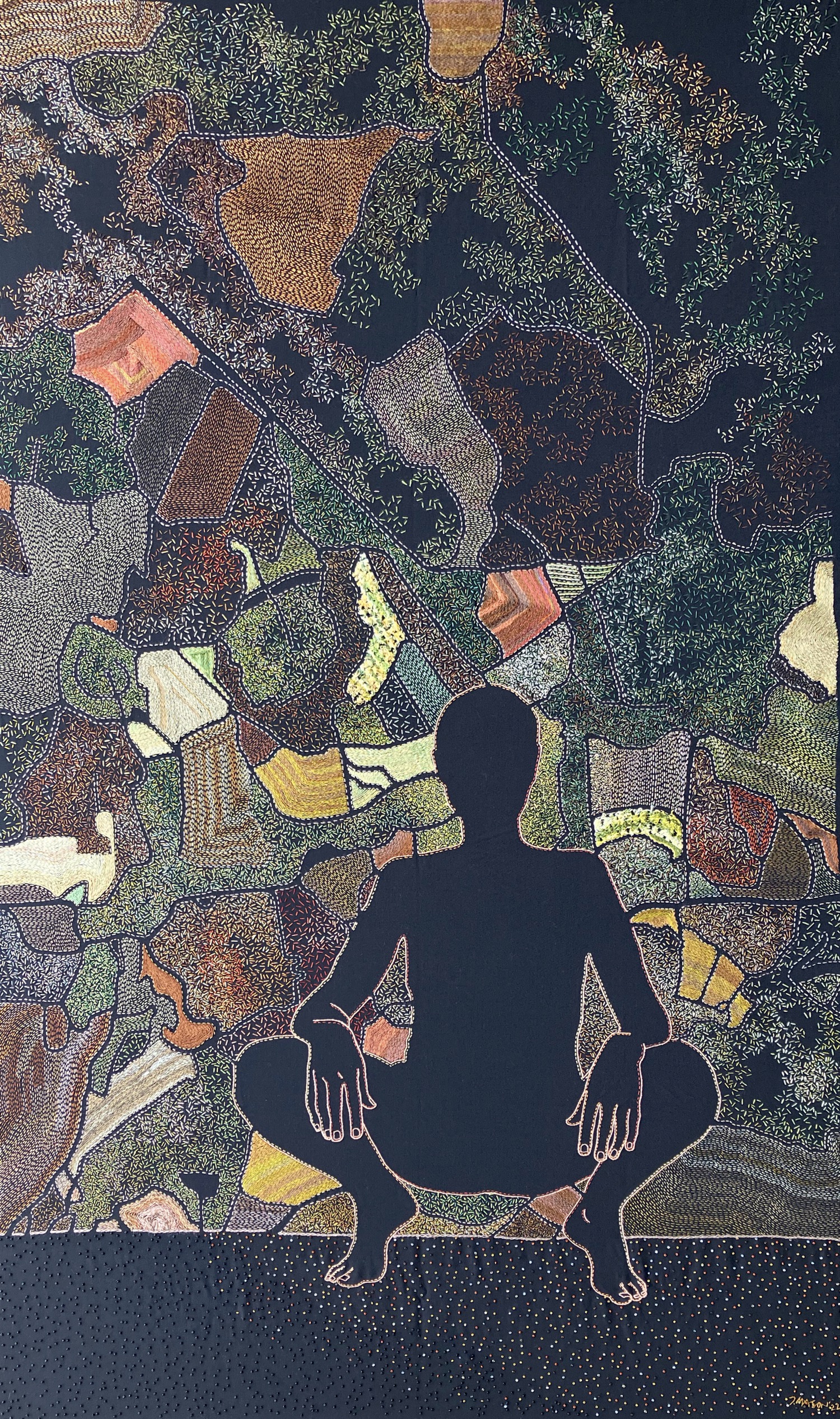
Title: Brondal
Medium: Embroidery and beadwork on fabric
Size: 198 x 118 cm
Museu Inimá de Paula collection, Belo Horizonte, Brazil
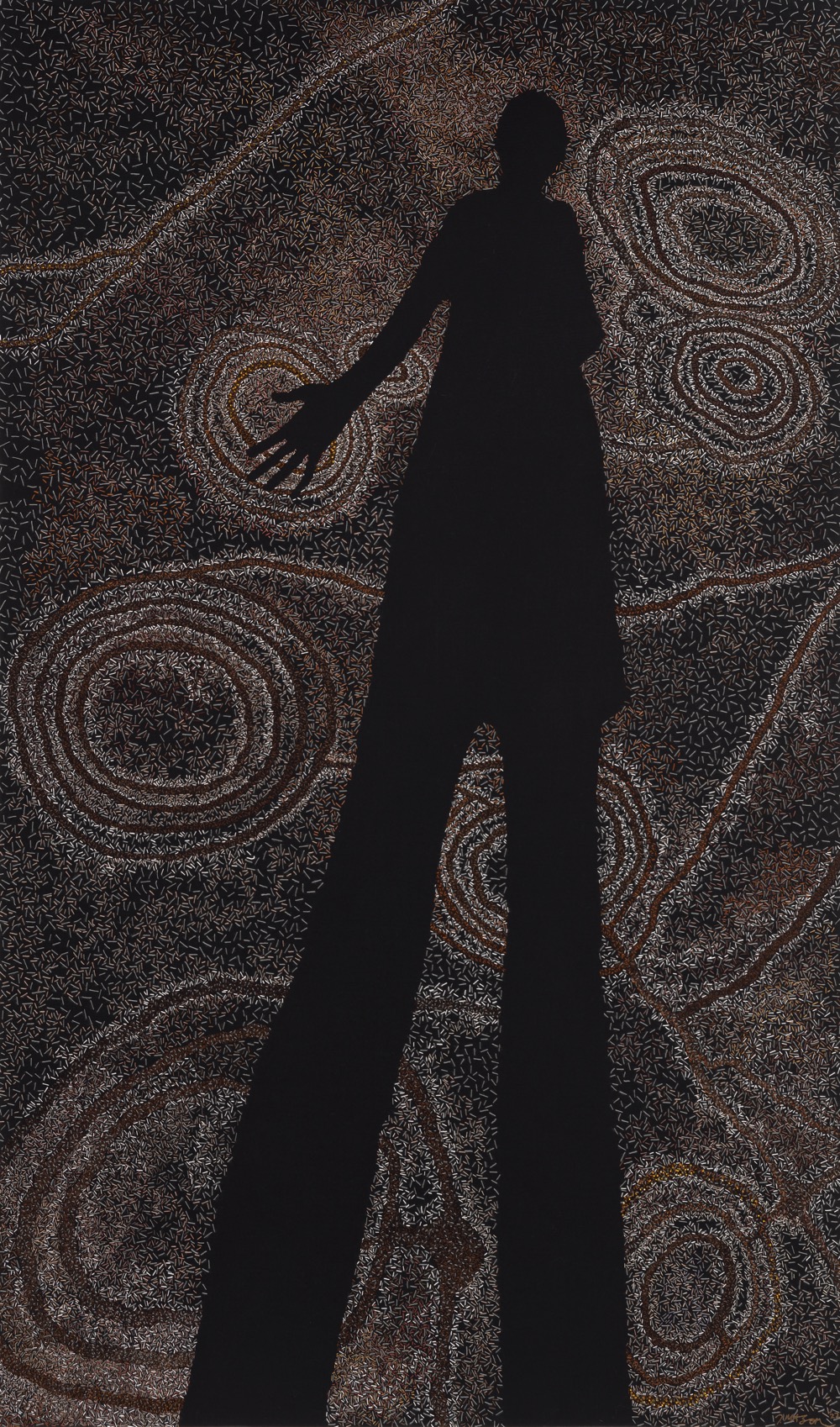
Title: Mashishing
Medium: Embroidery and beadwork on fabric
Size: 198 x 118 cm
The Robert Devereux Collection, UK
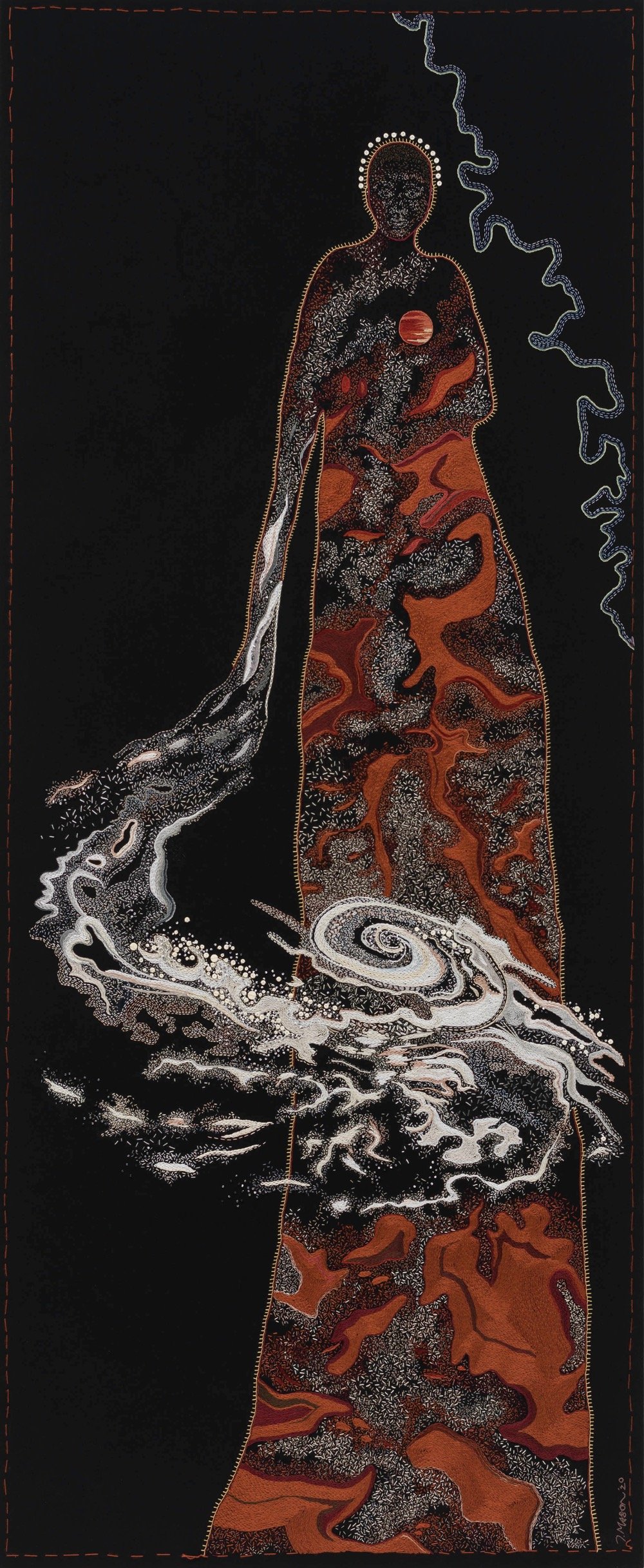
Title: Gxara
Medium: Embroidery and beadwork on fabric
Size: 217 x 90 cm
Collection of the Institute of Contemporary Art Miami
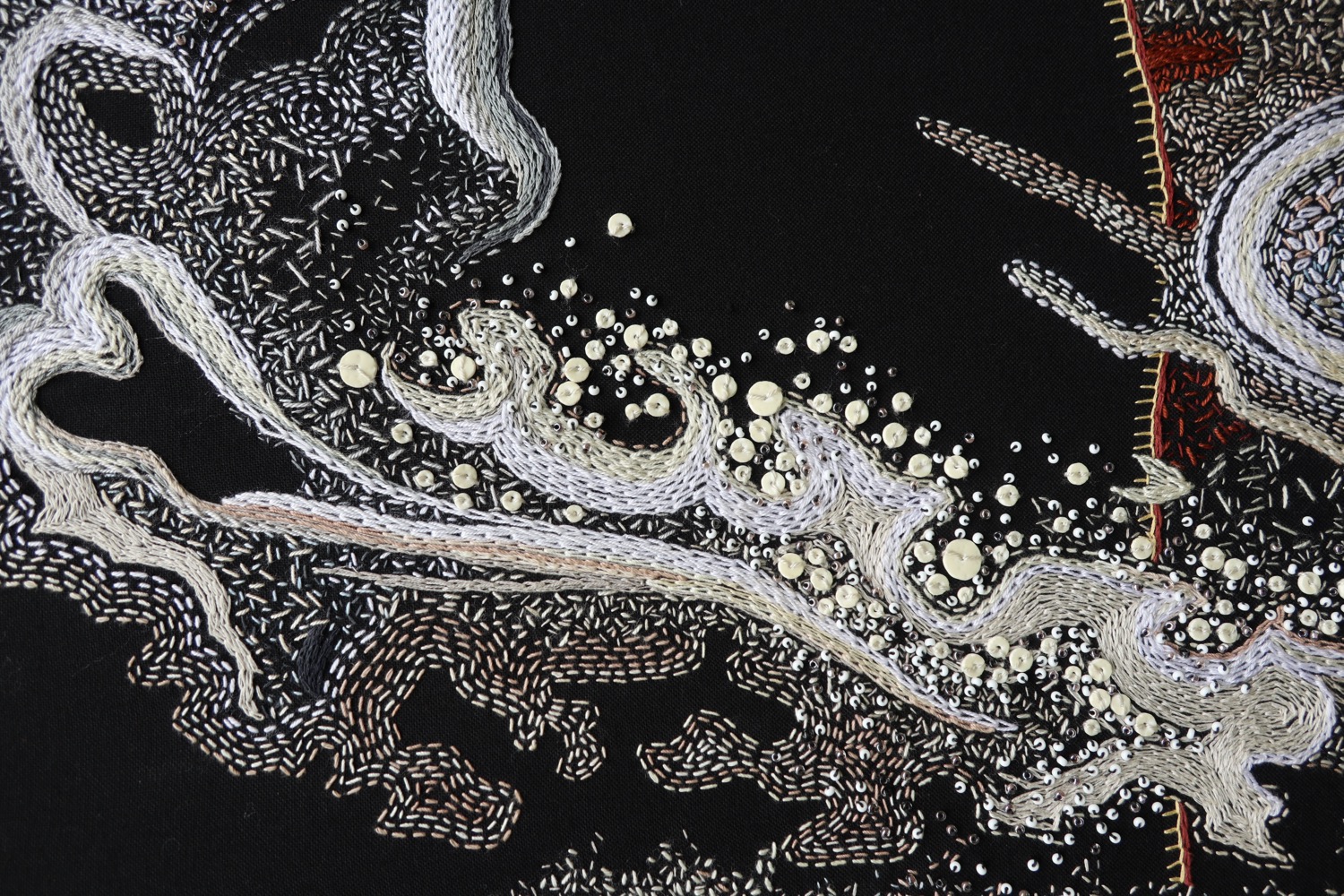
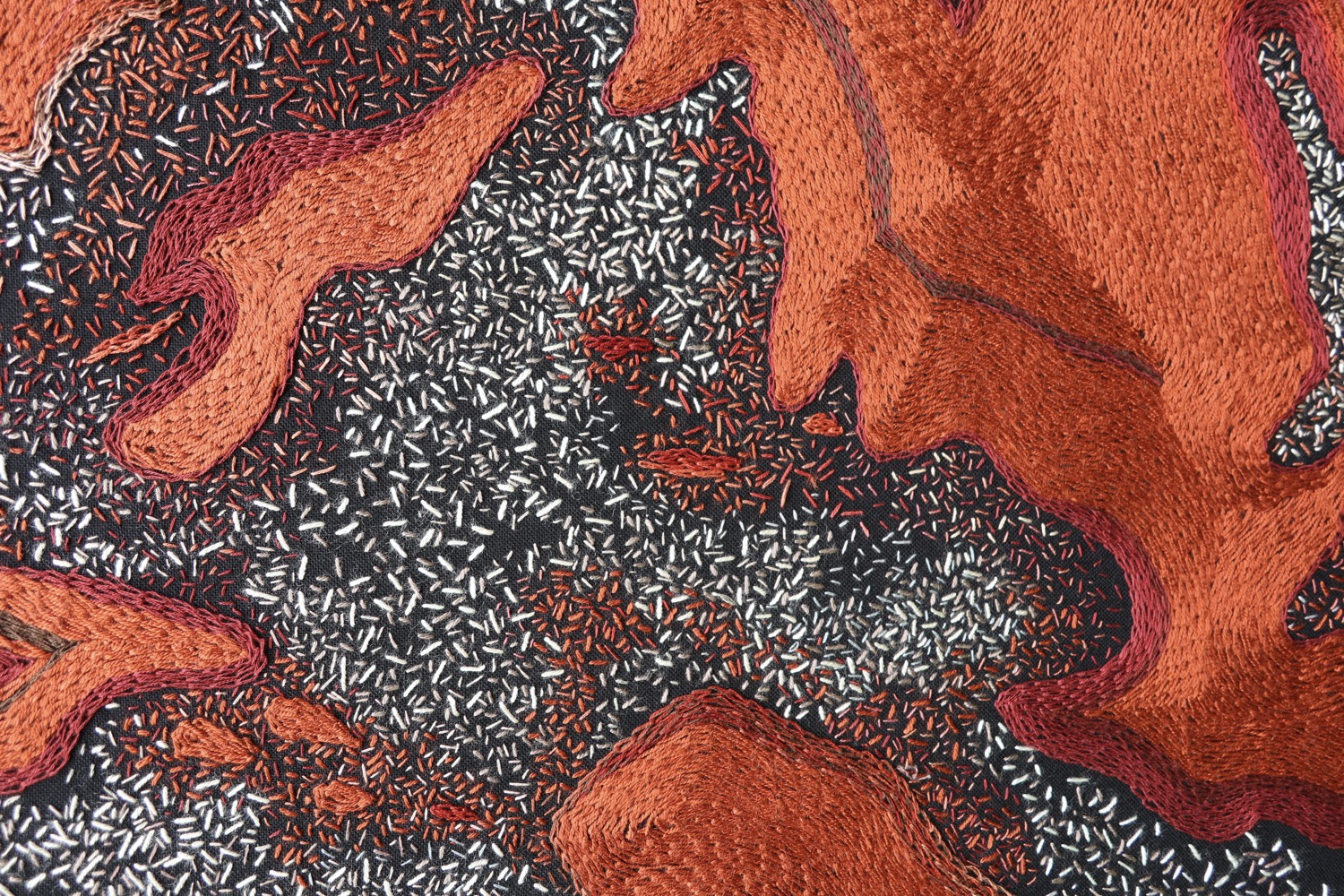
"I have focused my recent work on neglected rural areas in southern Africa. These are places with rich historical and cultural significance but where basic government services are failing or are completely lacking.These works refer to three of these places — Brondal, near my home; Mashishing, where I have walked through the burnt winter veld, and the Gxara River, where I have waded through the clear water of the river mouth. I am exploring the permanent record that societies leave on the land, in paradox with the transience of human lives in these landscapes.
Brondal’s immediate reference is the name of a valley adjacent to the one where I live. It is an Afrikaans word for source/spring valley and is in turn derived from Dutch and German. More recently it has become known as Magosha valley by Siswati speakers. Magosha is a derogatory name for prostitutes. Part of the verdant sub-tropical Lowveld, the area has been exploited by industrial farming, first for planting Australian blue gum plantations, and now for macadamia and avocado orchards. Along the main road through the valley prostitutes ply their trade, using the cover of the trees as a place to service their clients. Prostitution is illegal and hence unprotected in South Africa. Like the women, the land is exploited whilst simultaneously providing.
In the SePedi language, Mashishing is a place name derived from the word for good grazing grass, it has replaced the colonial name of Lydenburg. At Mashishing there are hundreds of mostly geometric line engravings on the rock surfaces. Research indicates that these marks were made by the Koni people in the mid-1650s. The Koni were later assimilated into and displaced by the Pedi. For generations, shadows have been cast on these stones as people have been forcibly removed by conflict, colonialism, and apartheid and have later returned to Mashishing. Each time, the landscape leaves a mark on them just as they leave a mark on the landscape, the engraved lines linking the experience of now with then.
The Gxara River is where a young woman, Nongqawuse experienced a revelation that led to the Xhosa Cattle-Killing of 1856-7. Her millenarian vision predicted that all Europeans would be driven back into the sea if the Xhosa killed all their cattle and stopped cultivation. Millenarian movements, often a feature of societies that have been profoundly disrupted by colonialism, center around a radical apocalyptic vision and a return to plenty and pre-colonial power. Nongqawuse’s vision led to an estimated 350 000 cattle being killed and a famine that caused the deaths of roughly 70 000 people. The stress on the environment by the extractive reaches of colonialism is at the root of this tragedy. In a world that is still dominated by patriarchy, I am interested in the massive effect that young women’s voices can have on the course of history and how this ripples into the present fabric of the climate crisis". Tamar Mason 2022
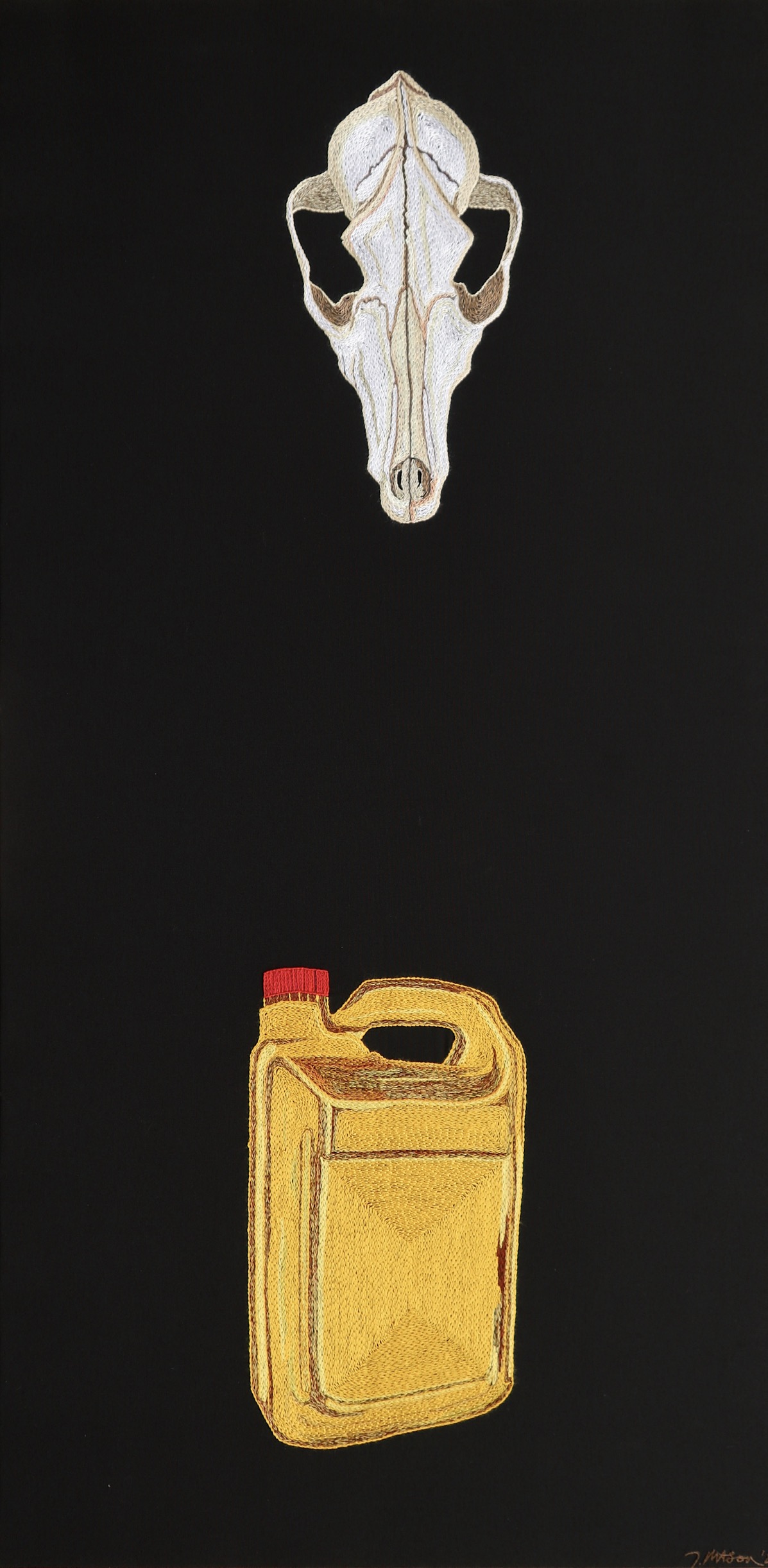
Title: Jakkalsdans
Medium: Embroidery on fabric
Size: 144 x 71cm
Private collection Brazil
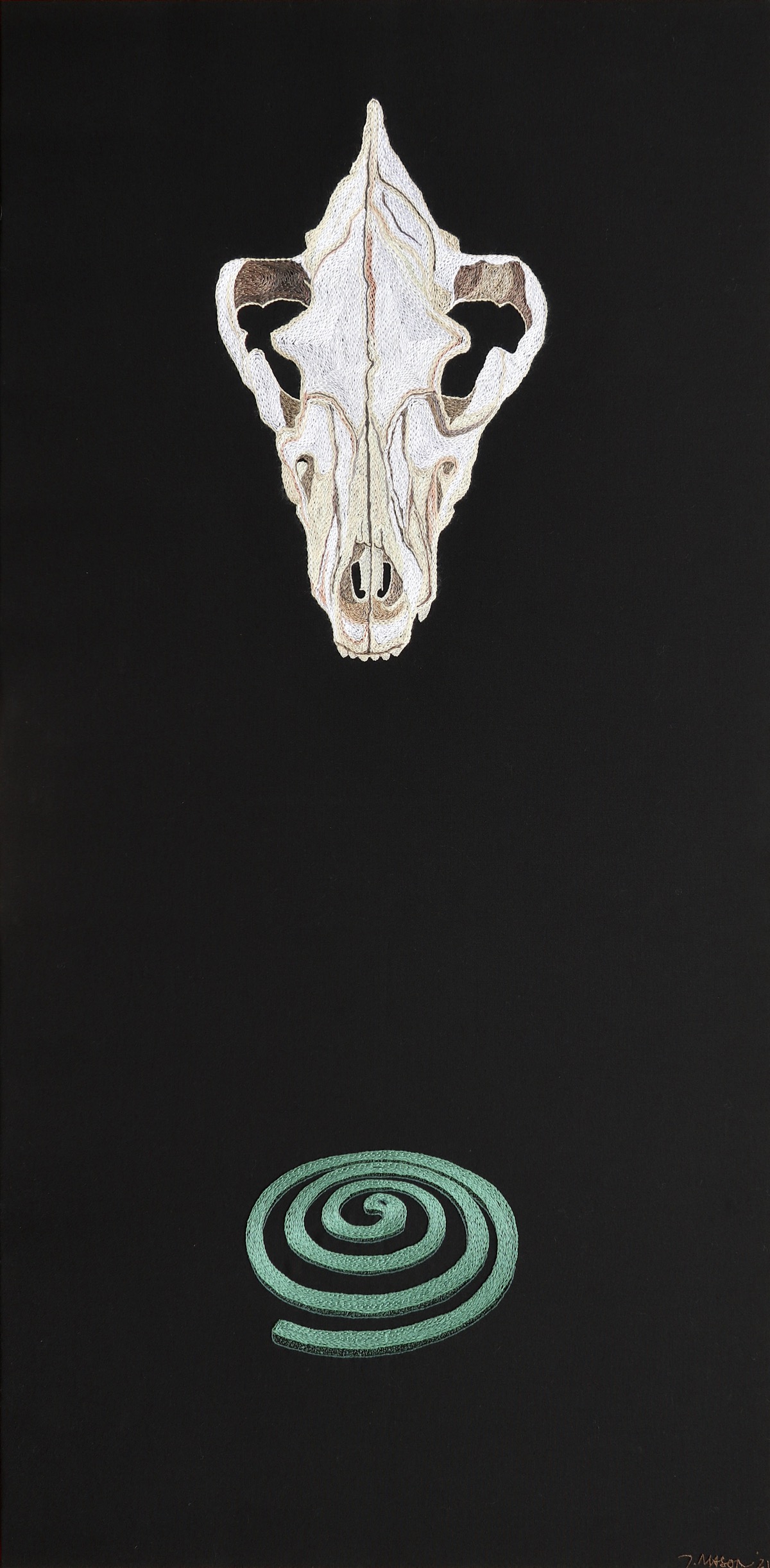
Title: KwaMpisi
Medium: Embroidery on fabric
Size: 144 x 71cm
Private collection Brazil
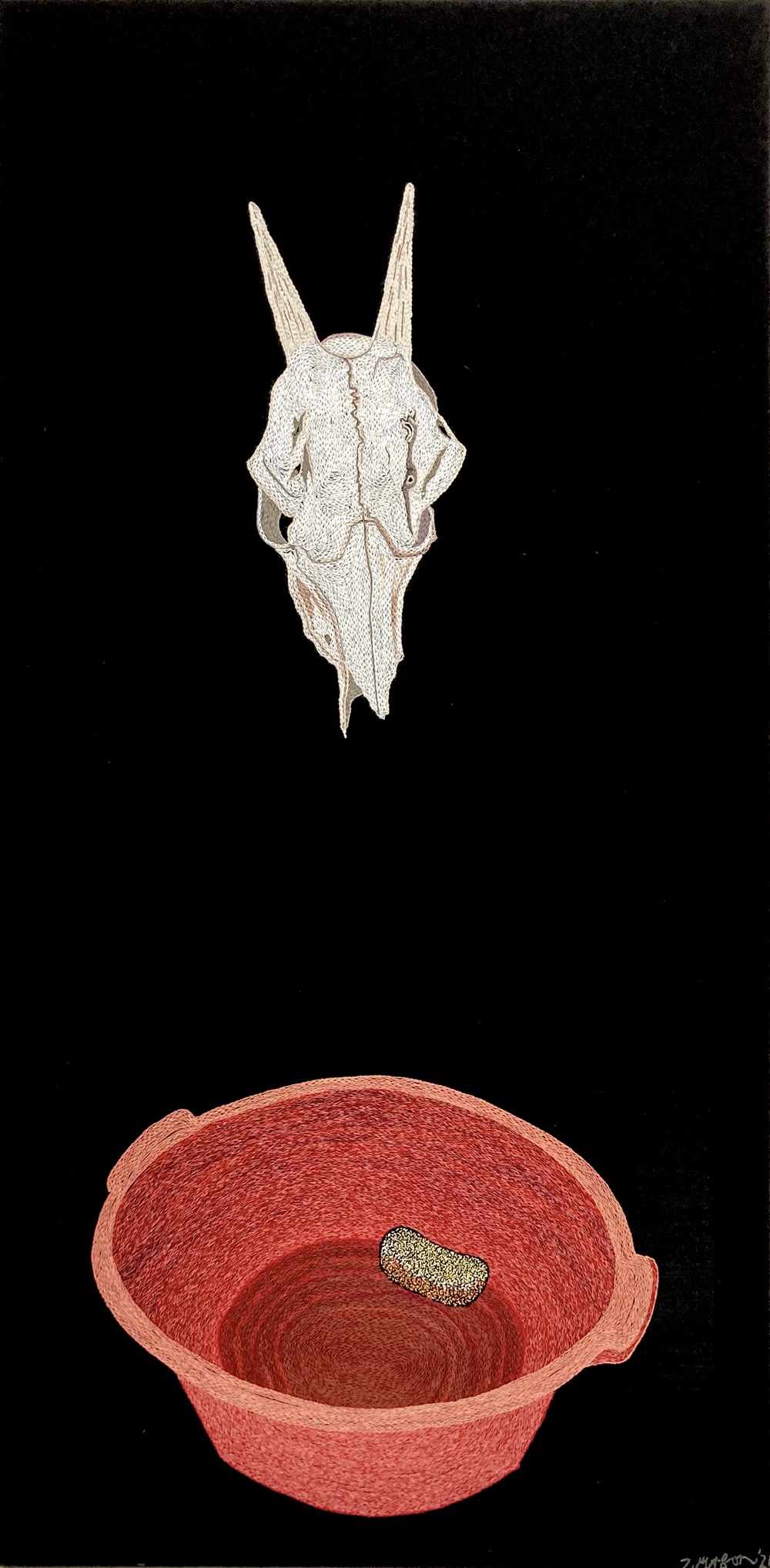
Title: Mpunzi Kop
Medium: Embroidery on fabric
Size: 144 x 71cm
Art Bank South Africa collection
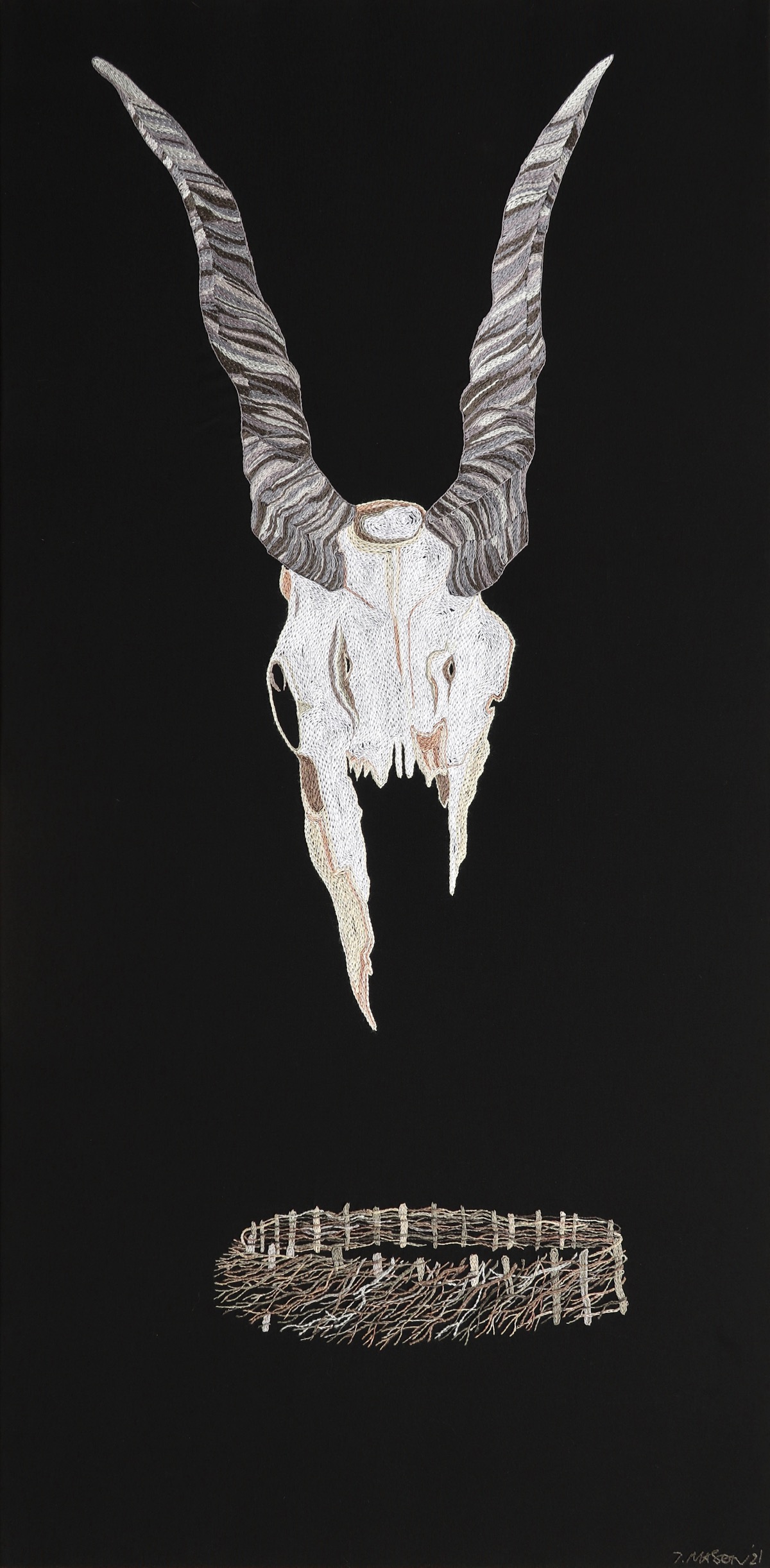
Title: Elandskraal
Medium: Embroidery on fabric
Size: 144 x 71cm
Private collection Brazil
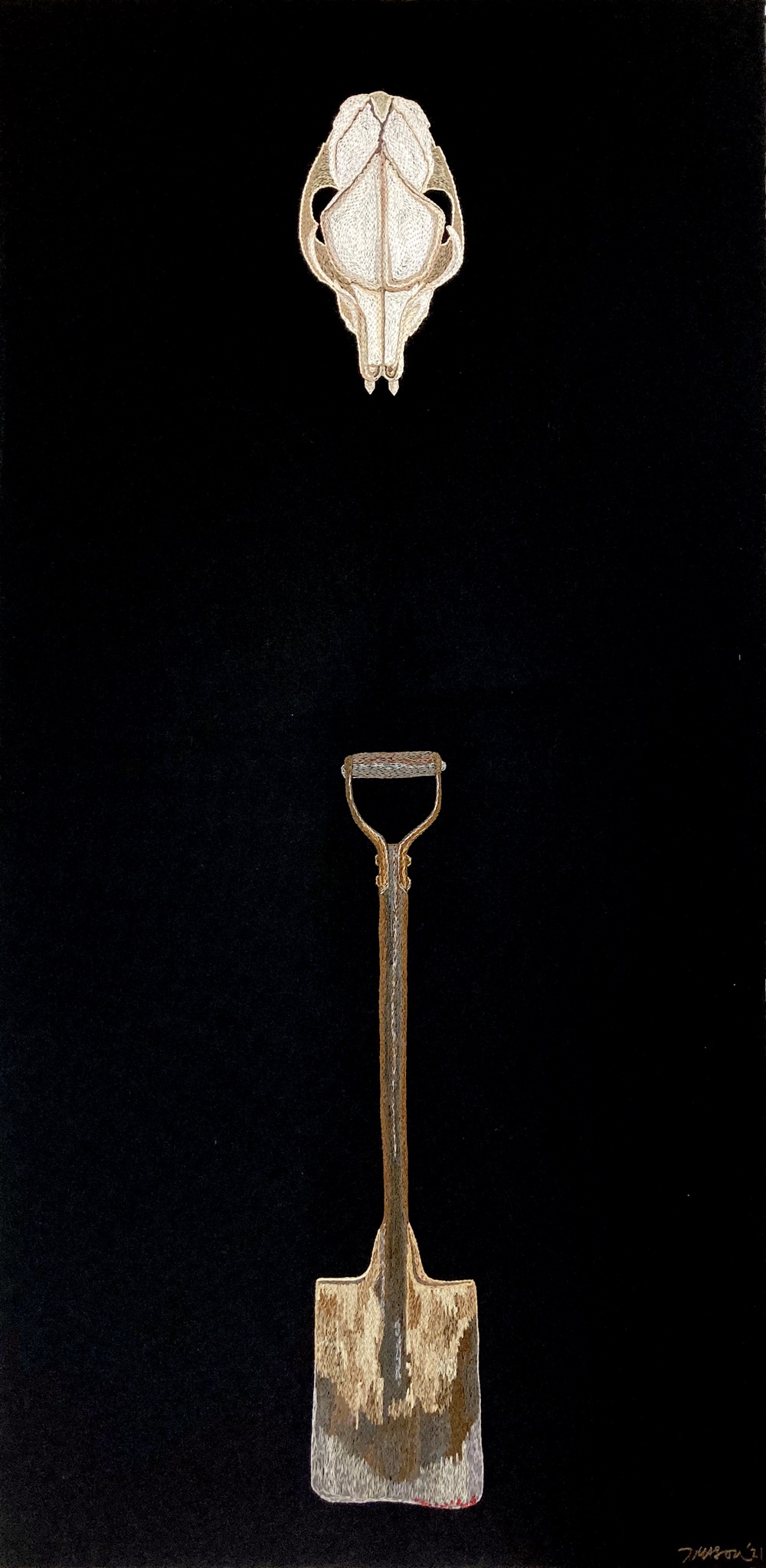
Title: Mochudi
Medium: Embroidery and beads on fabric
Size: 144 x 71cm
Private collection Brazil
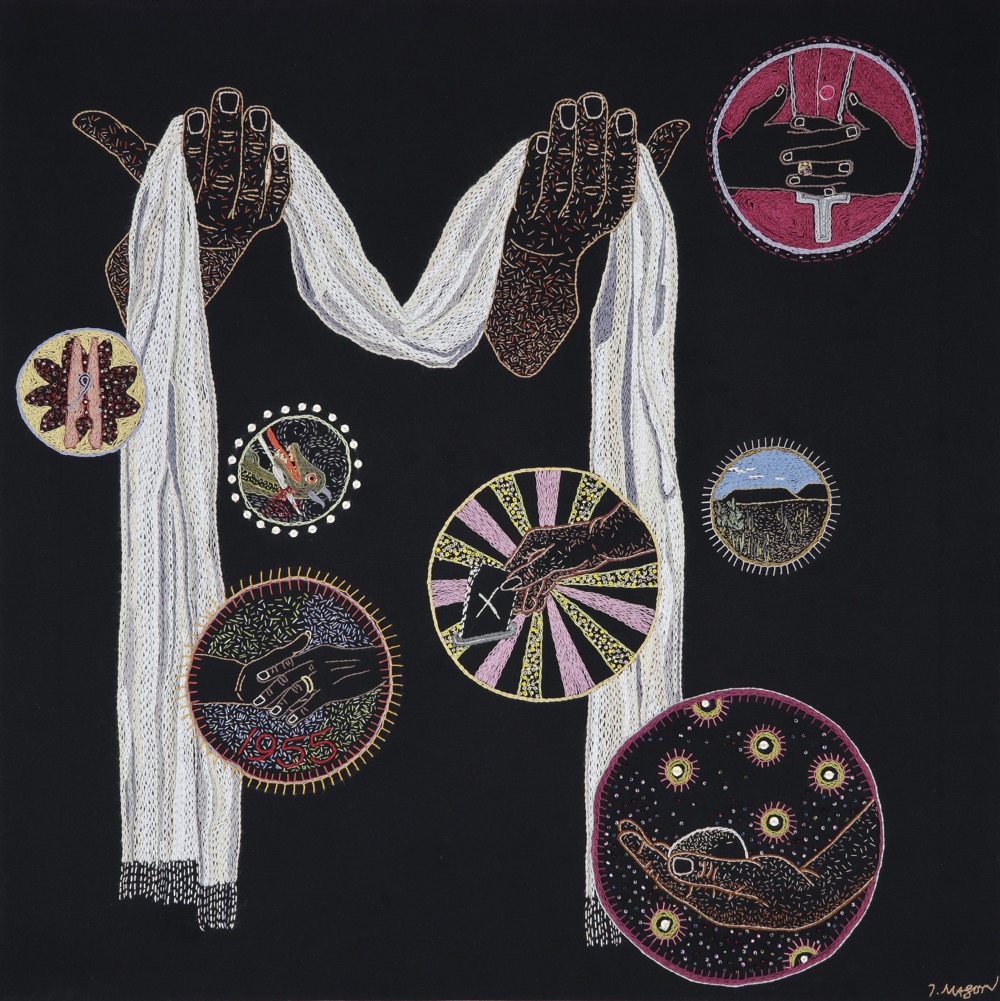
Title: A khata cloth for Leah and Desmond Tutu
Medium: Embroidery and beadwork on fabric
Size: 76 x 76cm
Wits Art Museum collection
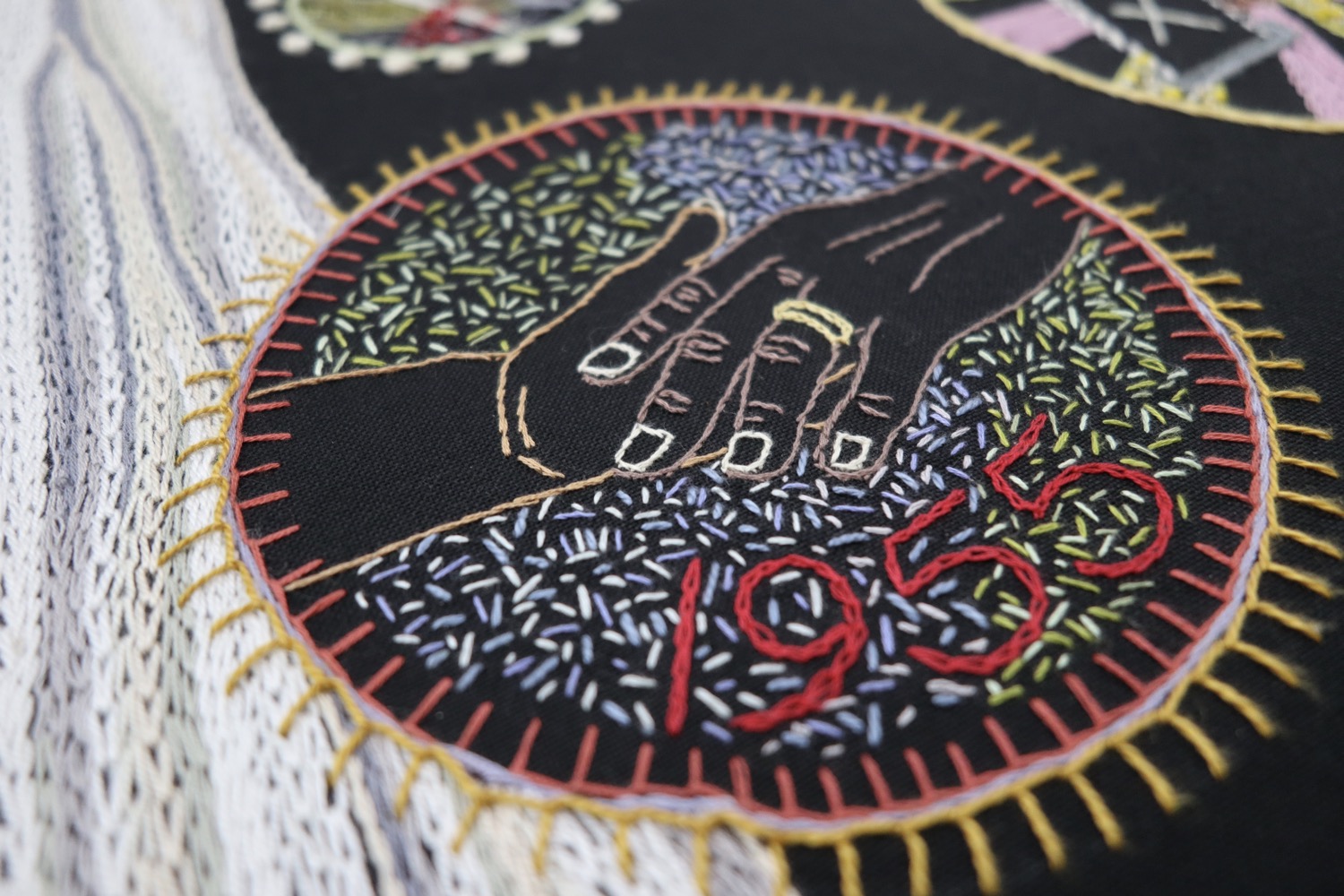
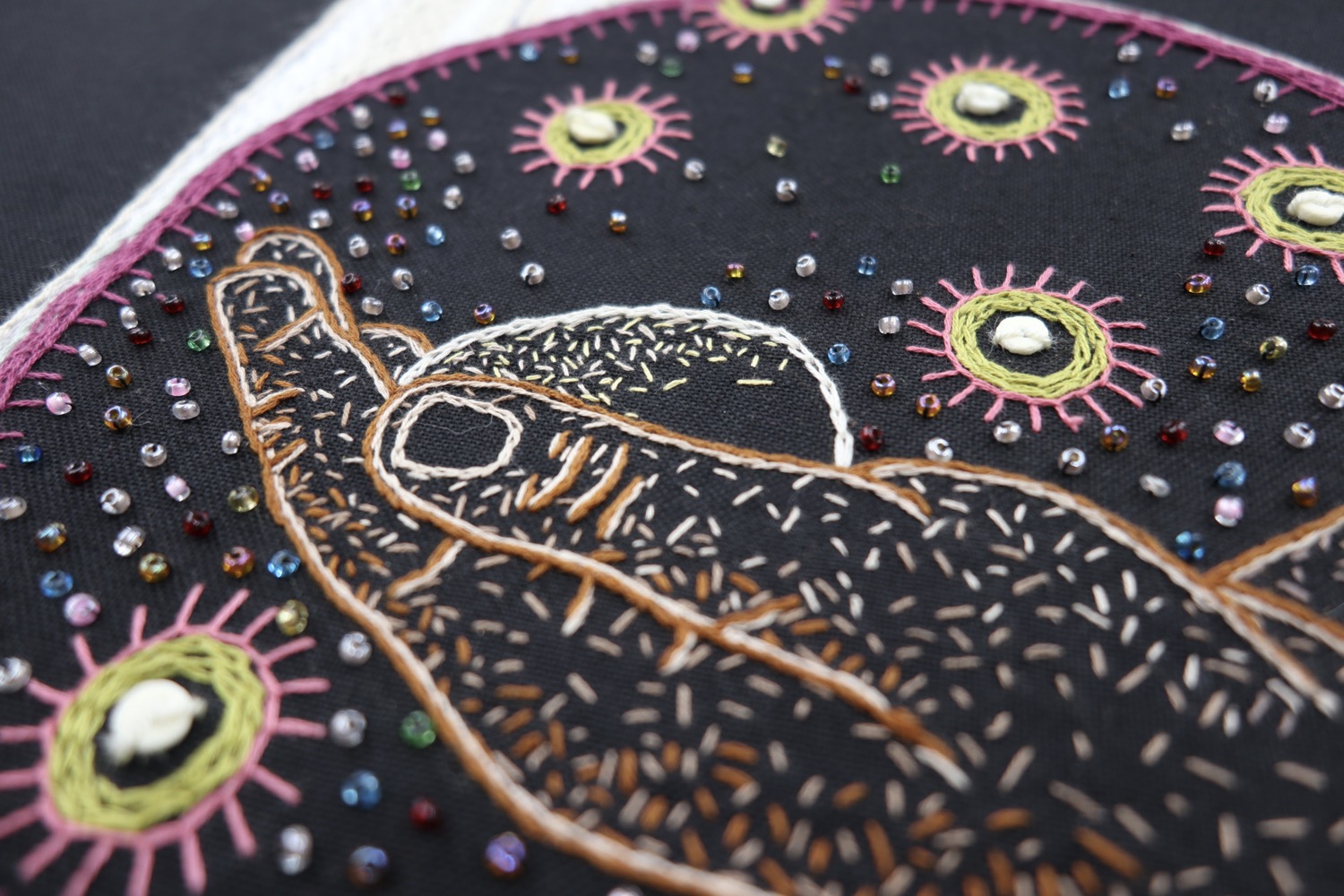
"The khata symbolizes purity and compassion and is given to honoured people by Tibetan Buddhists. It is usually made out of white fabric. Desmond Tutu has been fearless in questioning the South African government’s bias against the Dalai Lama. Both the Dalai Lama and Desmond Tutu have been awarded Nobel Peace Prizes. The washing peg refers to the establishment of the South African Domestic Workers Association (SADWA) of which Leah Tutu was a founder. Desmond Tutu was the first Black Archbishop of Cape Town, the highest position within the Anglican Church in South Africa. St Georges Cathedral was his base; hence St George slaying the dragon, a metaphor that I selected to represent Apartheid. My reference was an image from a church in Lalibela, Ethiopia. The two hands are the Tutu’s who married in 1955. Desmond Tutu was instrumental in transitioning South Africa to democracy and this is symbolised by Leah’s hand casting a vote. The hand holding the egg is a symbol of power inspired by West African fabrics. Hold on to power too tightly and the egg will break, hold on loosely and the egg will break. Desmond Tutu has succeeded in holding power in balance. The landscape image refers to the gold mine dumps that surround the childhood homes of both Leah and Desmond Tutu. The hands across the chest are Desmond Tutu’s wearing his Anglican ring, cross and gown. I chose to focus on hands as they are what humans use to create, build, and communicate with". Tamar Mason
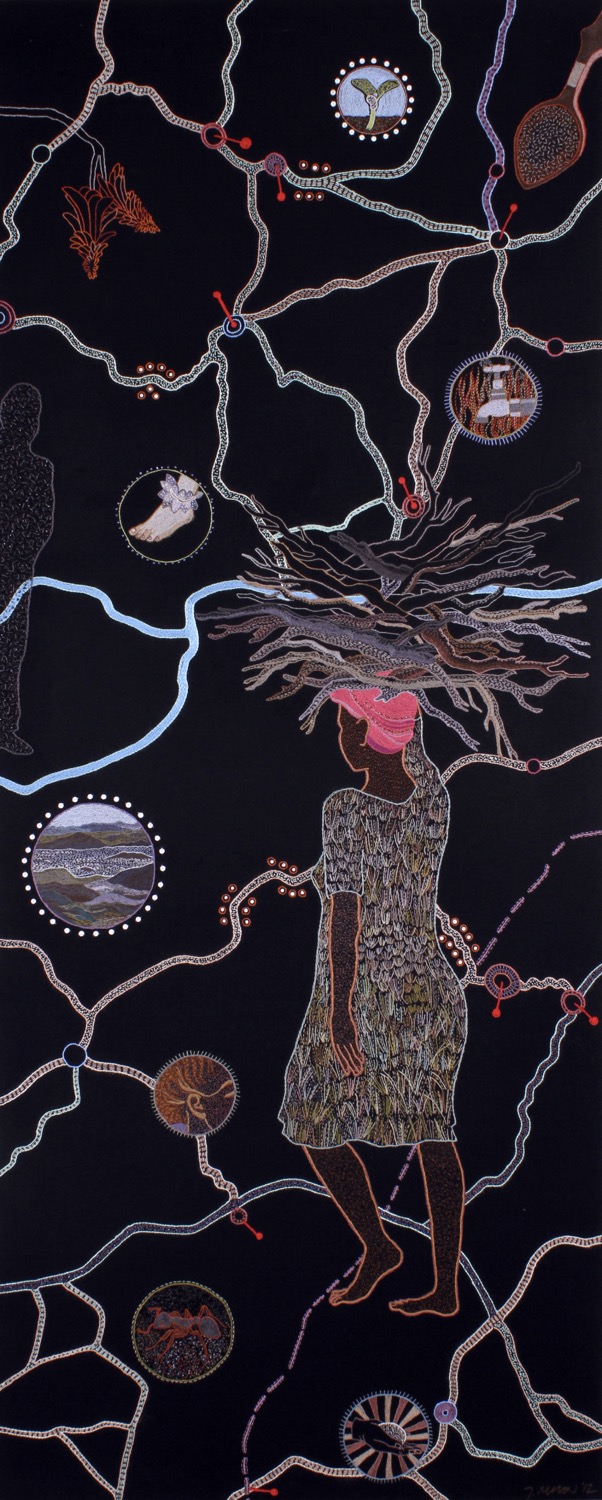
Title: Grace Unathi
Medium: Embroidery and beadwork on fabric
Size: 215 x 88 cm
Private collection United Kingdom
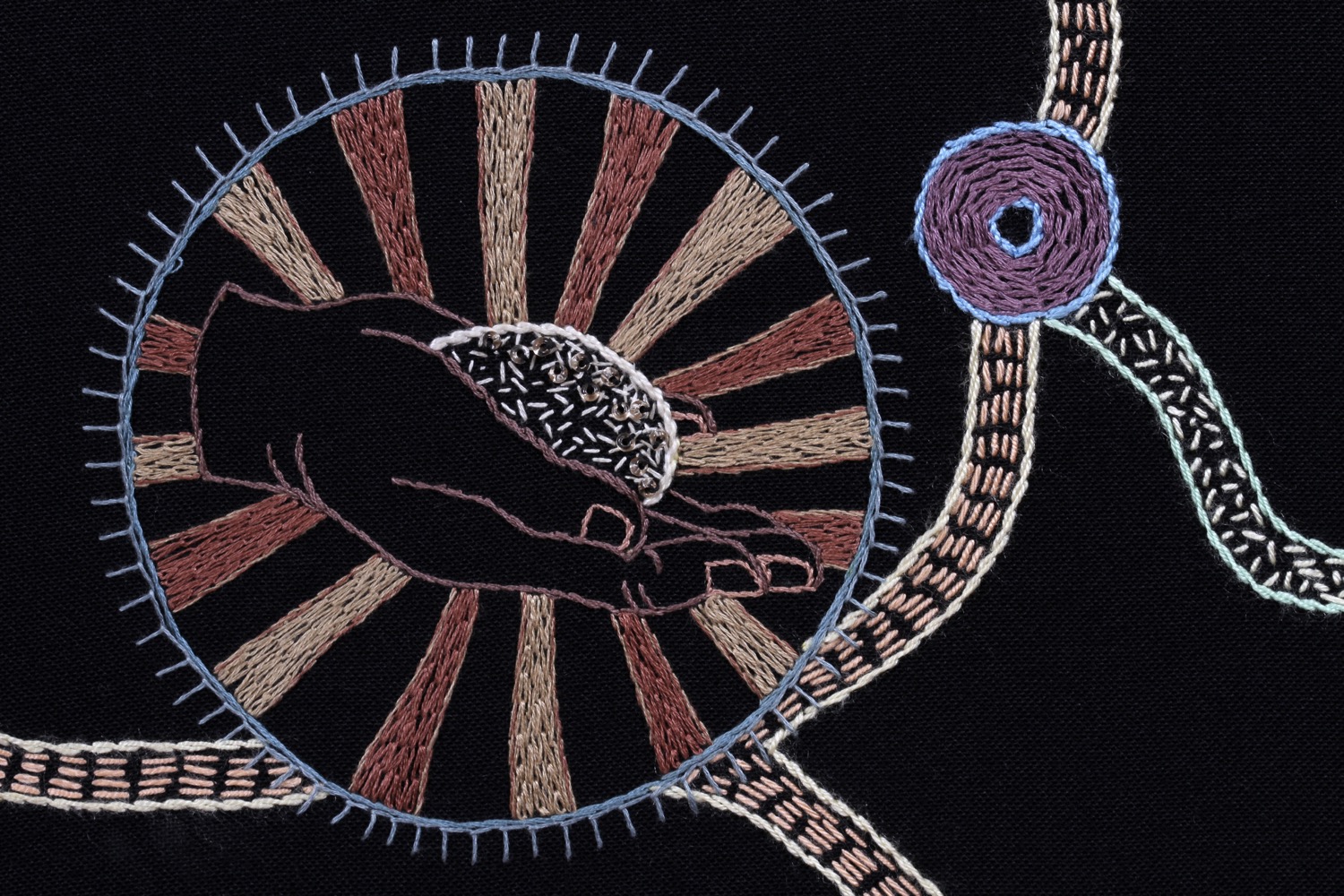
Detail: Grace Unathi (hand holding egg)
Medium: Embroidery and beadwork on fabric
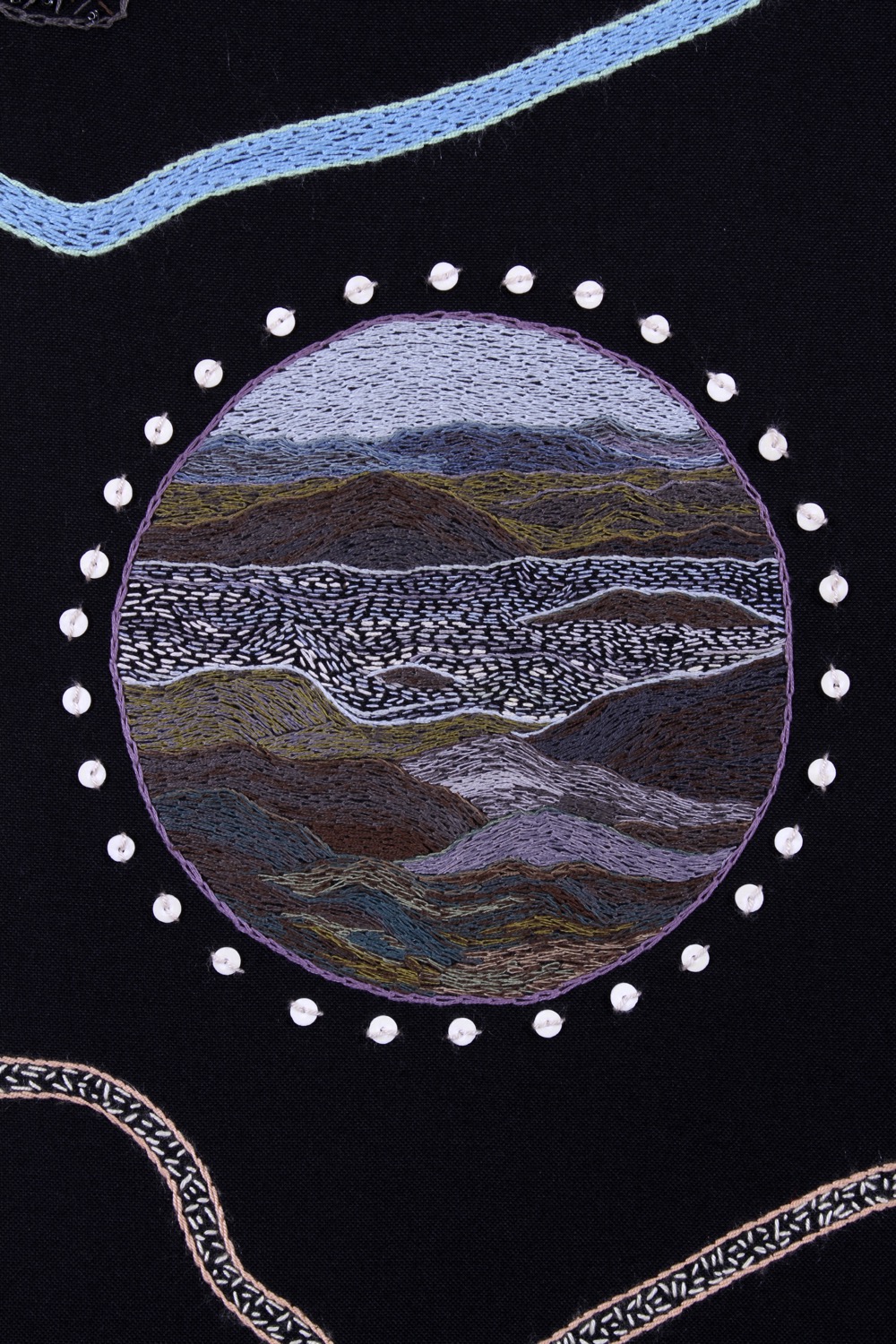
Detail: Grace Unathi (Barberton Valley)
Medium: Embroidery and beadwork on fabric
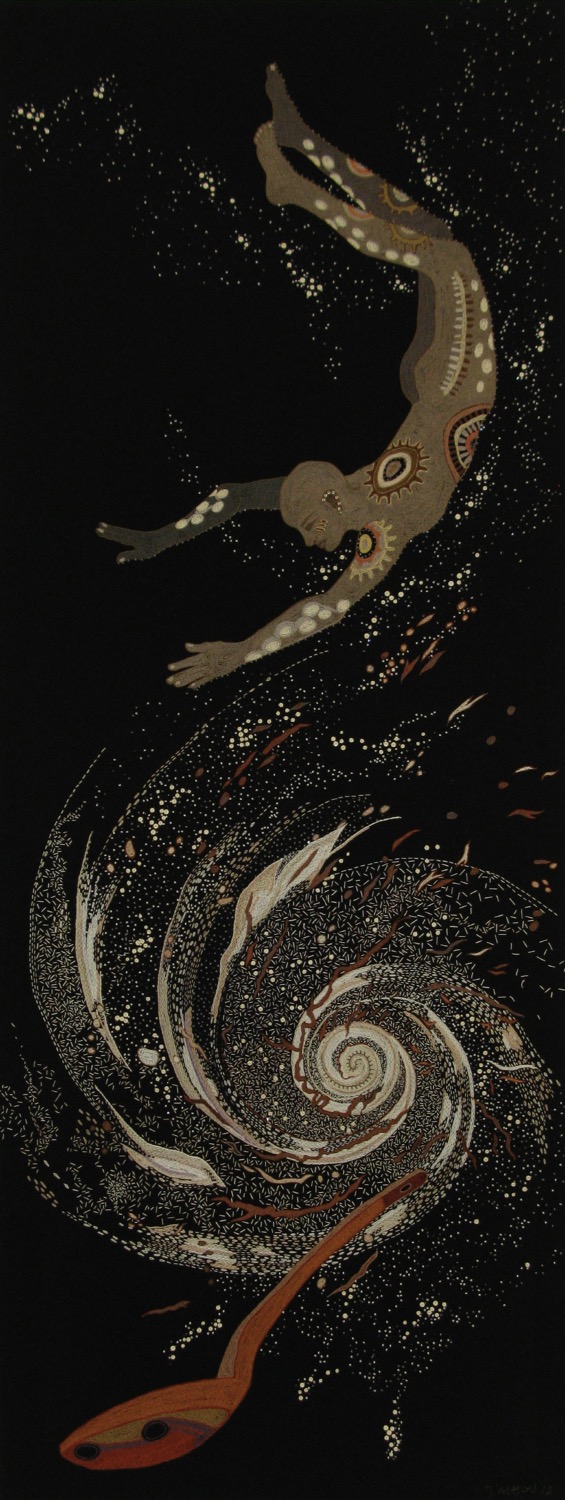
Title: Detachment
Medium: Embroidery and beadwork on fabric
Size: 214 x 88 cm
Private collection South Africa
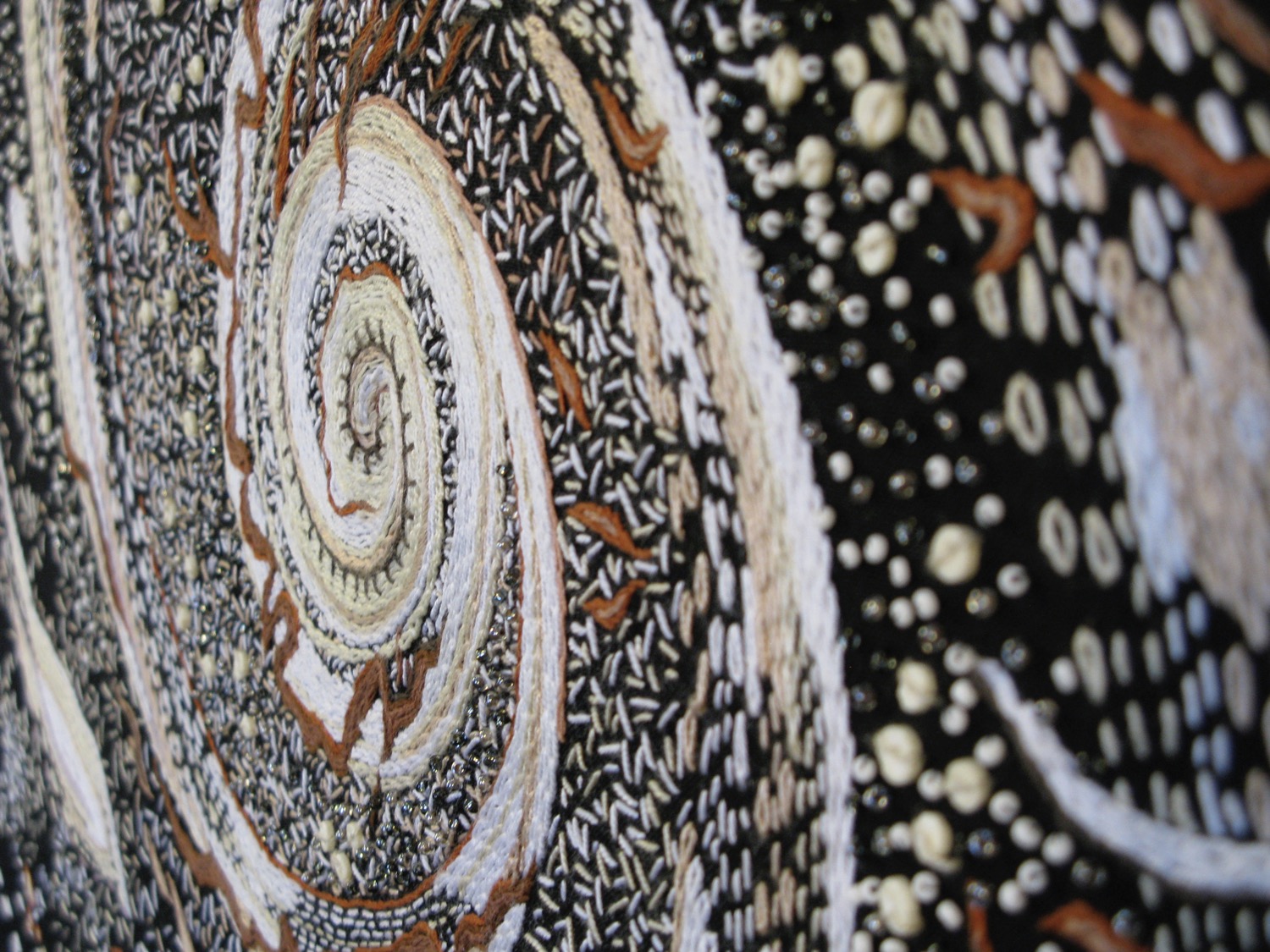
Detail: Detachment (Spiral Galaxy)
Medium: Embroidery and beadwork on fabric
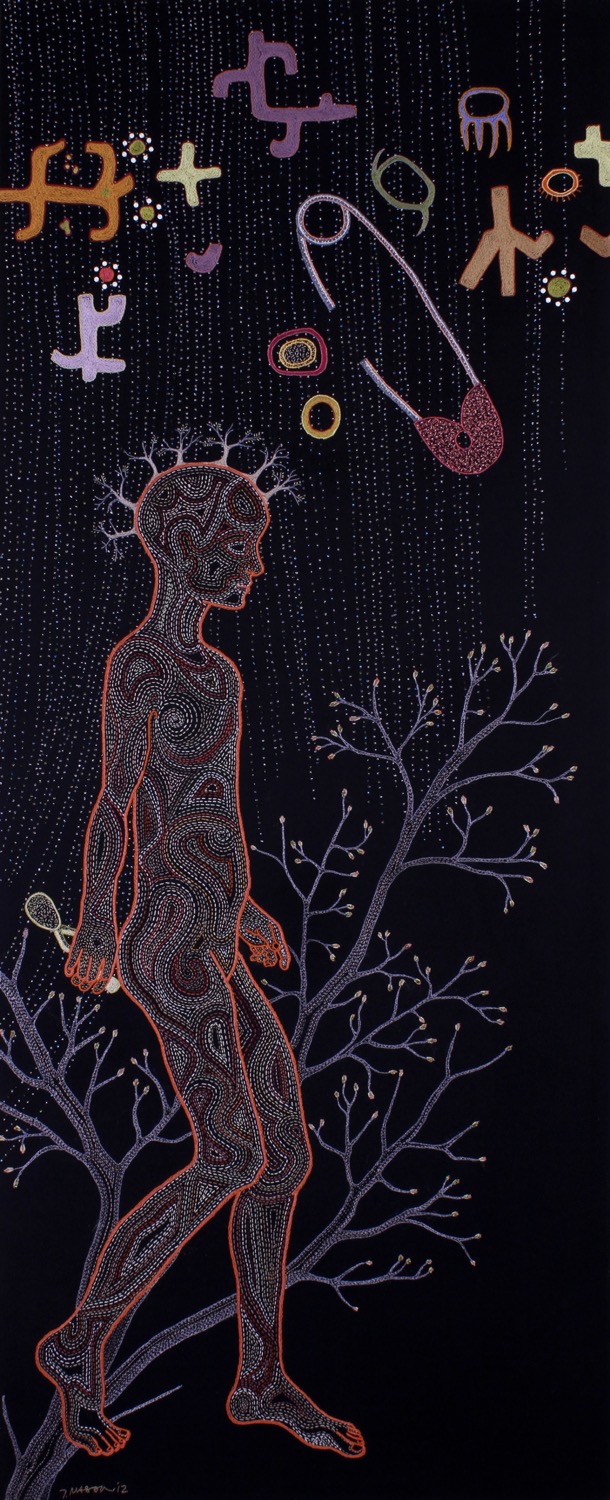
Title: My mtDNA (LOa1b)
Medium: Embroidery and beadwork on fabric
Size: 214 x 88 cm
Price: Available through the Pippy Houldsworth Gallery (London)
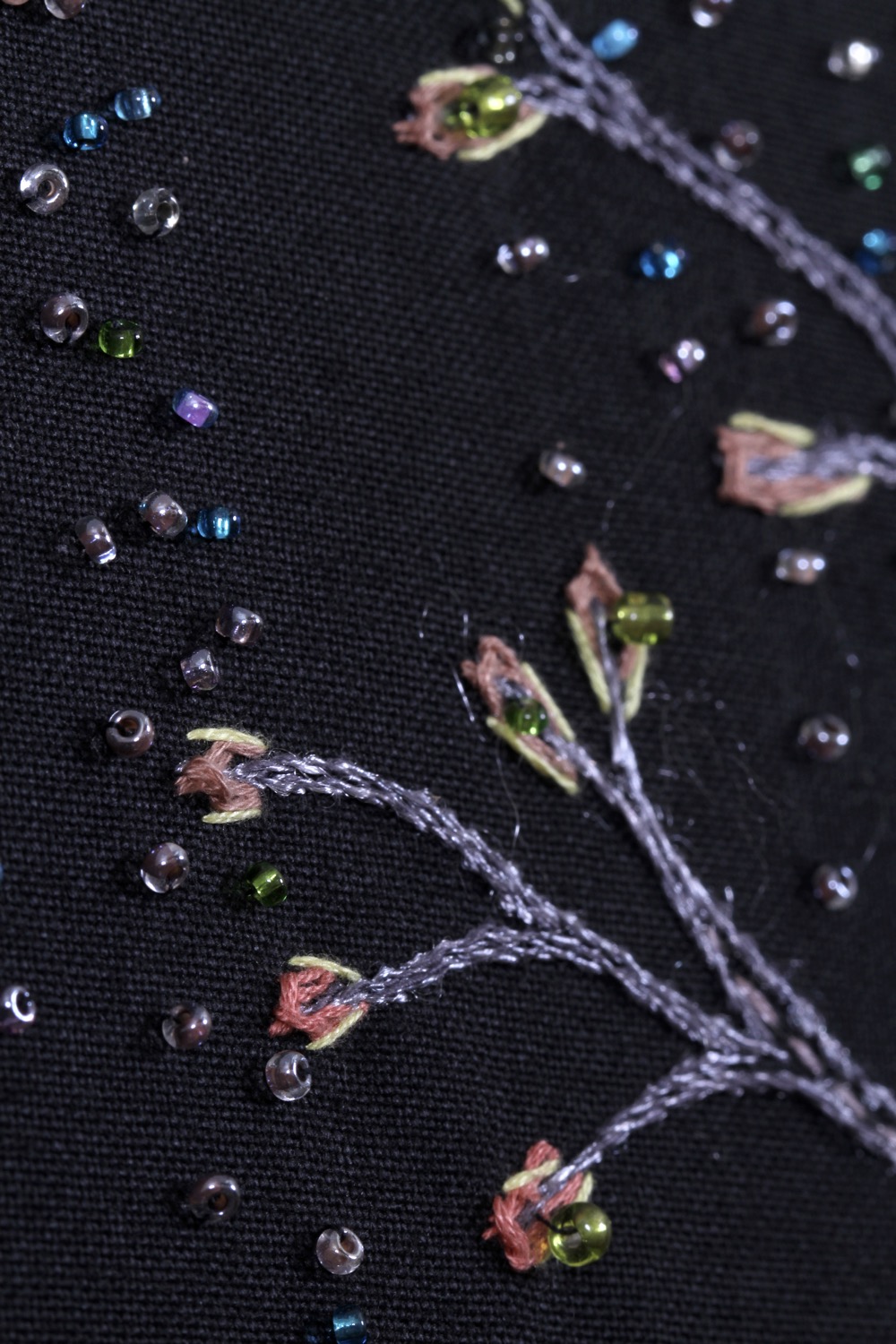
Detail: My mtDNA LOa1b(new leaves)
Medium: Embroidery and beadwork on fabric
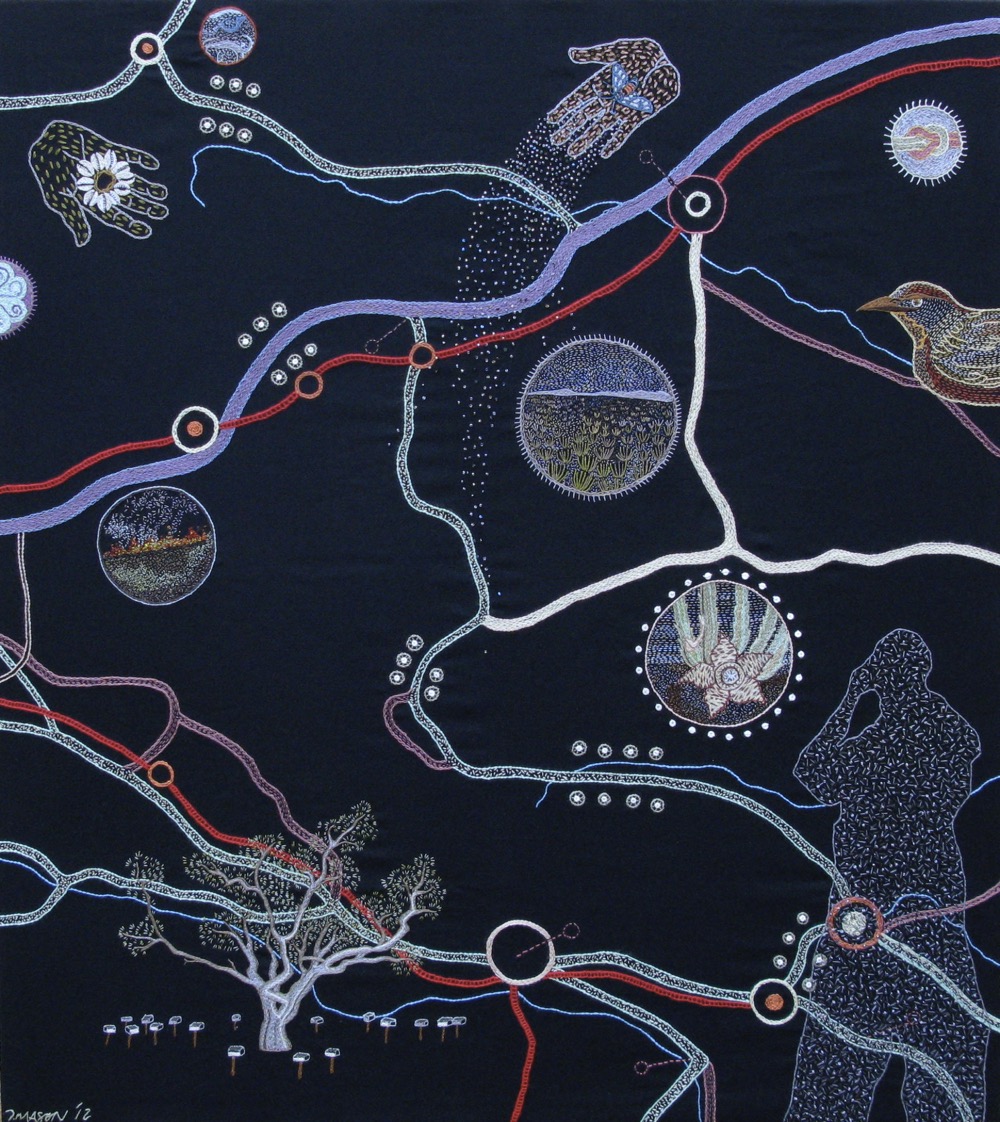
Title: Portrait of Hanneke Benadé
Medium: Embroidery and beadwork on fabric
Size: 103 x 115 cm
Private collection South Africa
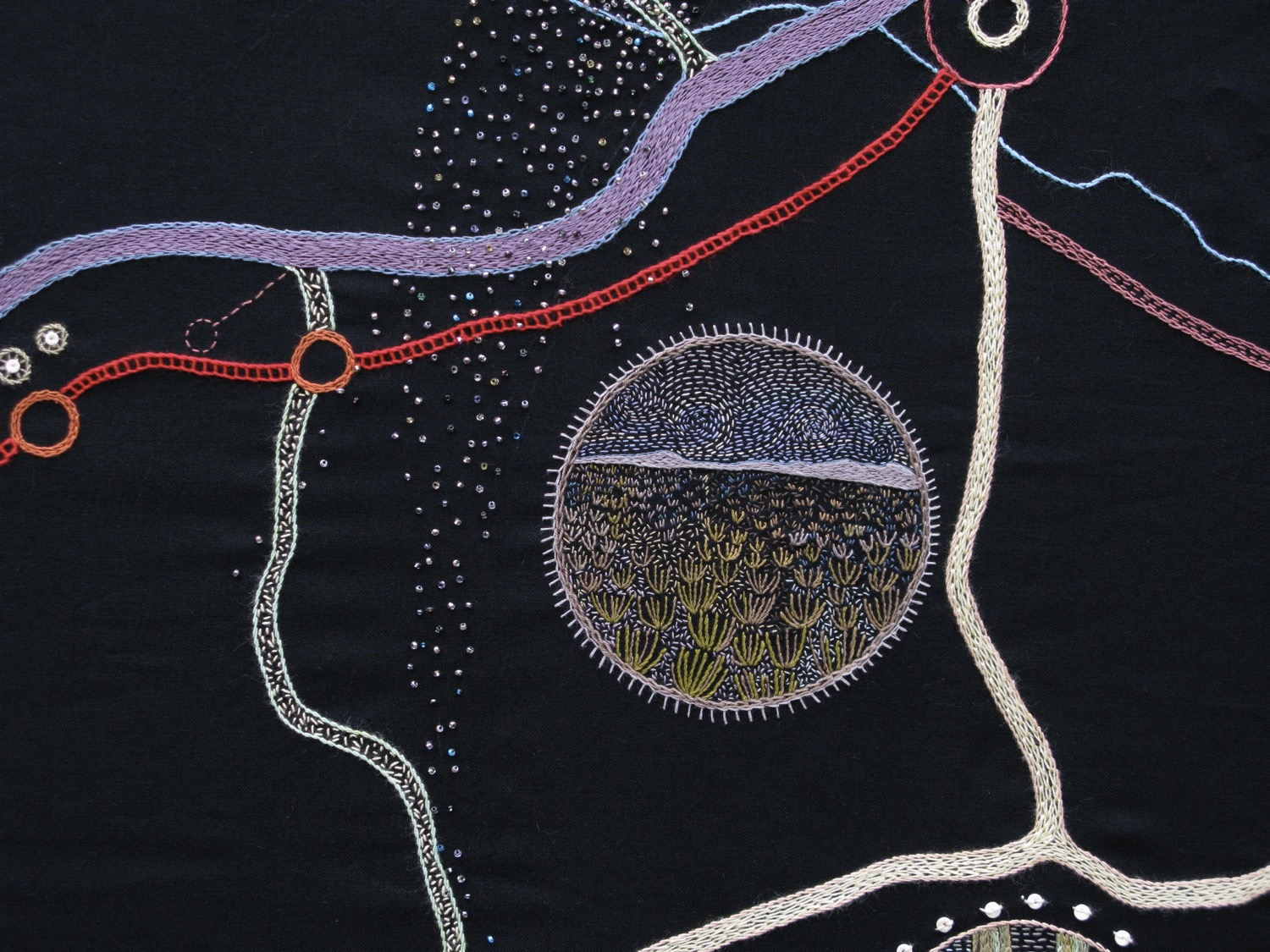
Detail: Hanneke Benadé portrait
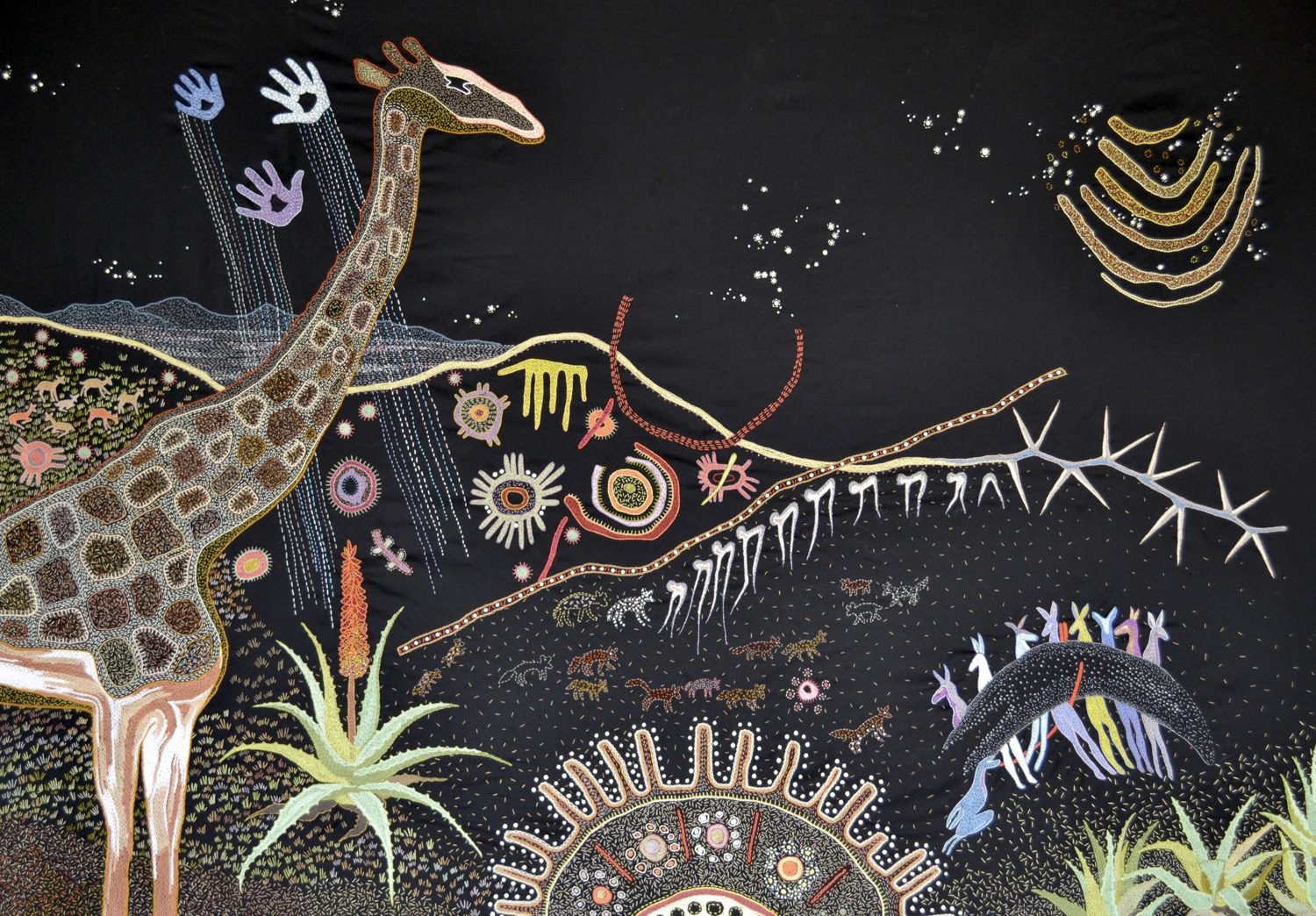
Title: South African Landscape
Medium: Embroidery and beadwork on fabric
Size: 2 x 1.5 m
Private collection United Kingdom
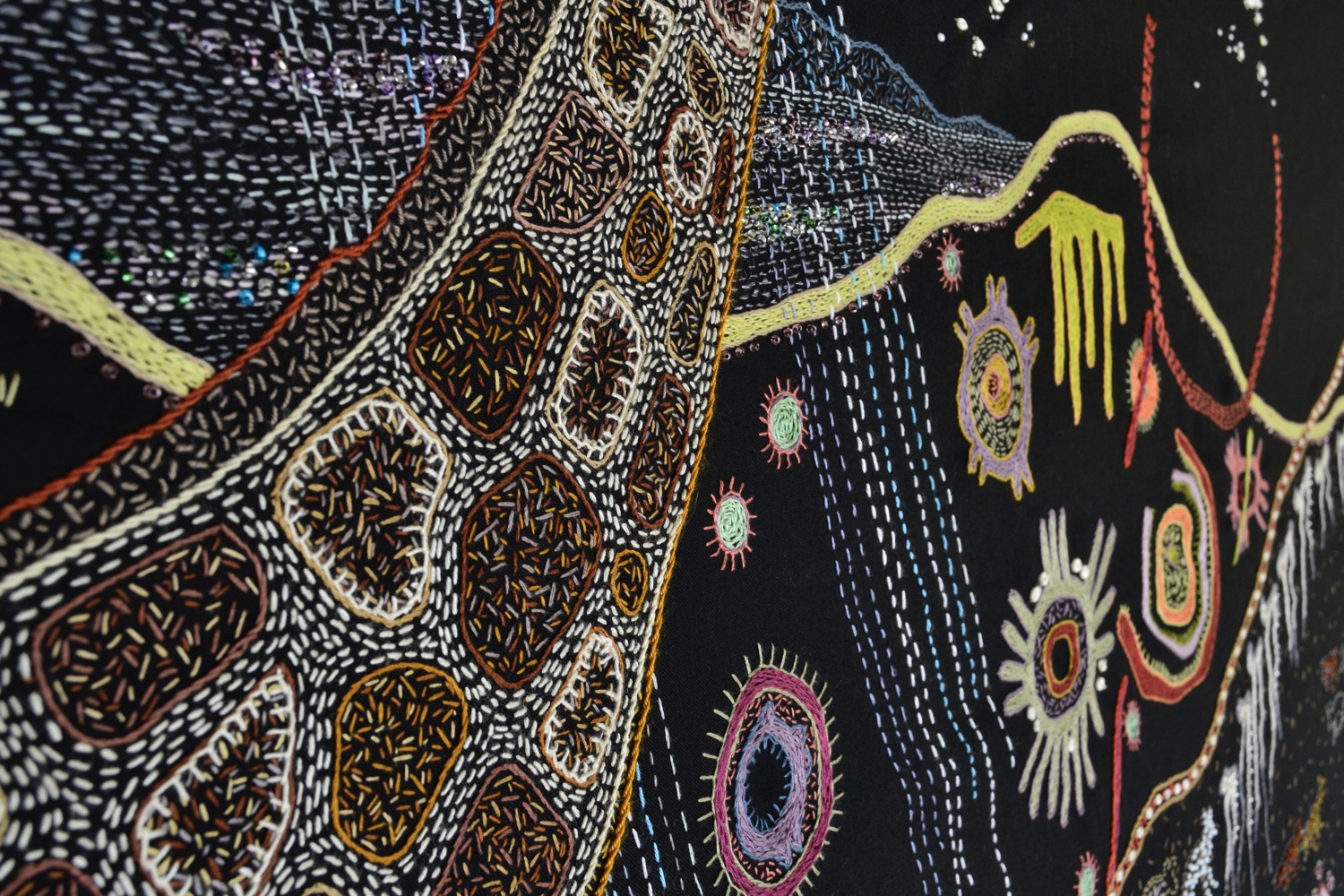
Detail: South African Landscape
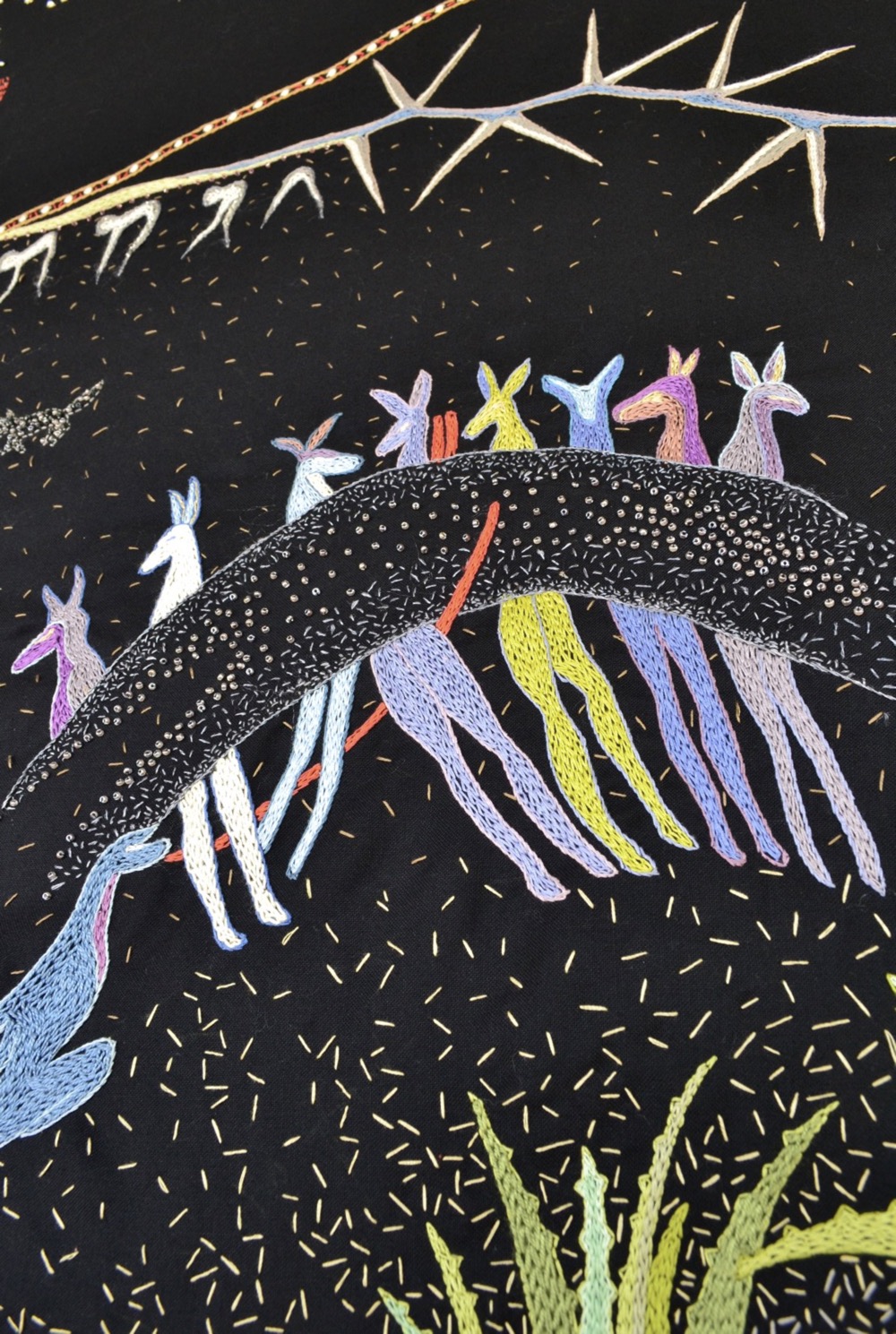
Detail: South African Landscape
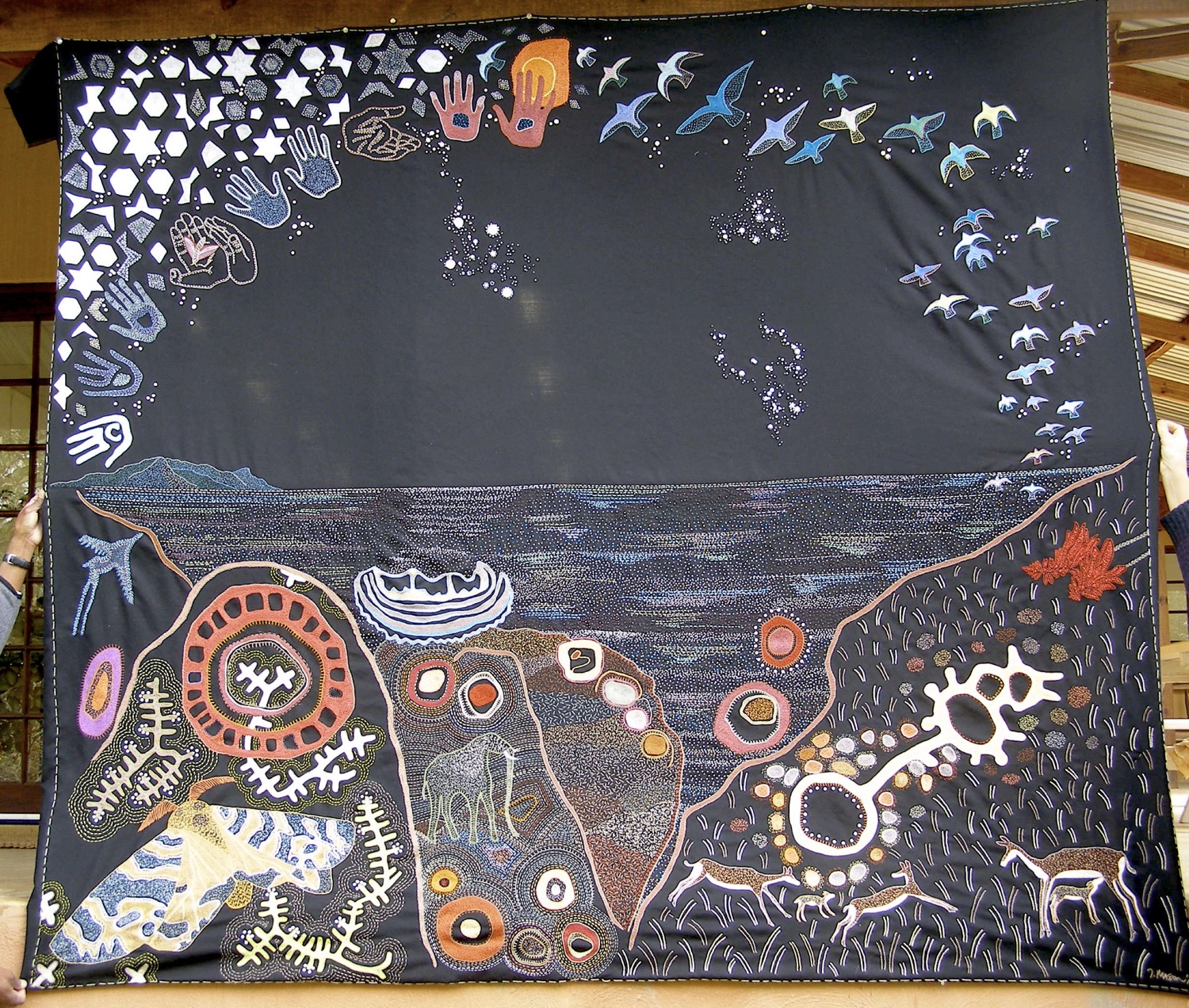
Title: Western Cape Landscape (unstretched)
Medium: Embroidery and beadwork on fabric
Size: 2.3 x 2.5 m
Private collection South Africa
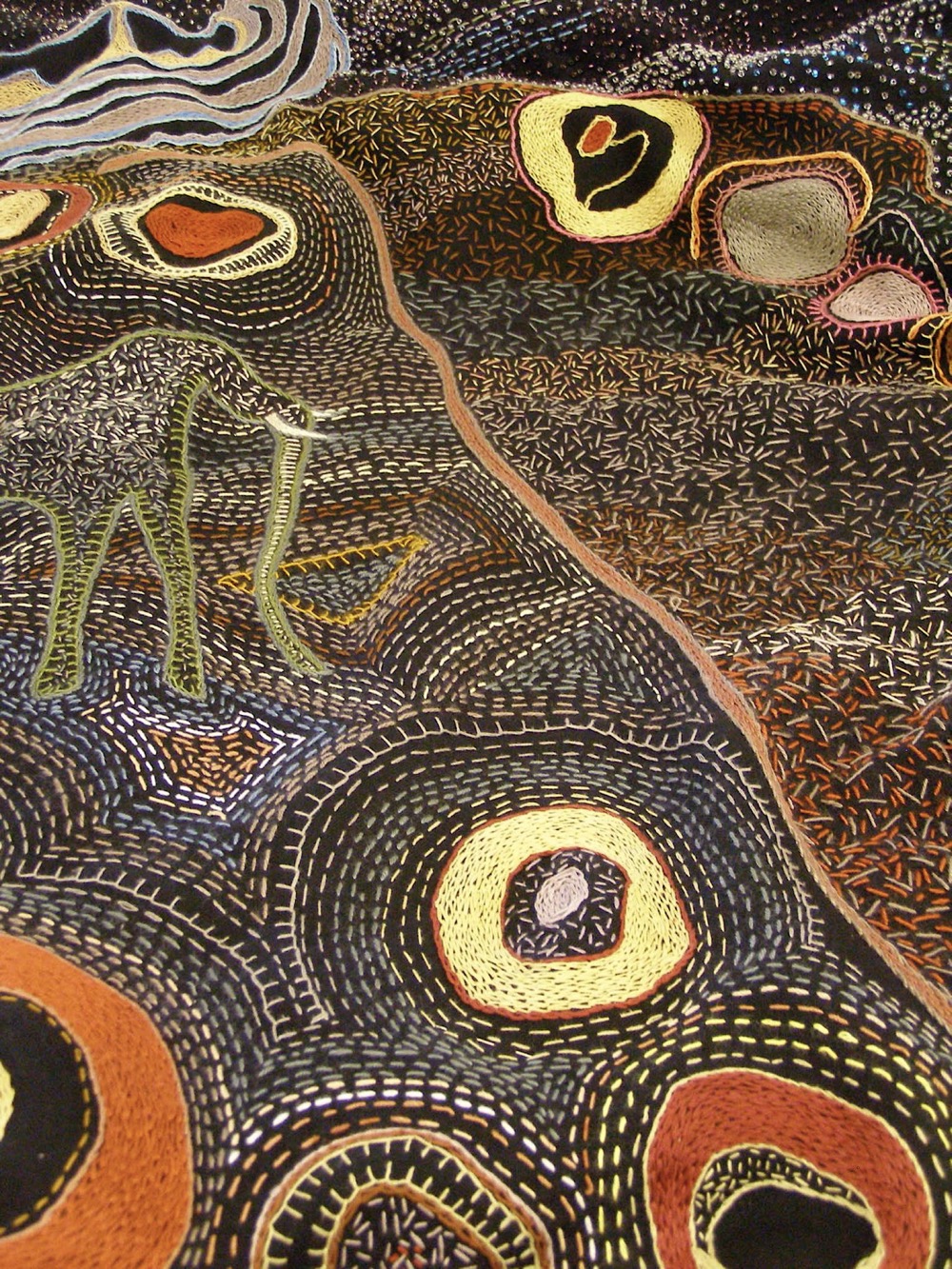
Detail: Western Cape Landscape
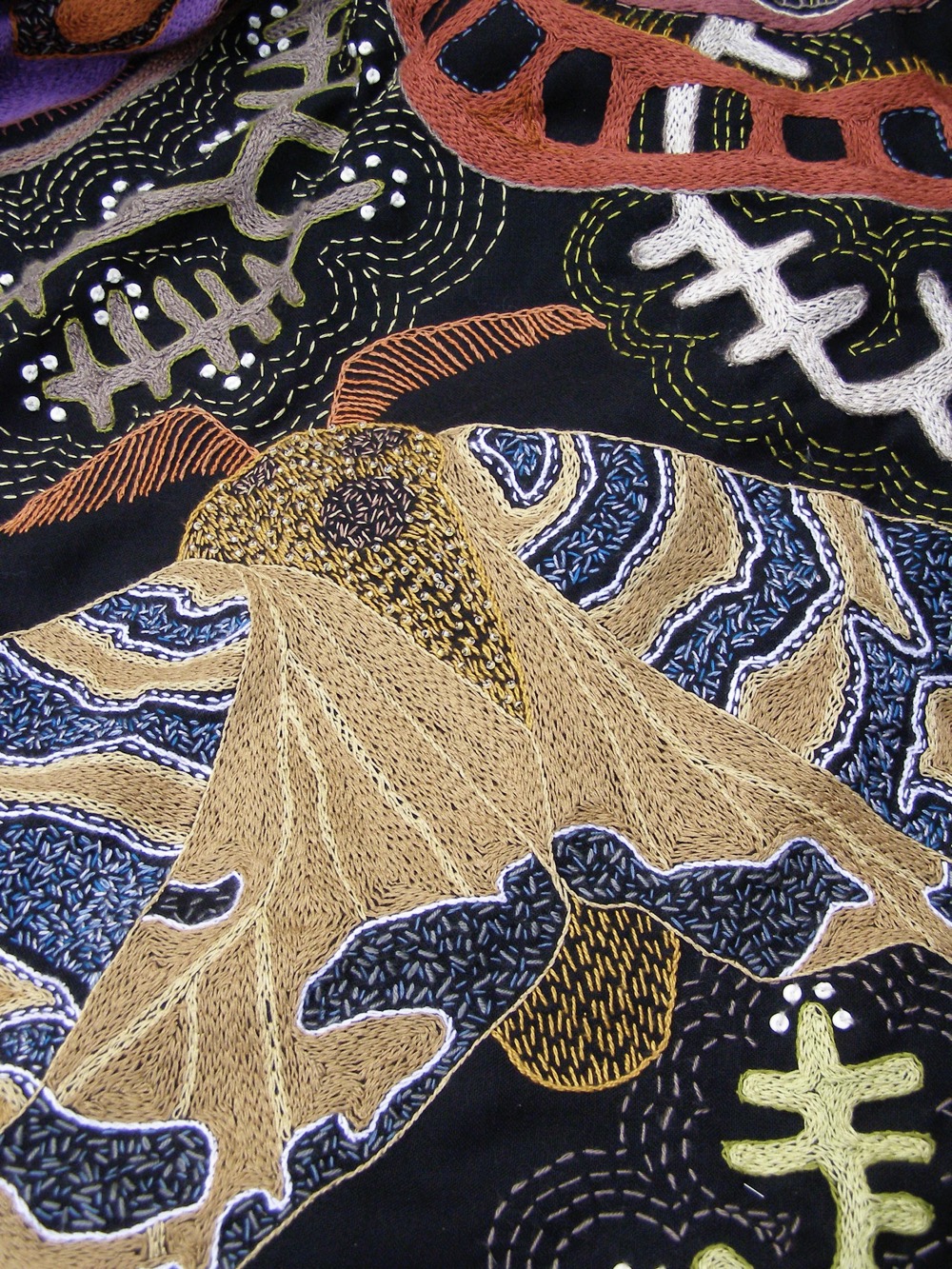
Detail: Western Cape Landscape
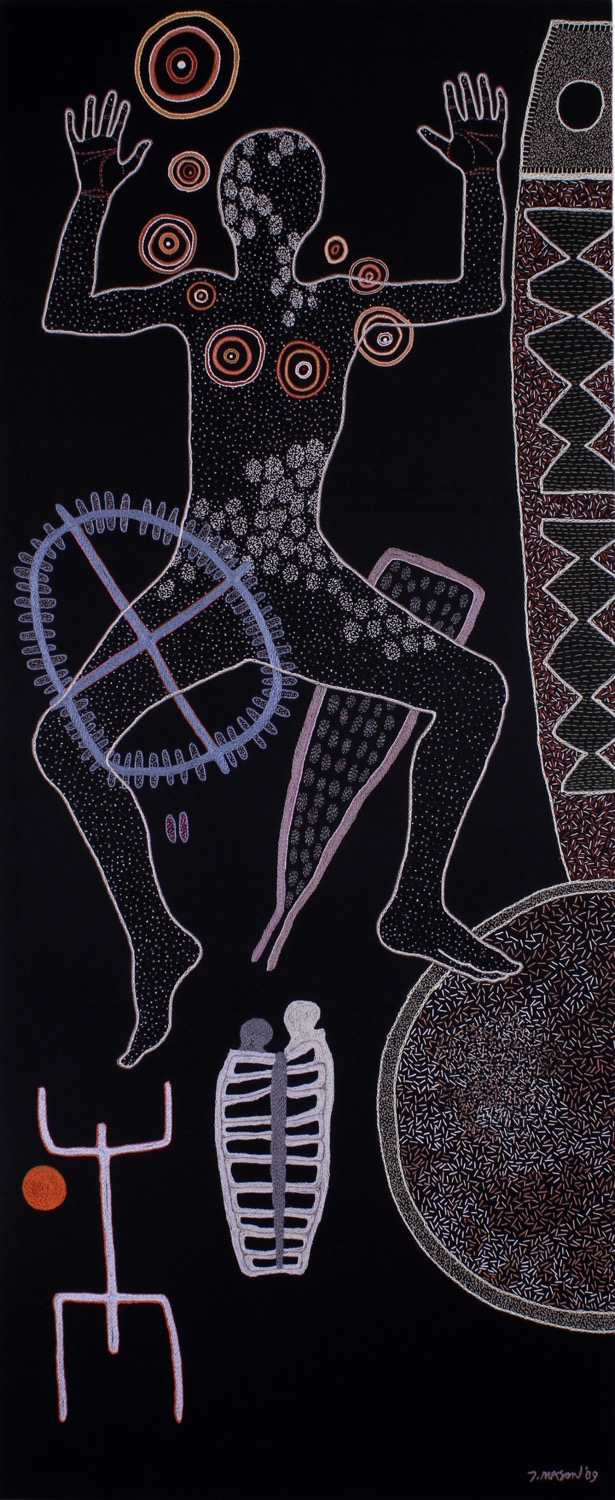
Title: Bokamoso Patience
Medium: Embroidery and beadwork on fabric
Size: 88 x 214 cm
Private collection USA
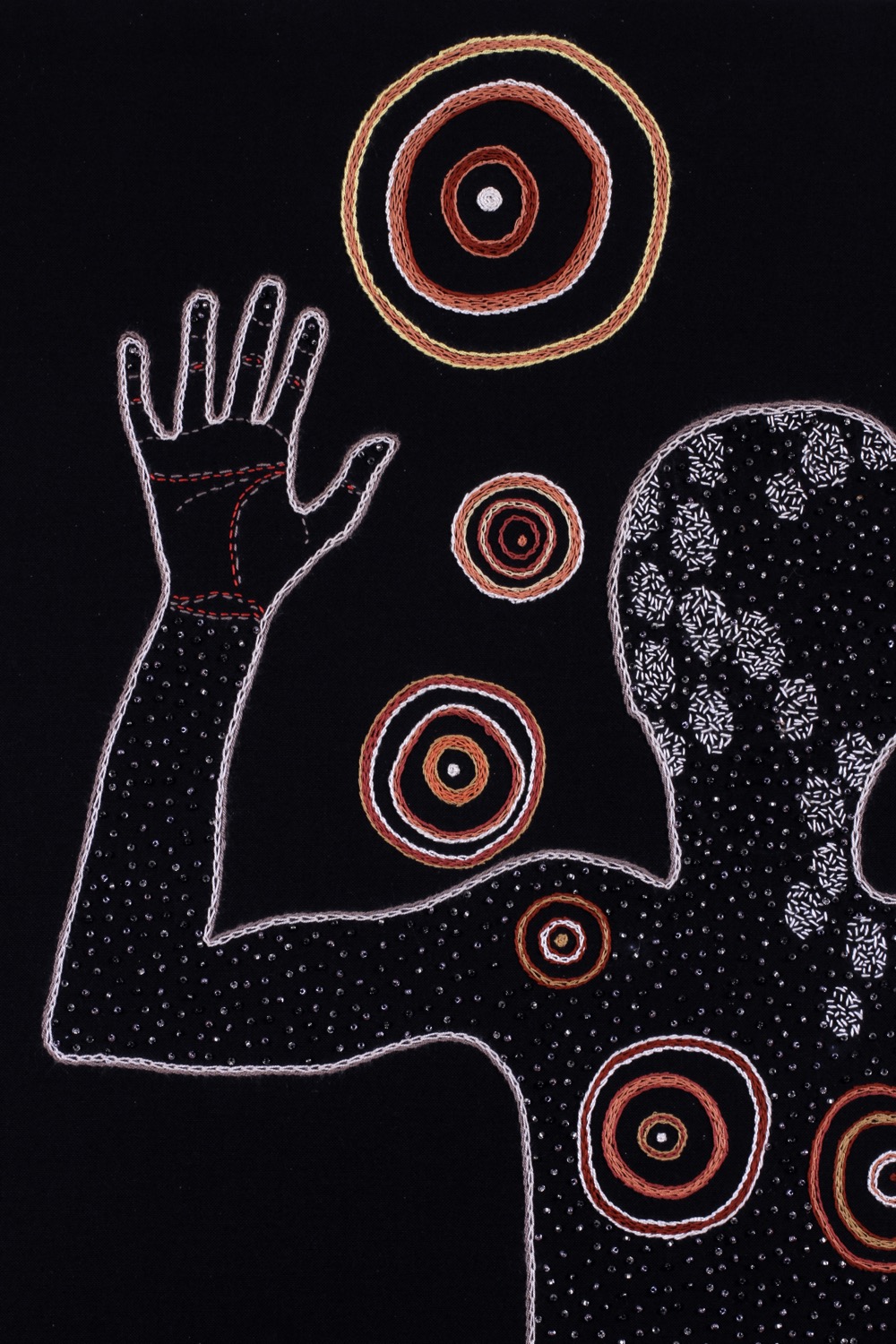
Detail: Bokamoso Patience
Medium: Embroidery and beadwork on fabric
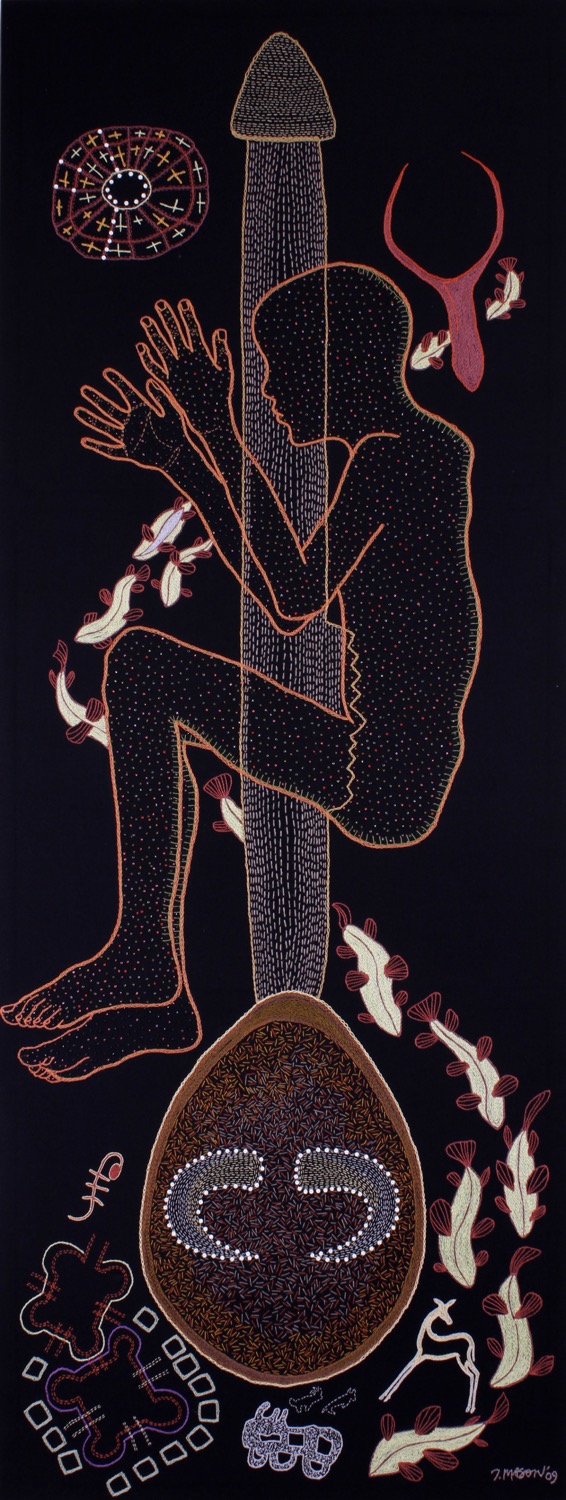
Title: Simon Seretse
Medium: Embroidery and beadwork on fabric
Size: 80 x 214 cm
Price: NFS
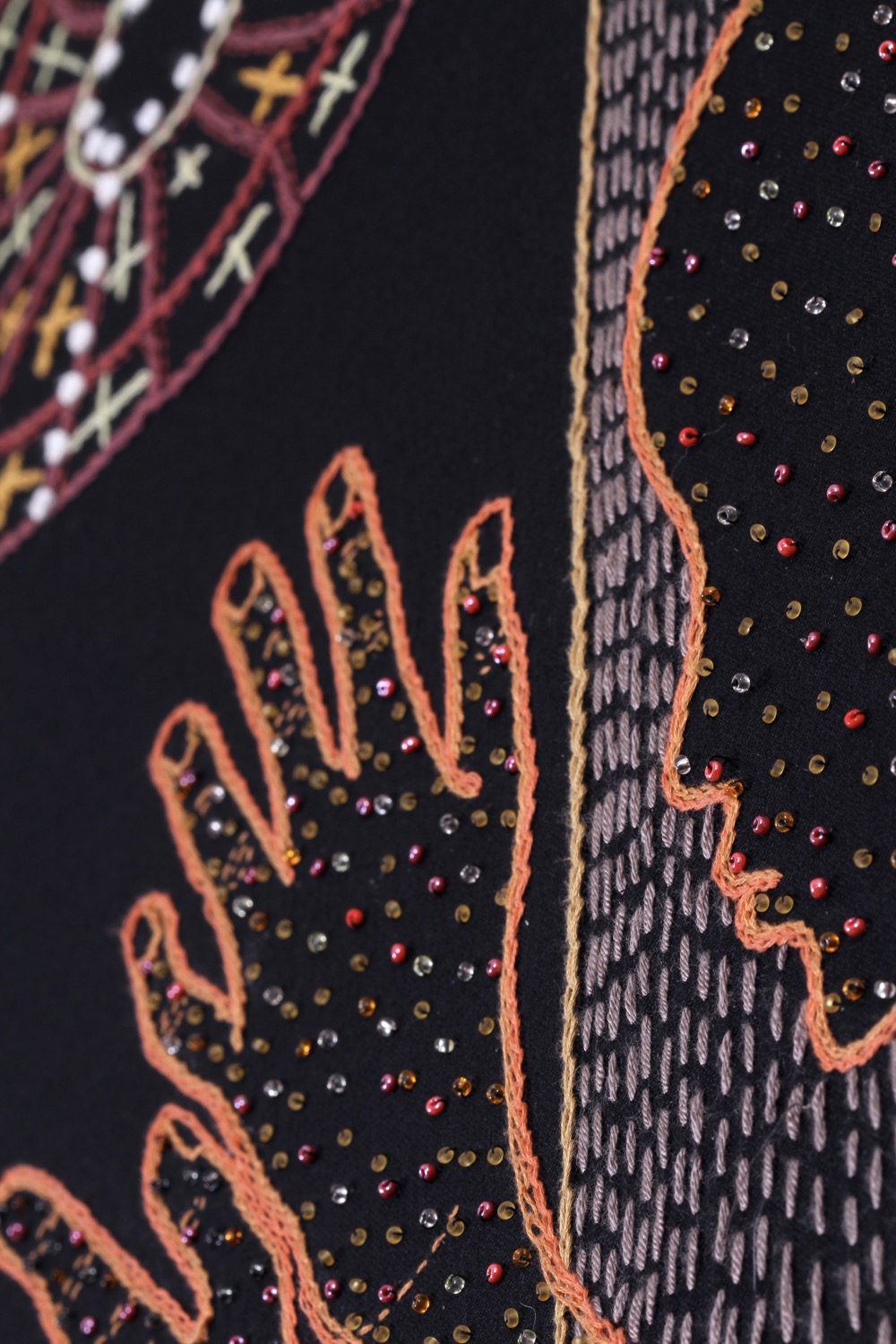
Detail: Simon Seretse
Medium: Embroidery and beadwork on fabric
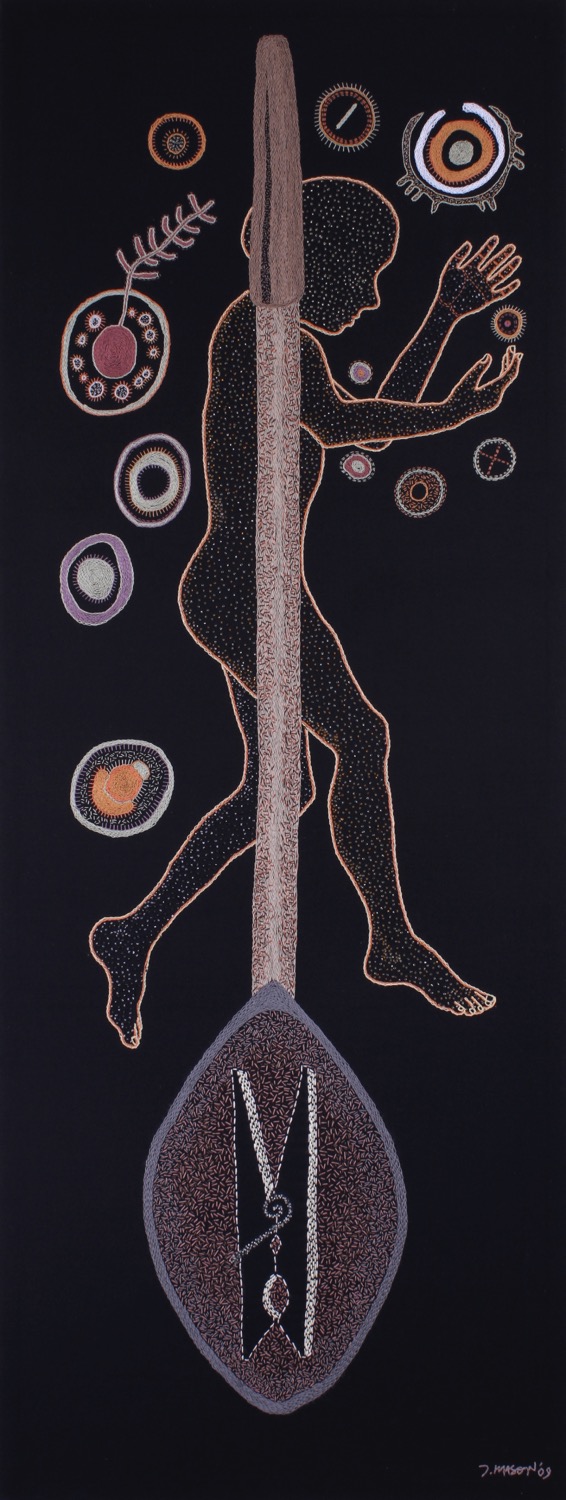
Title: Maru Francis
Medium: Embroidery and beadwork on fabric
Size: 80 x 214 cm
Price: NFS
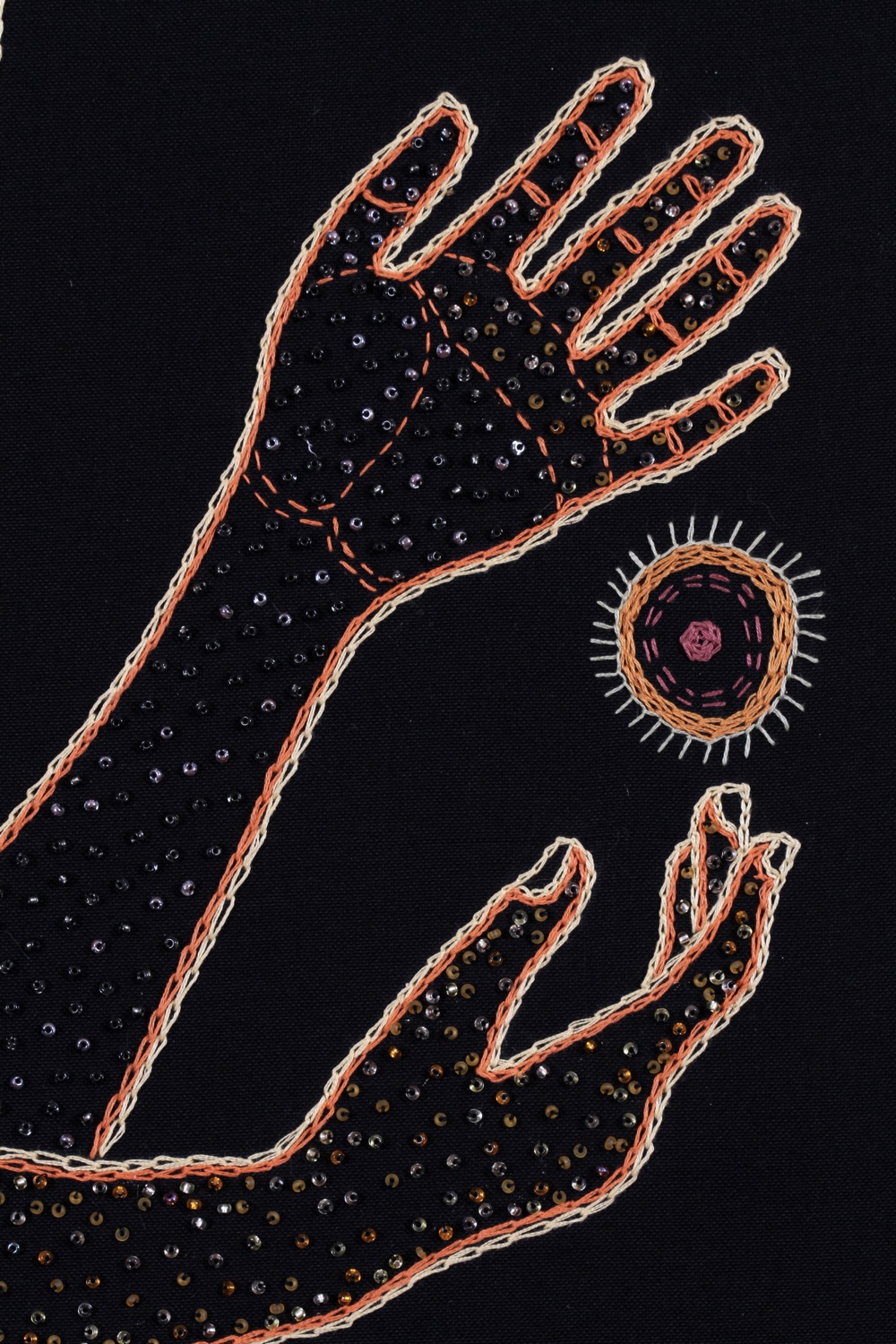
Detail: Maru Francis
Medium: Embroidery and beadwork on fabric
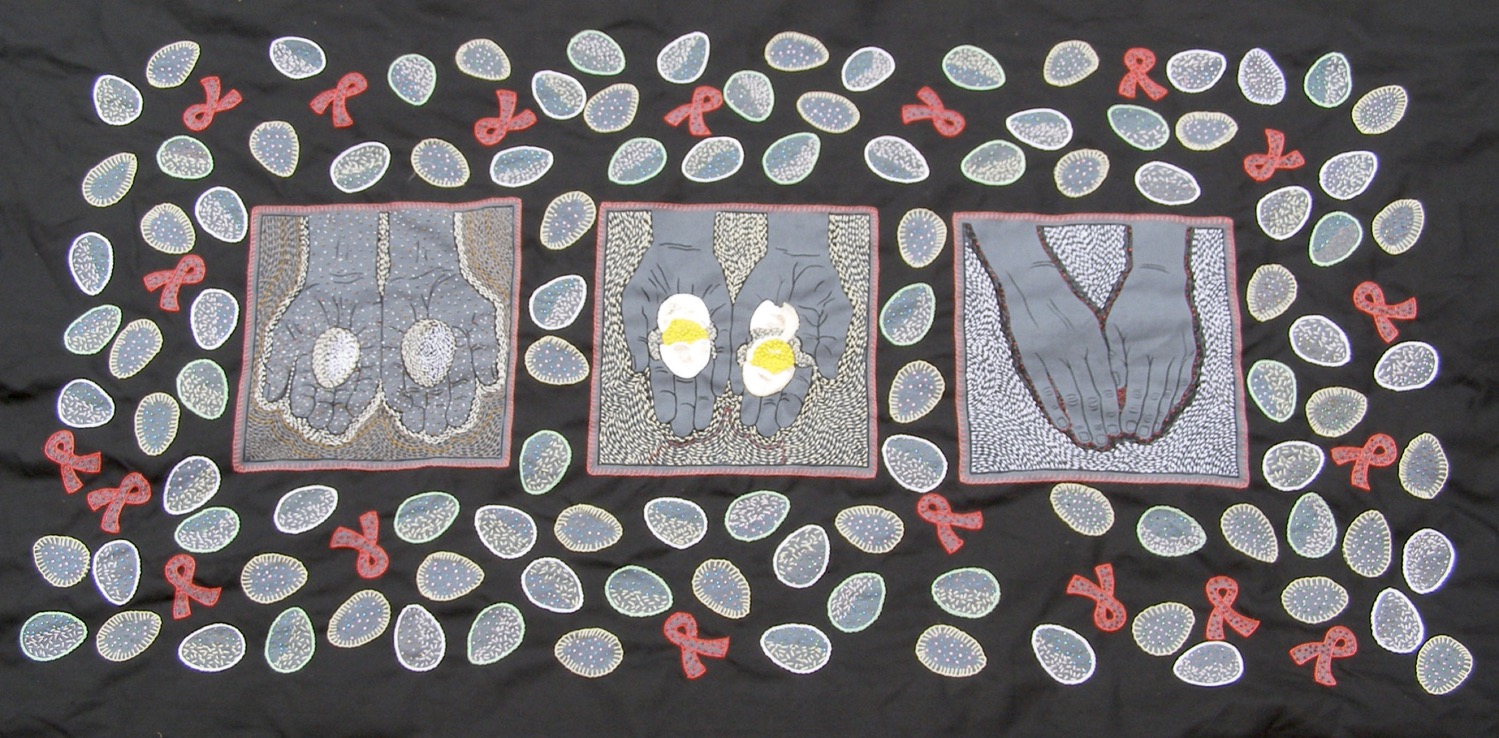
Title: Origins (AIDS advocacy project, Artist Proof Studio, unstretched)
Medium: Embroidery, printing ink and beadwork on fabric
Size: 105 x 210 cm
Price: Commission
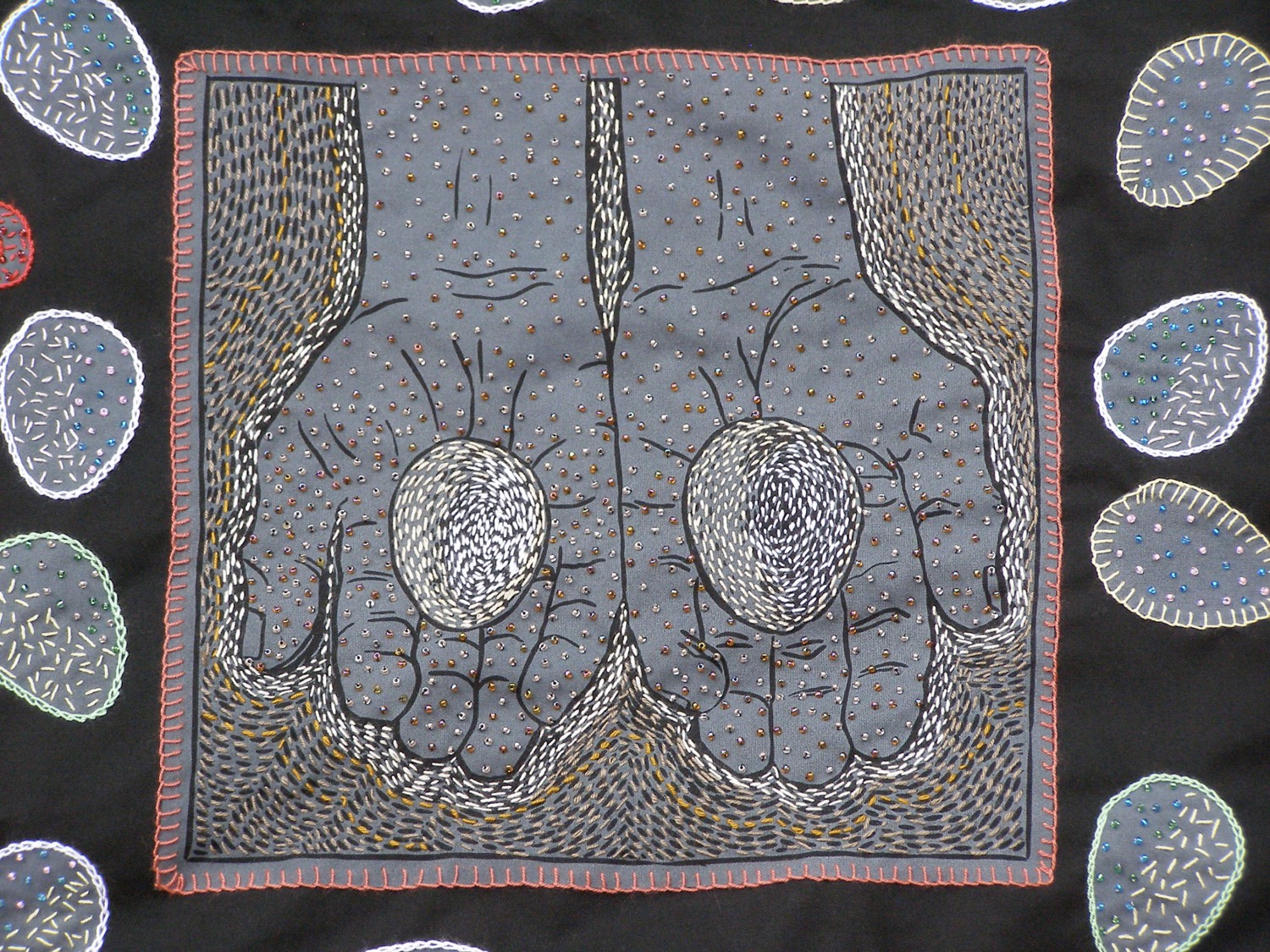
Detail: Origins
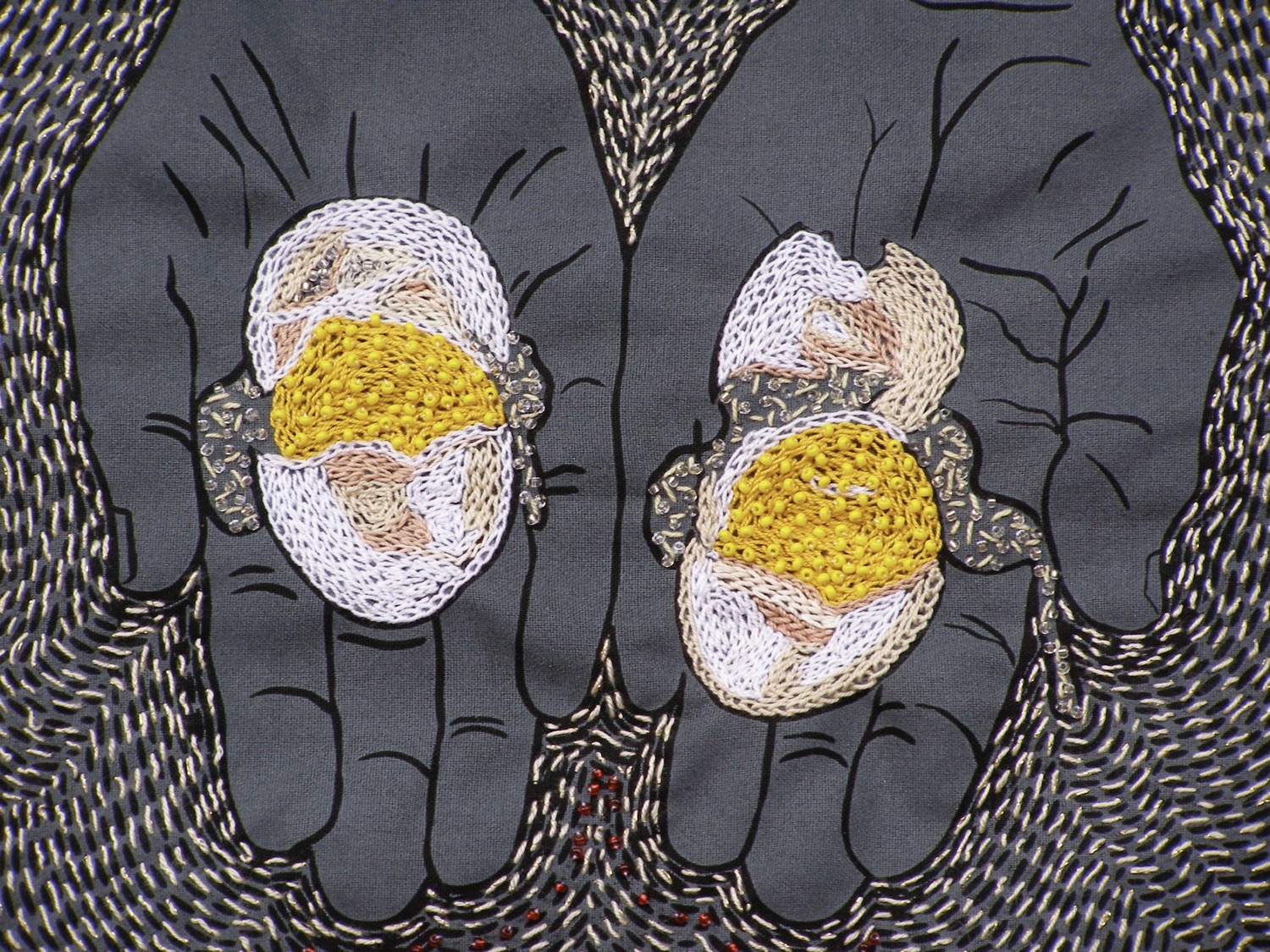
Detail: Origins
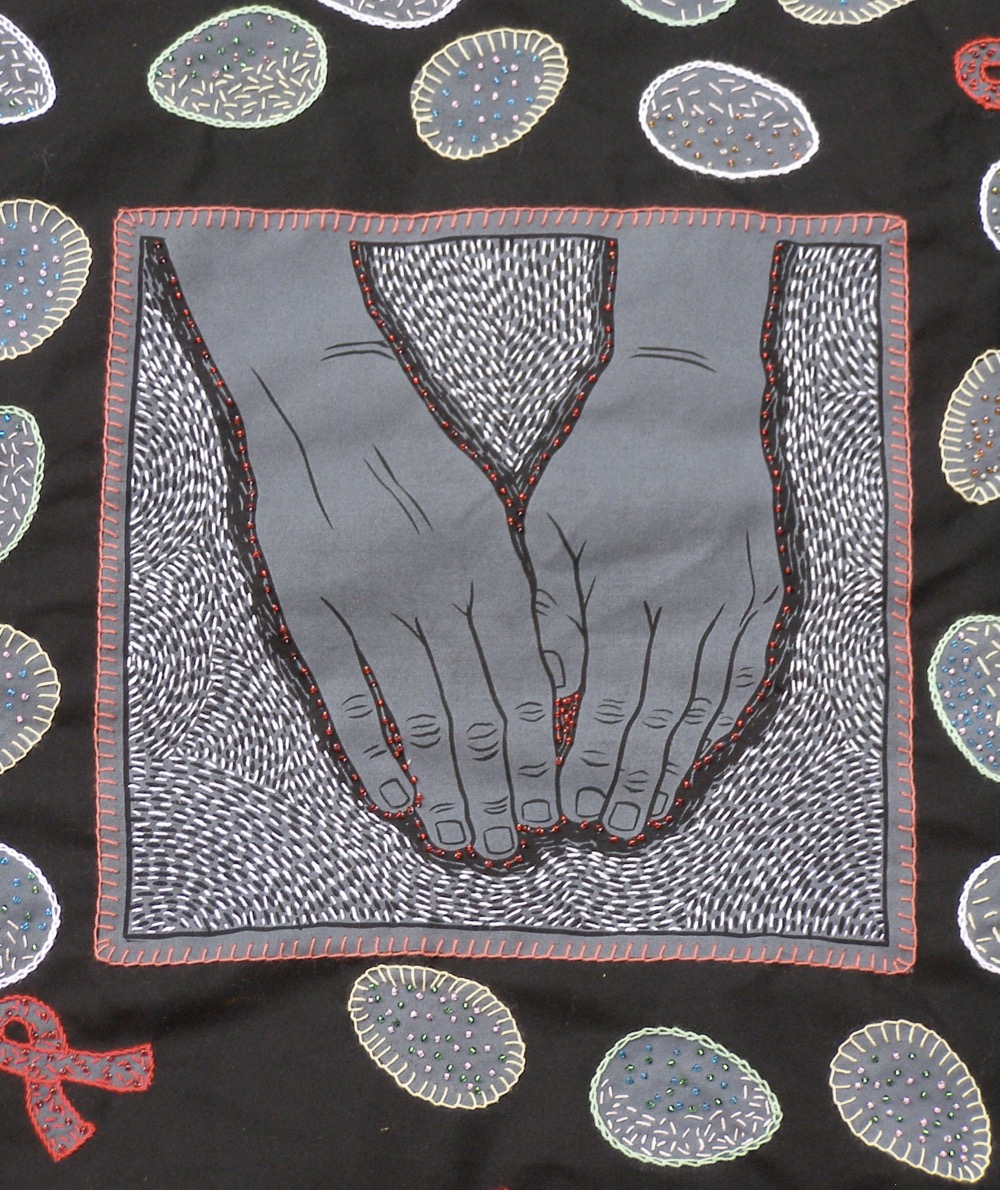
Detail: Origins
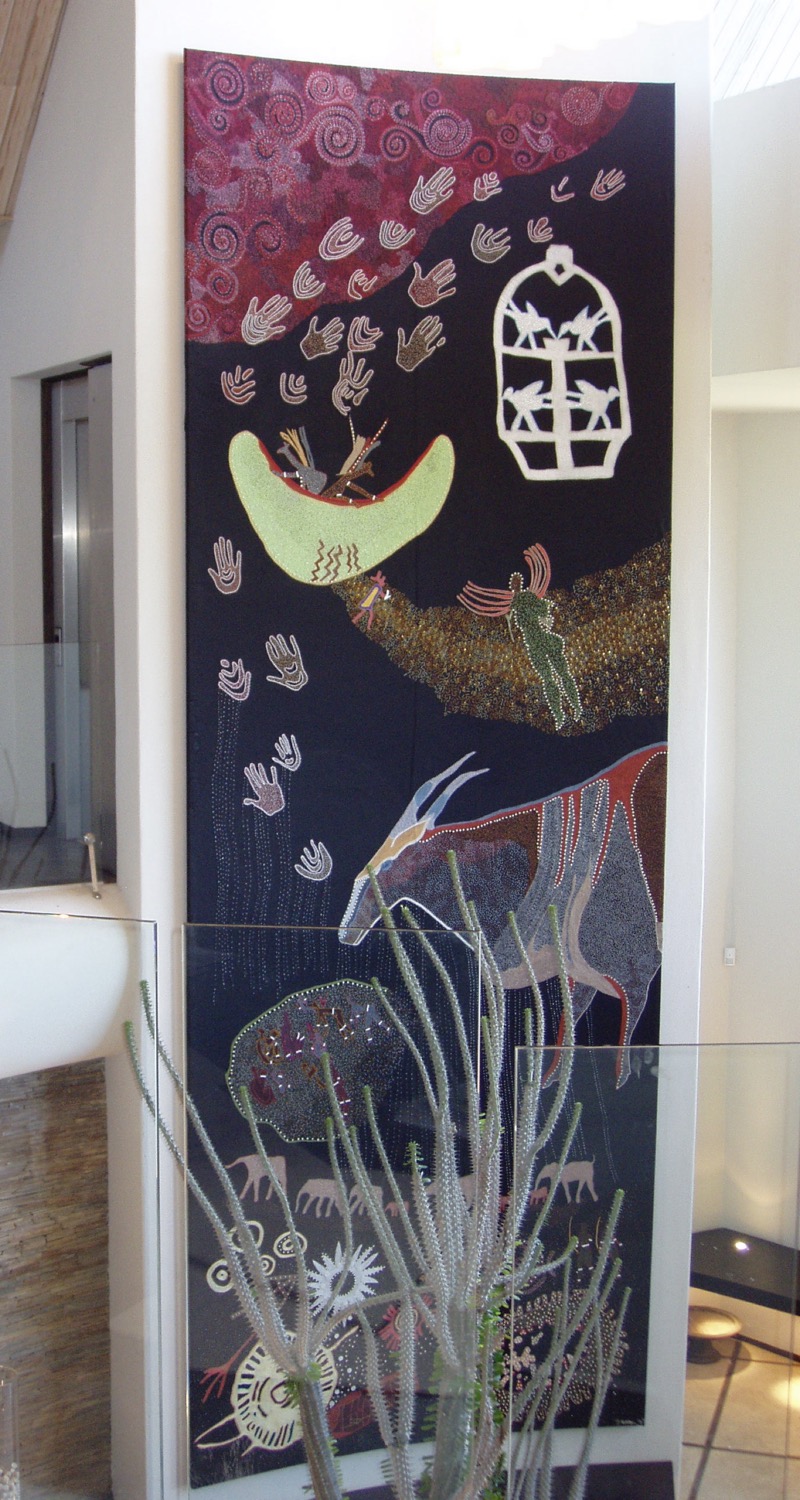
Title: Graham Beck Winery, Franschhoek
Medium: Embroidery and bead work on fabric
Size: 6 x 2.5 m
Commission
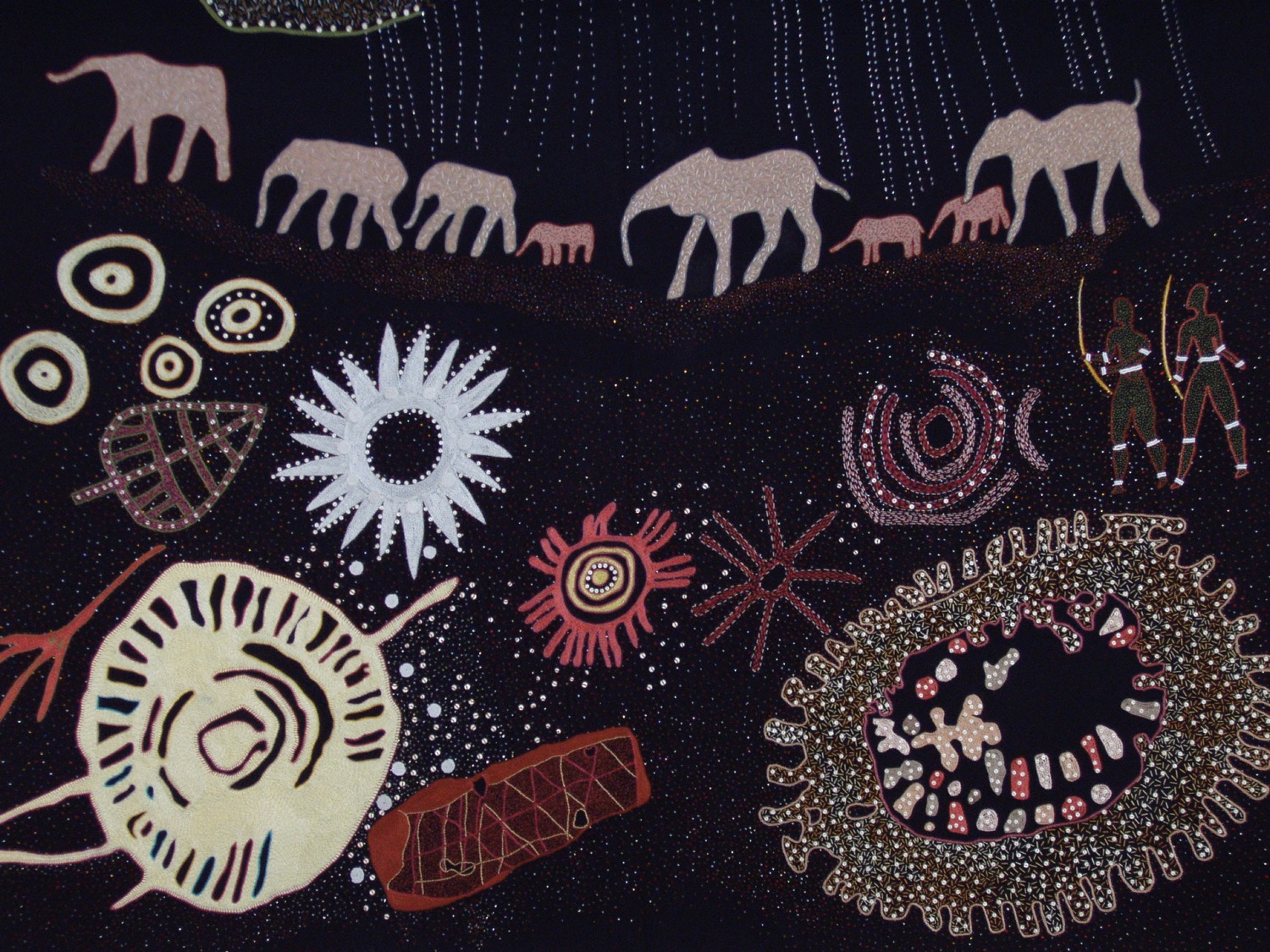
Detail: Graham Beck Winery, Franschhoek
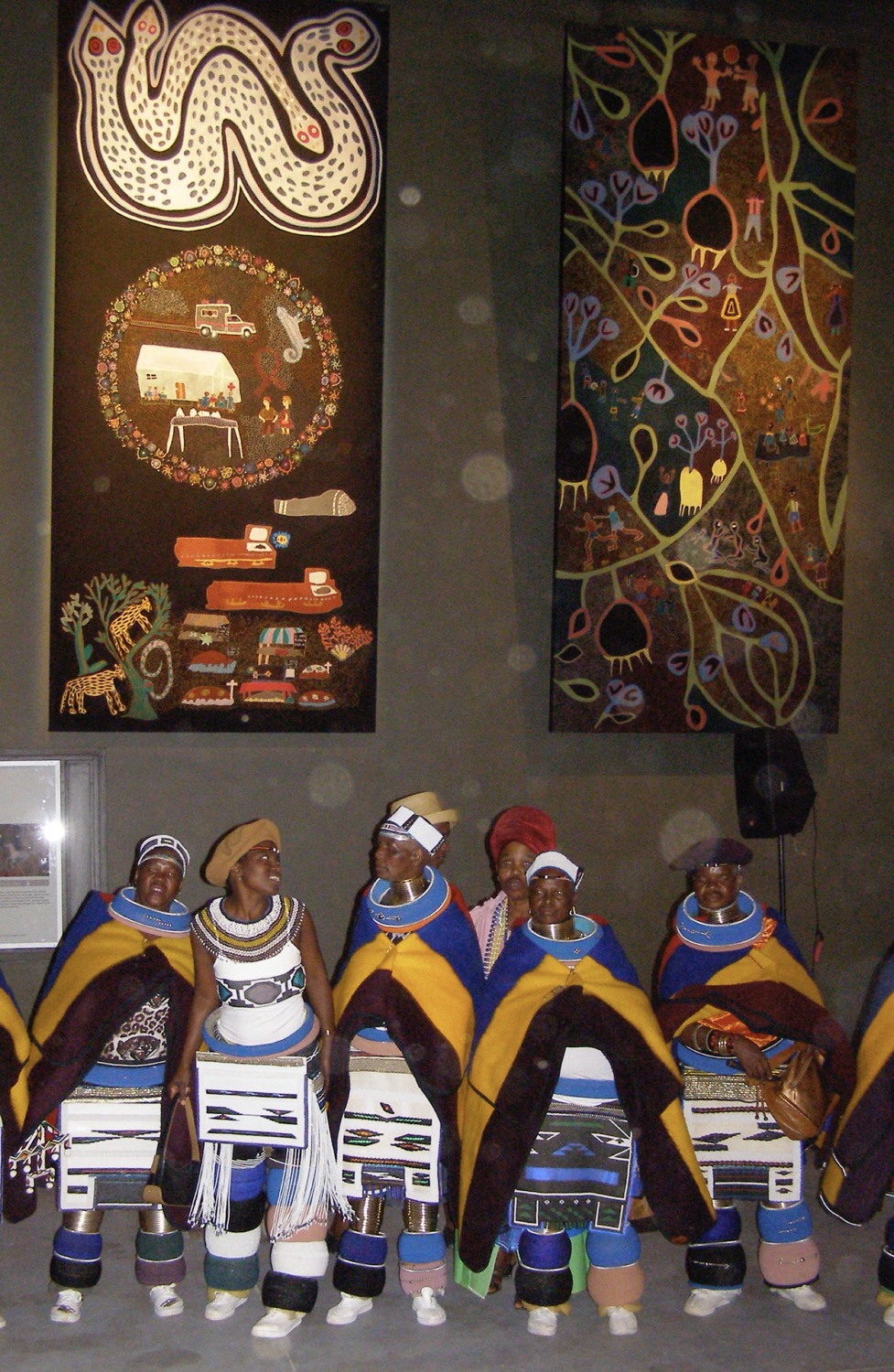
The Kosikona women at the press launch of The Origins Centre, University of the Witwatersrand. The women were technical assistants on the panels
Tamar Mason was commissioned to design and make eleven panels (each 4.5 x 2 m)depicting the history of the San, using rock art and contemporary San art references. Apologies for the poor quality of these images, lighting for good photography is difficult in the room. To get a better idea of the work take a look here
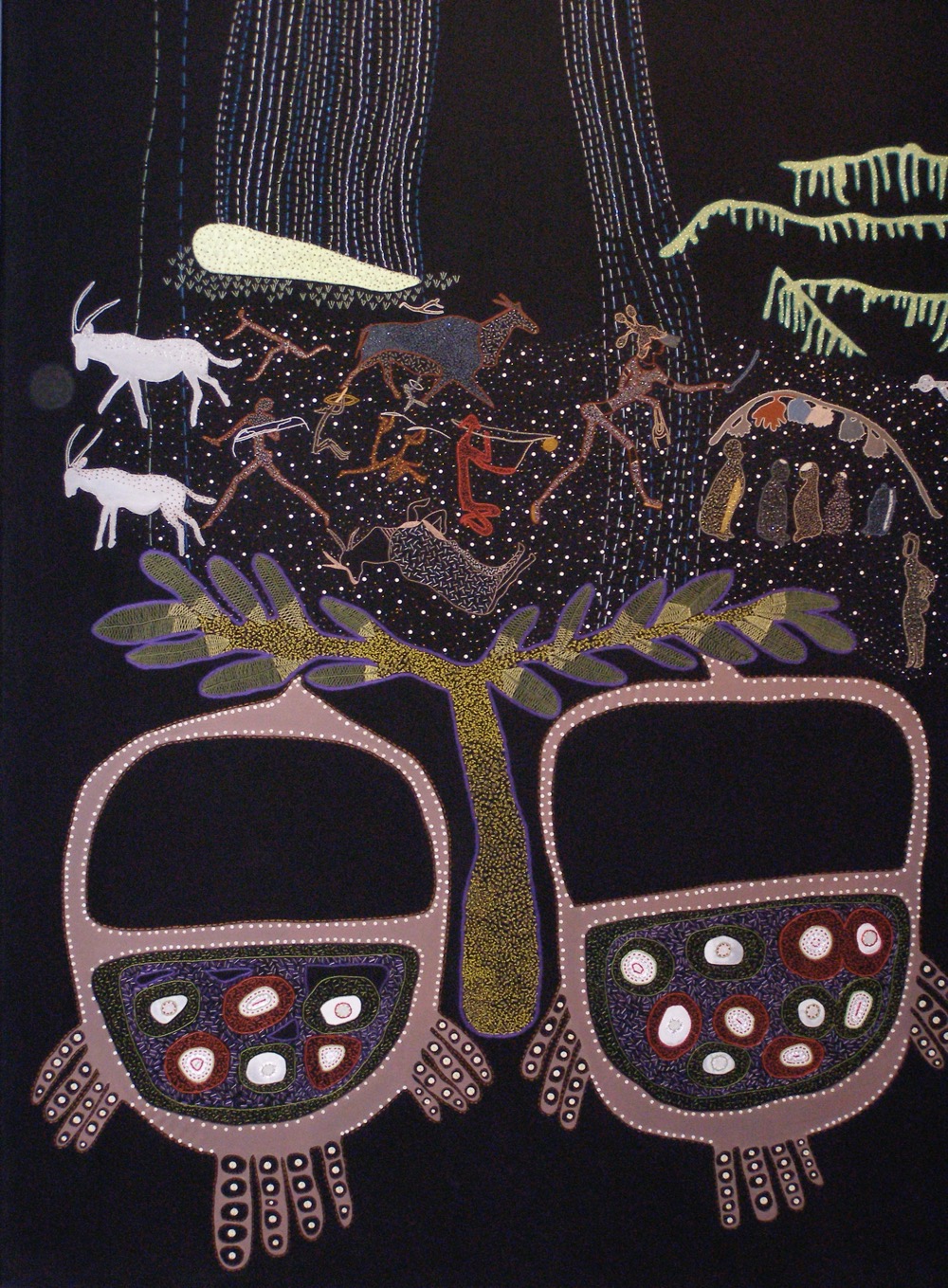
The second panel "Traditional Life"
Medium: Embroidery, fabric paint and beadwork on fabric
Size: 4.5 x 2 m (each panel, total of 11)
Price: Commission
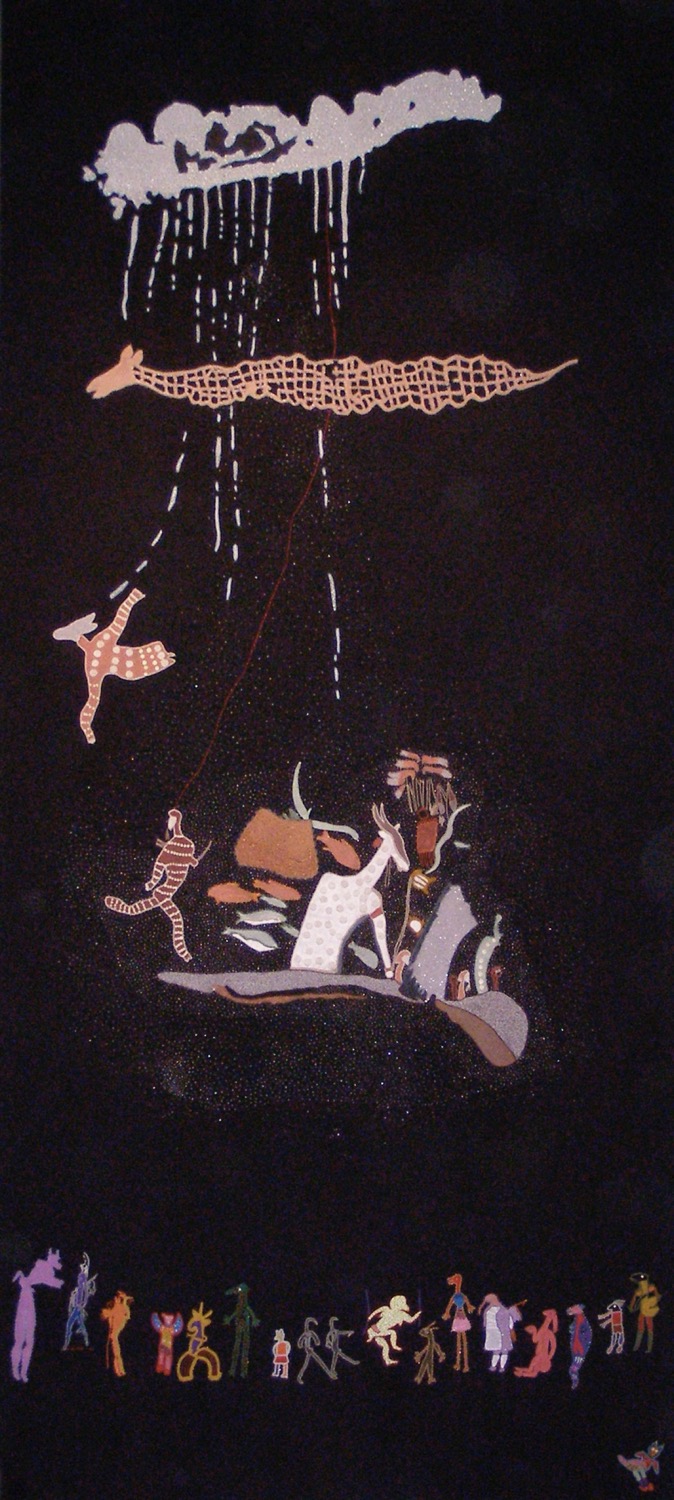
Panel 1
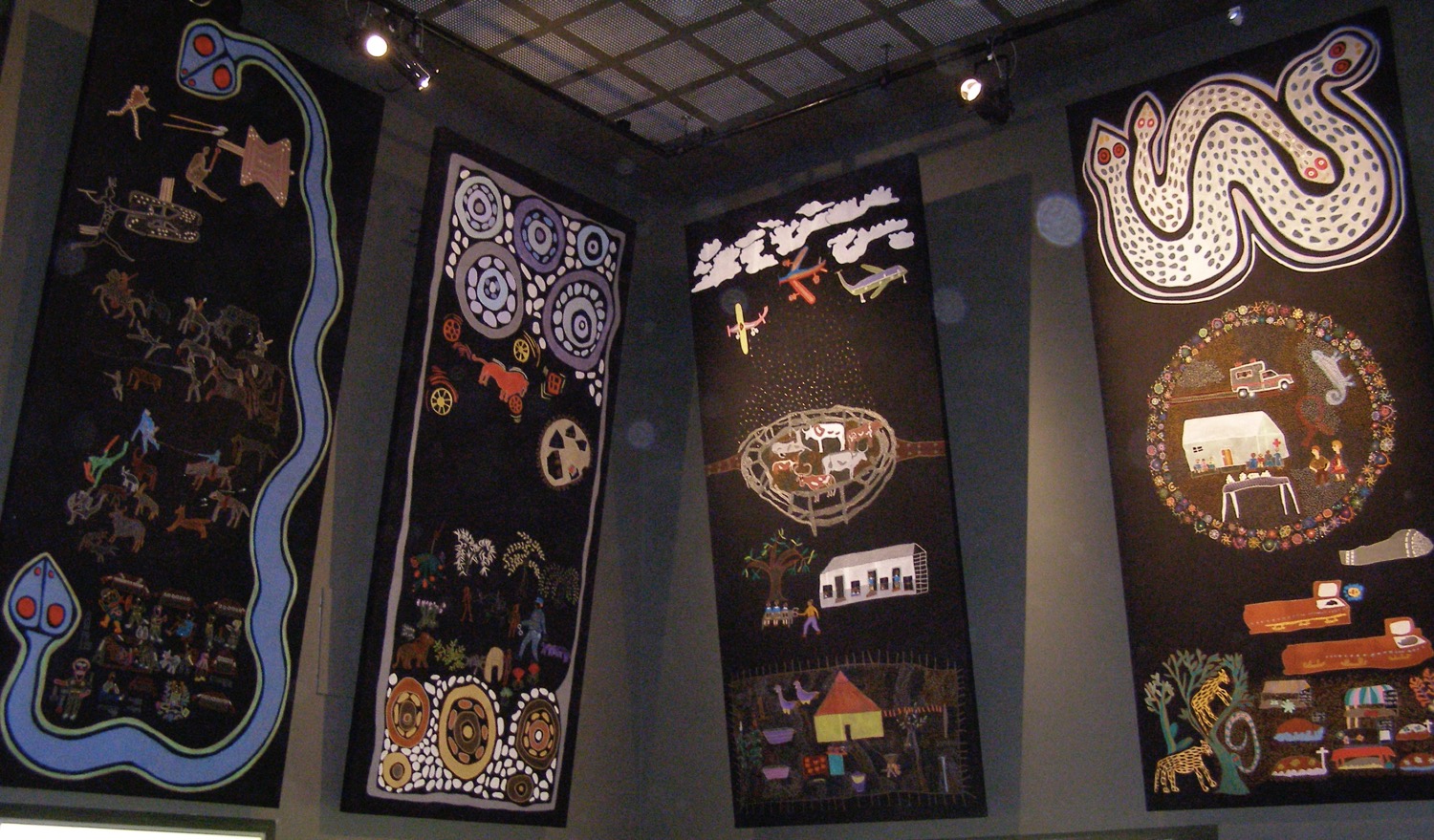
Panels 6 - 9
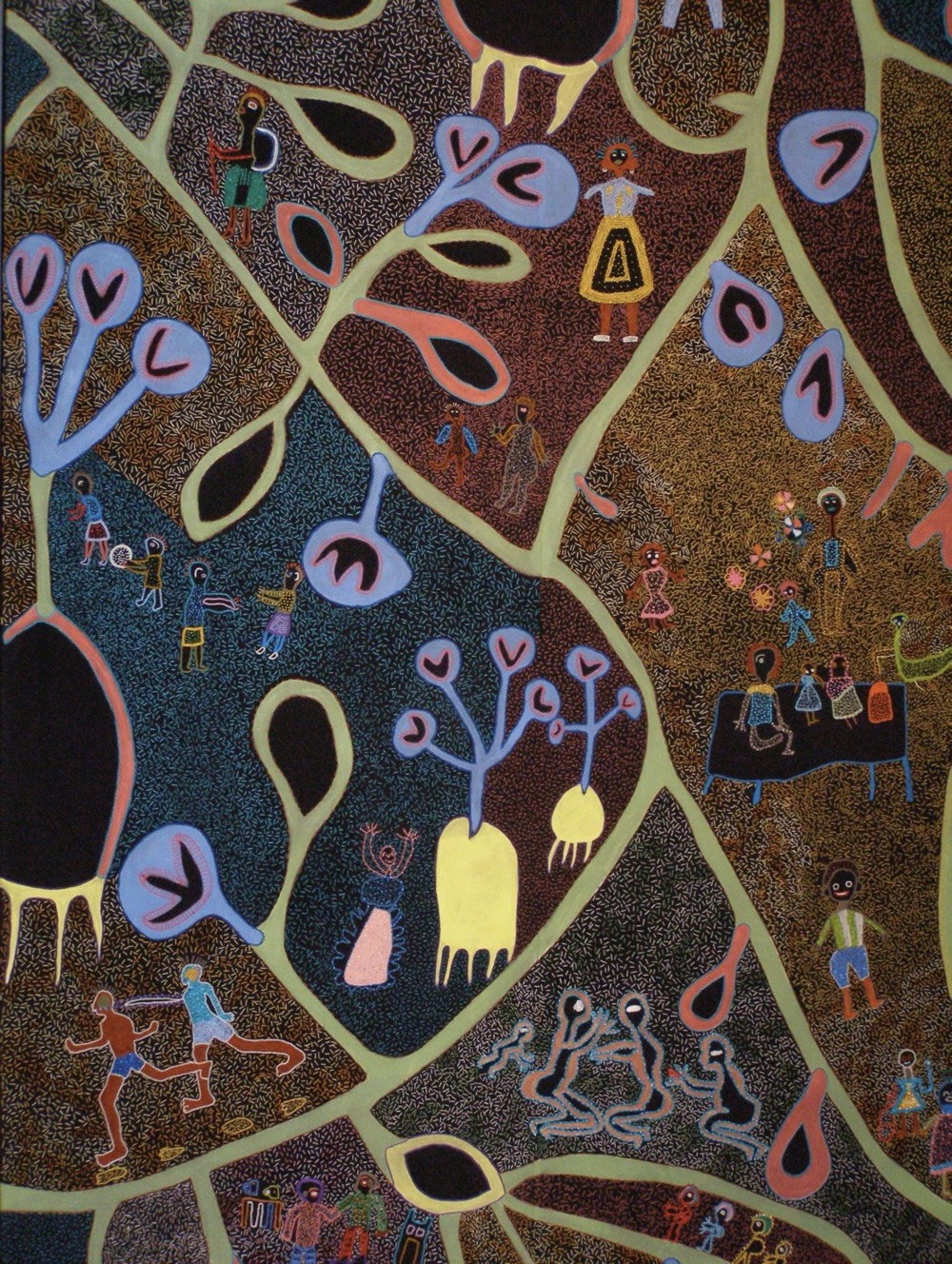
Panel 11
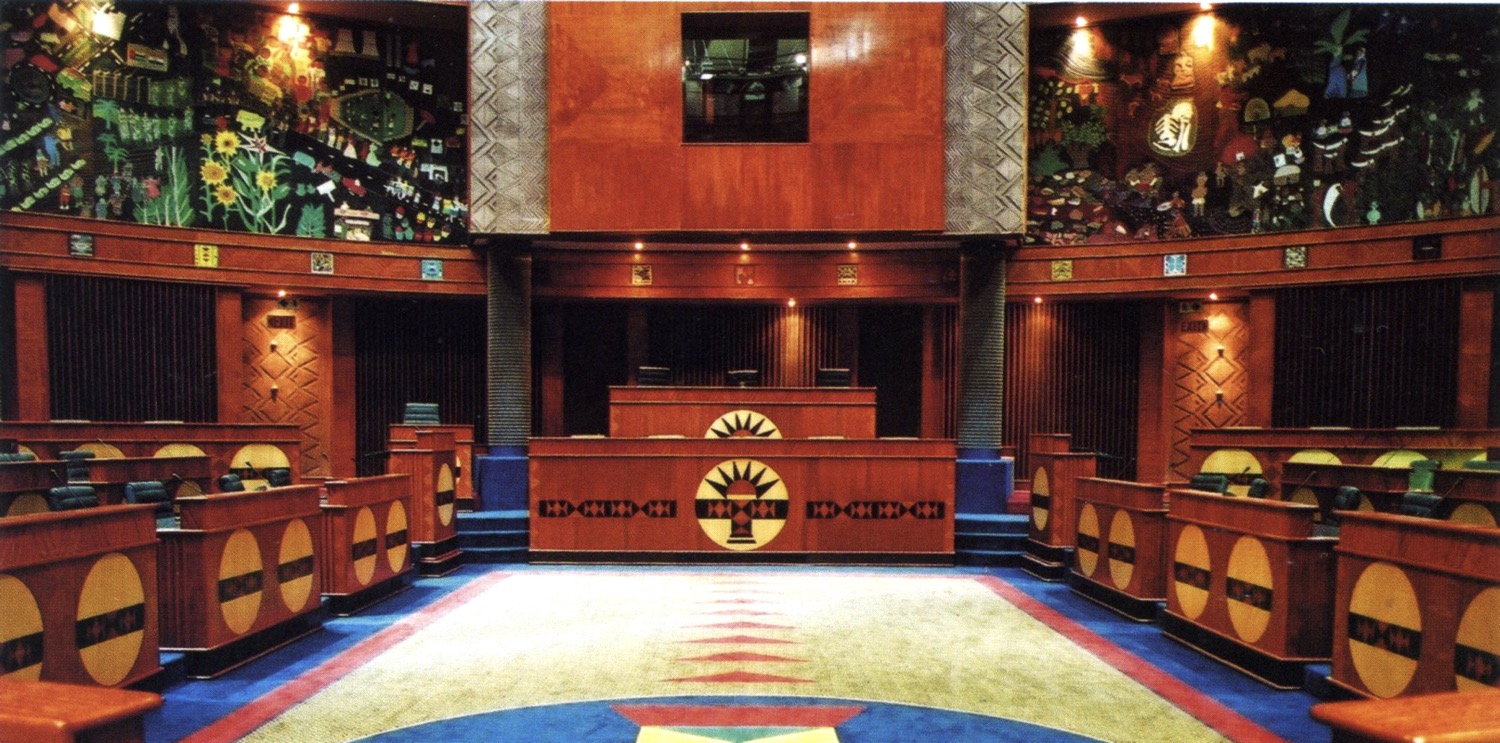
Mpumalanga Legislature Assembly Chamber interior. This work was commissioned by Meyer Pienaar Architects in 1998. Tamar Mason was one of the principal designers and technical skills trainer for the sixty rural women who put the work together. The panels tell the story of the history of the Mpumalanga province and measure 35 m long by 3.5 m high. They are worked onto a base of worsted fabric with beads, wire work, applique and embroidery.
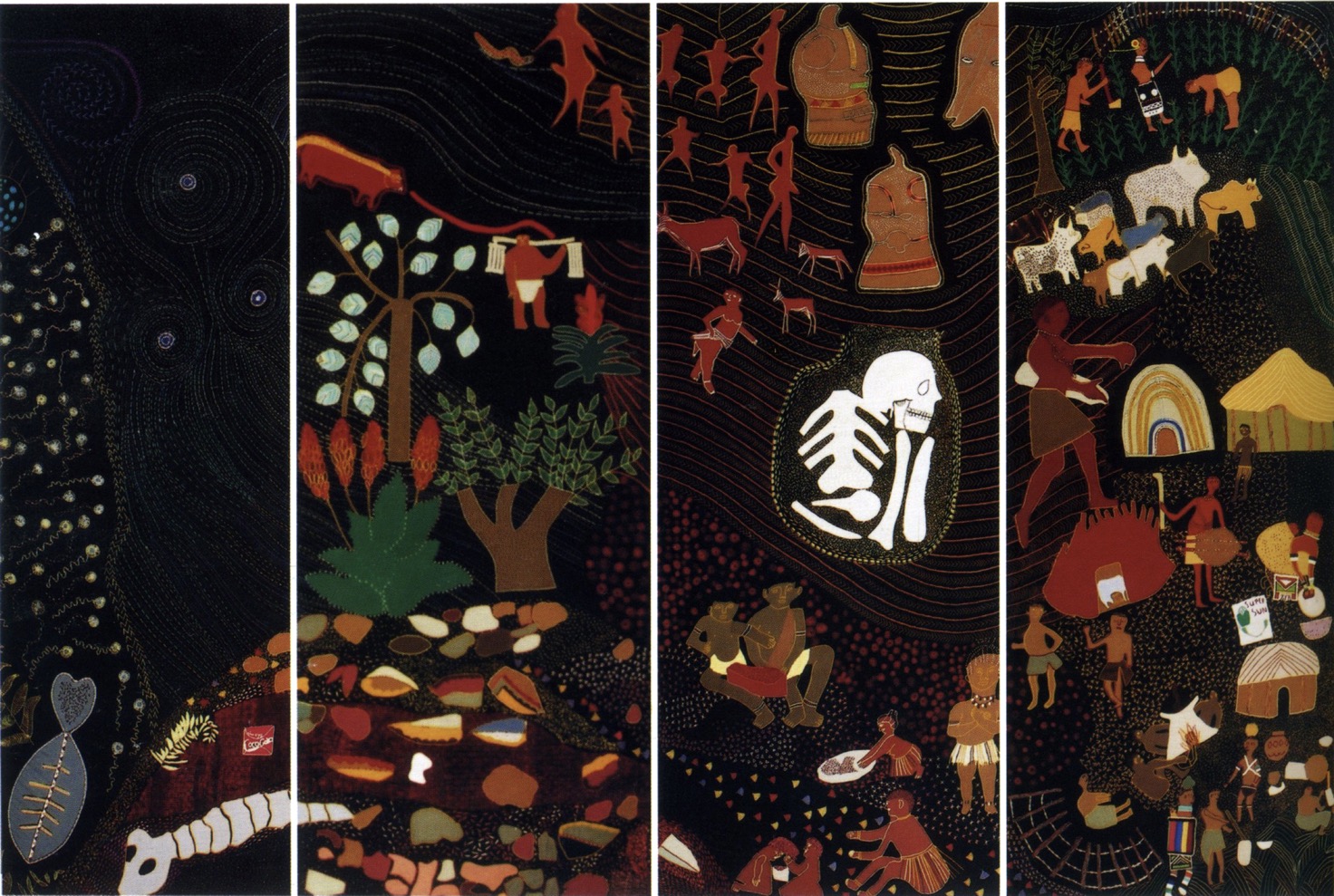
The first four panels (first signs of life, fauna, stone age, iron age)
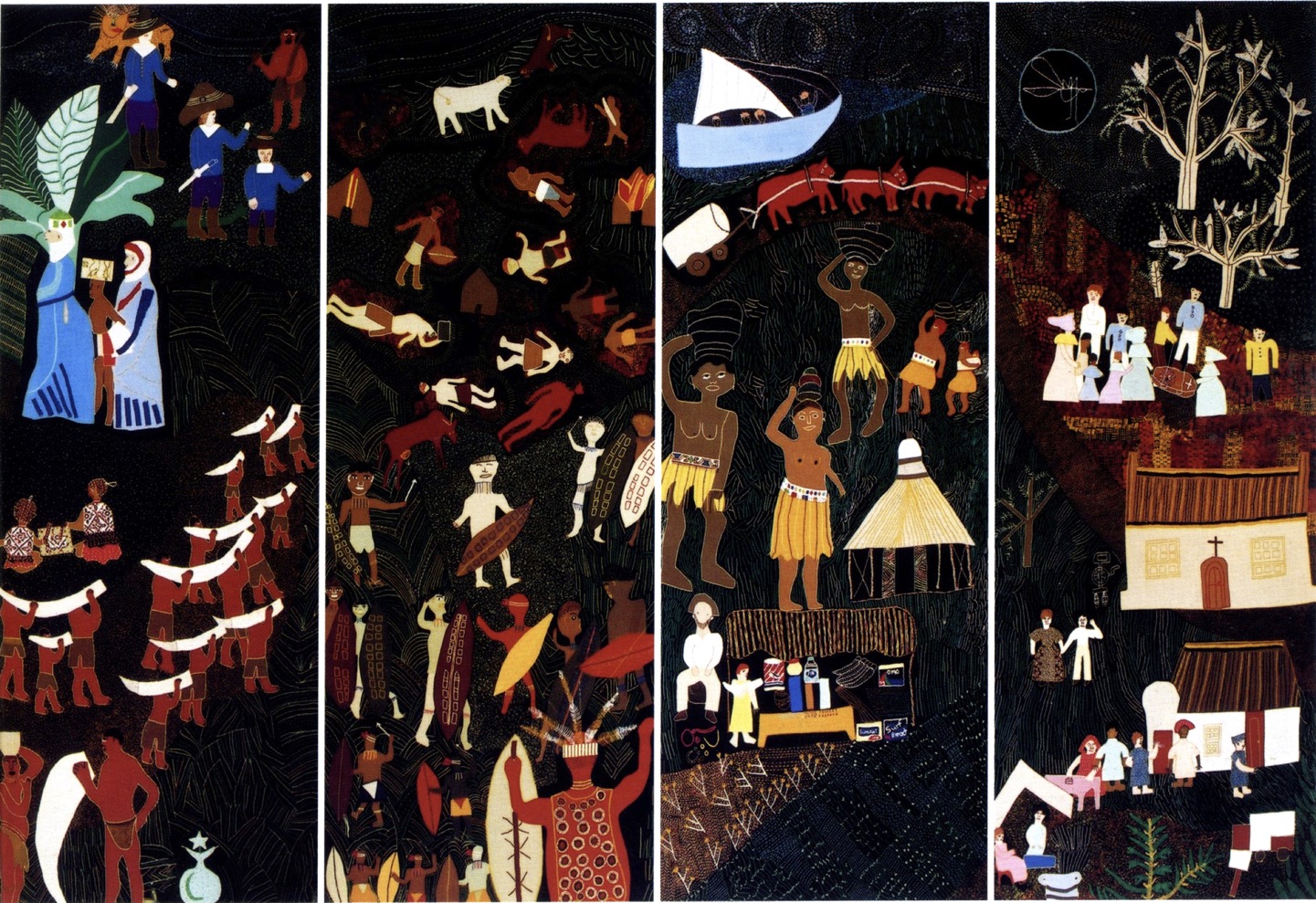
Panels 5 to 8 (Arab trade, Mfecane, Maputo trading, arrival of the Boers, Orighstad and establishment of Lydenburg)
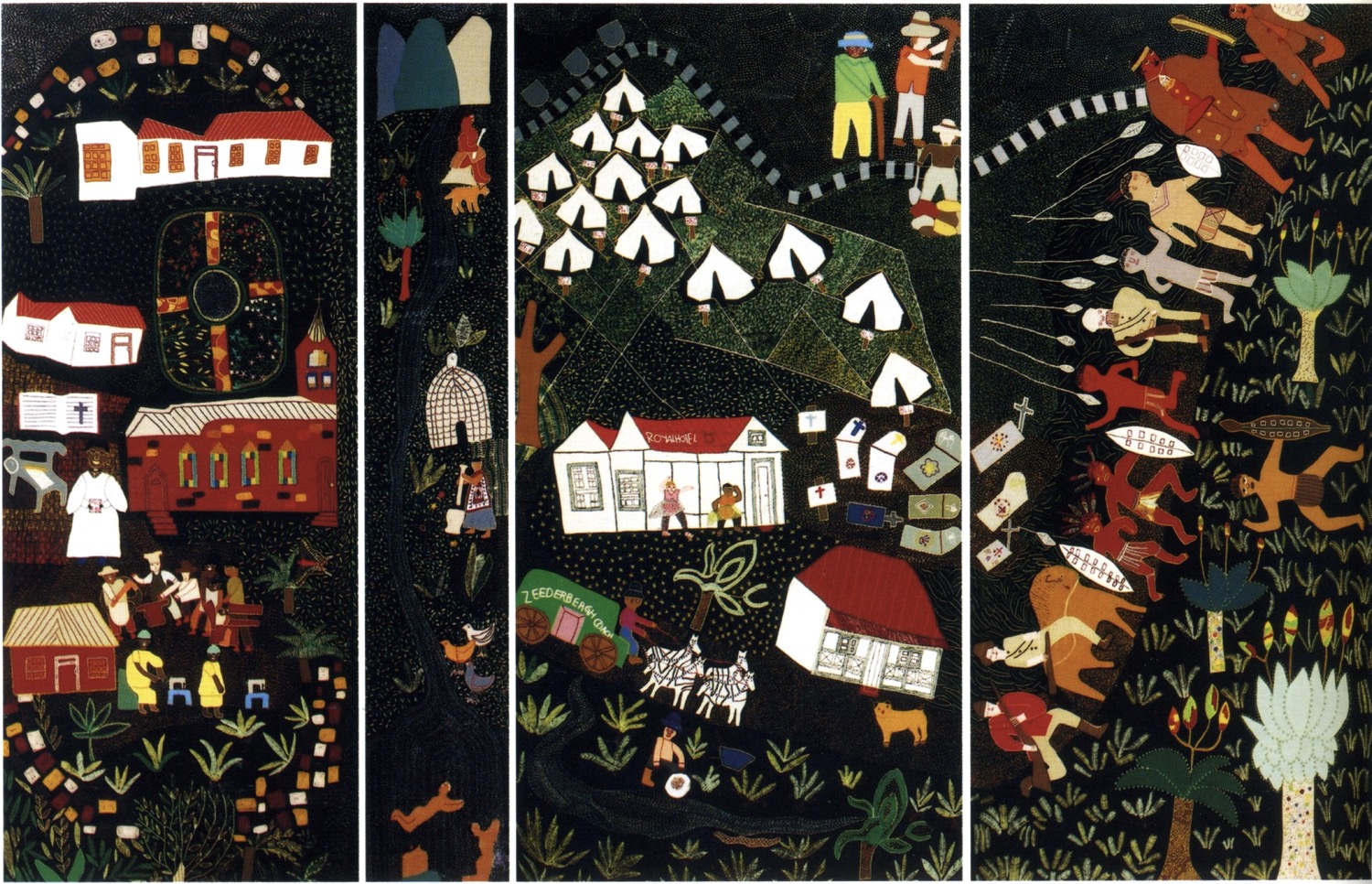
Panels 9-11 (Botshabelo, Emanzana, Pilgrims Rest gold, Boer war and Pedi war).
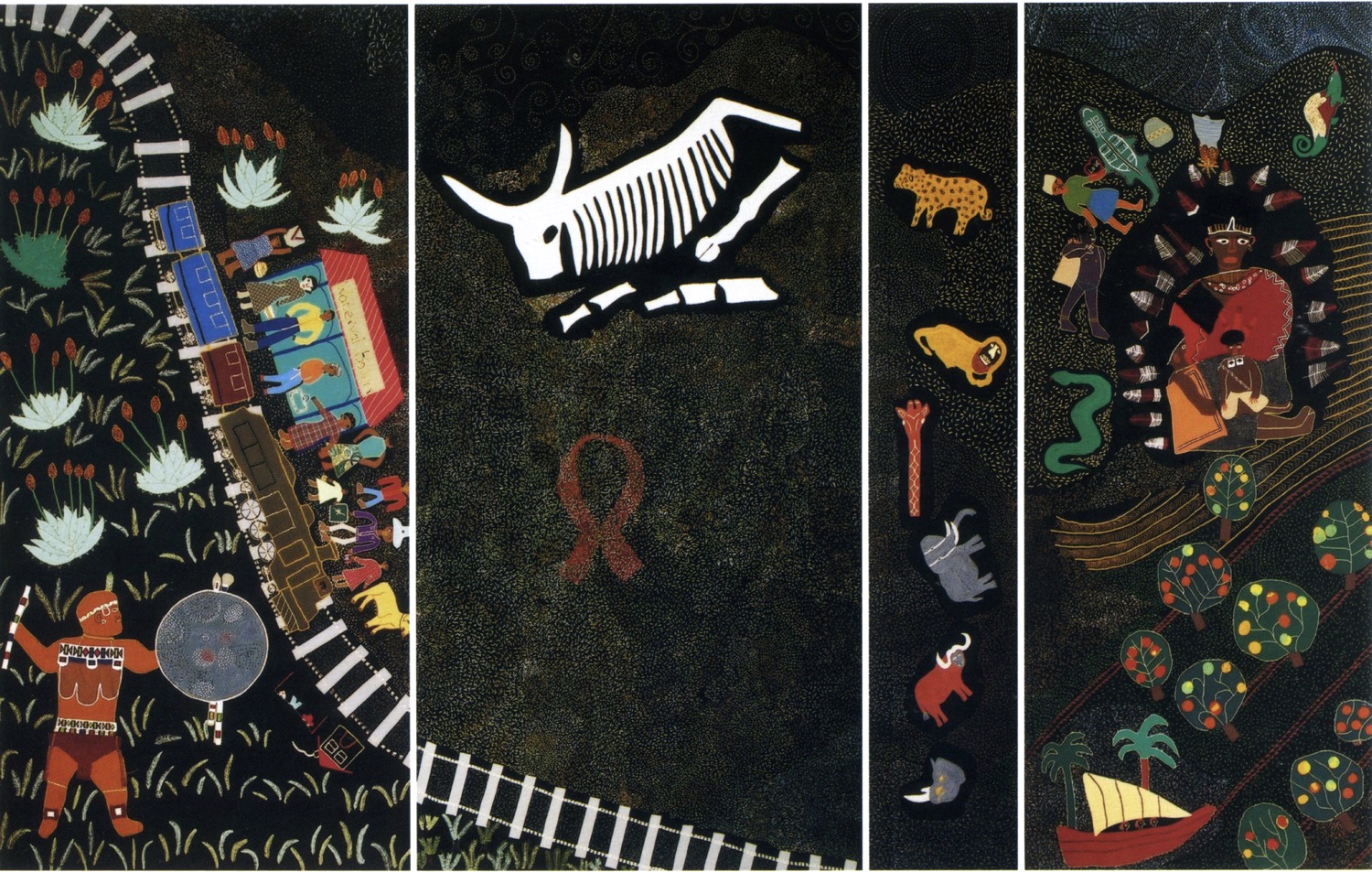
Panels 14-16 (Ndebele wars, establishment of railroad, Rinderpest/AIDS, big five, Swazi culture, citrus, trade).
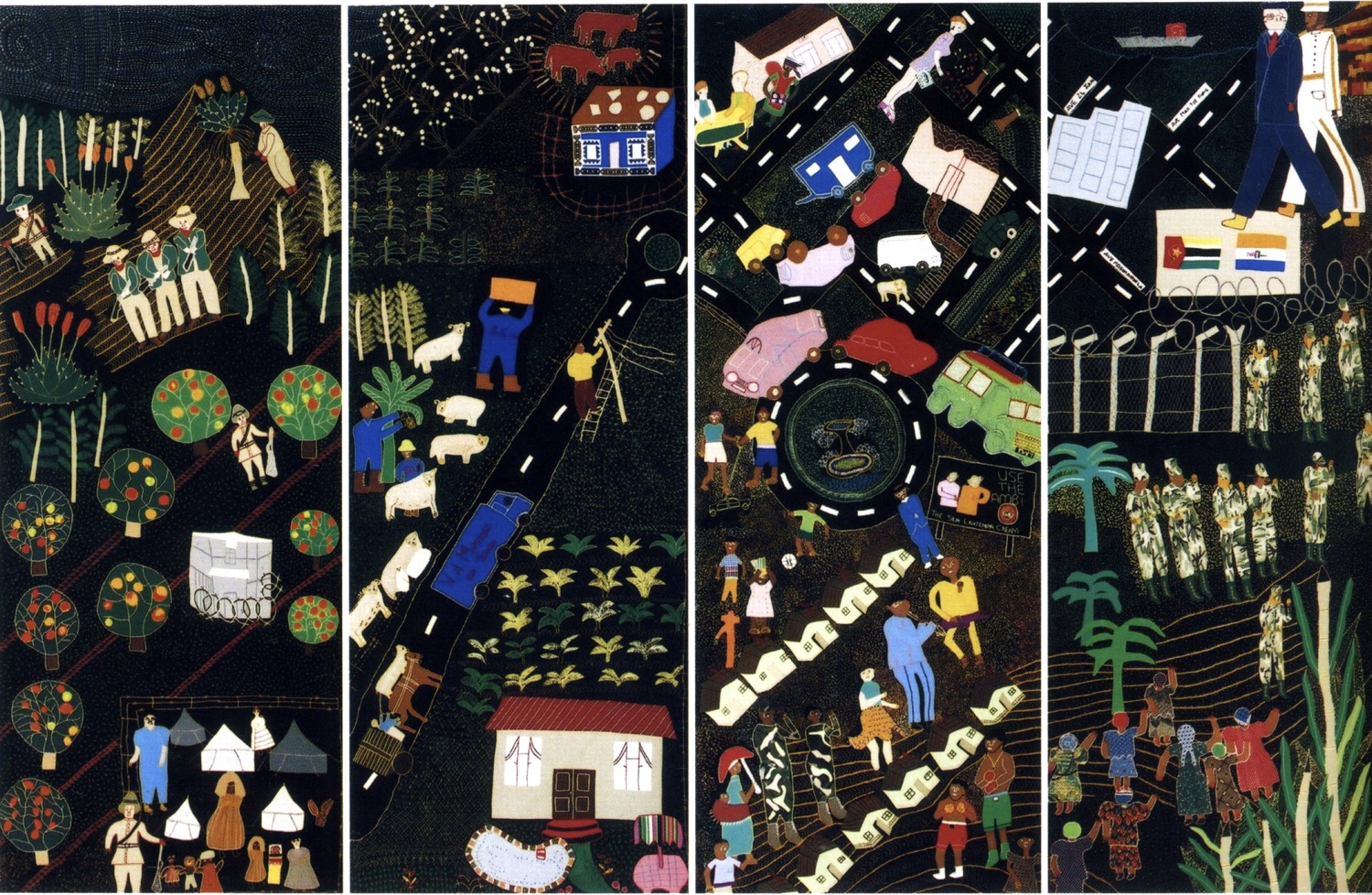
Panels 17-20 (Boer guerilla fighters, concentration camps, commercial farming, unions, township v suburban life, mothers bidding farewell to their children leaving to join liberation forces, Machel and Botha at the Nkomati Accord).
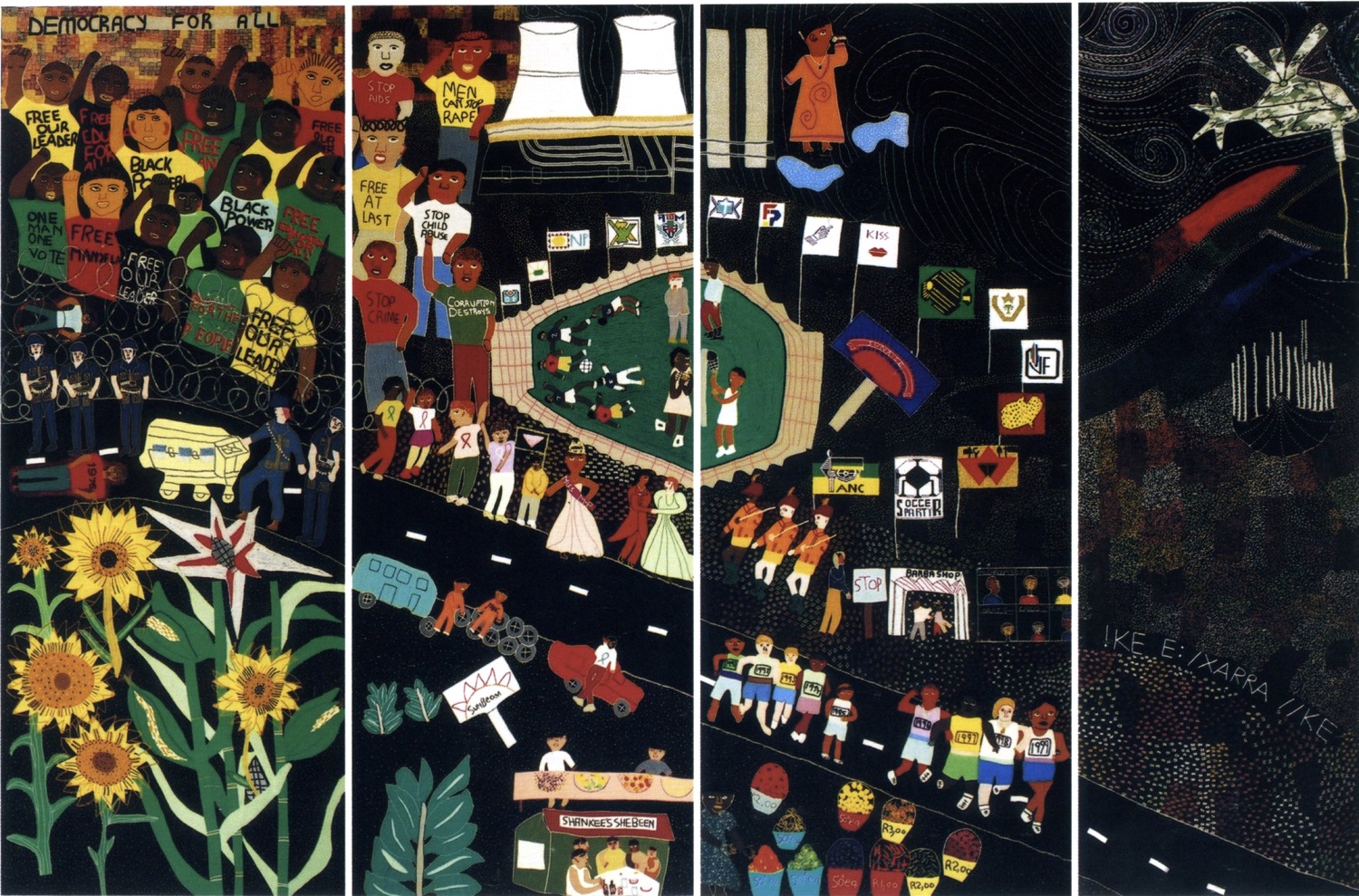
Panel 22-24 (political rallies, 1994 elections, freedom celebrations, Mbuzini Machel monument).
You might like these
Come and Stay
Accommodation options are available at The Artists' Press property, set in a beautiful sprawling sub-tropical African garden.
Who are we?
A brief introduction to the team at the The Artists' Press, who collectively make all of our prints possible.
Handling original prints
Some tips for keeping your prints in perfect shape.


